




## Toyota’s Aggressive Pivot: The 2027 bZ5 Strategy in China
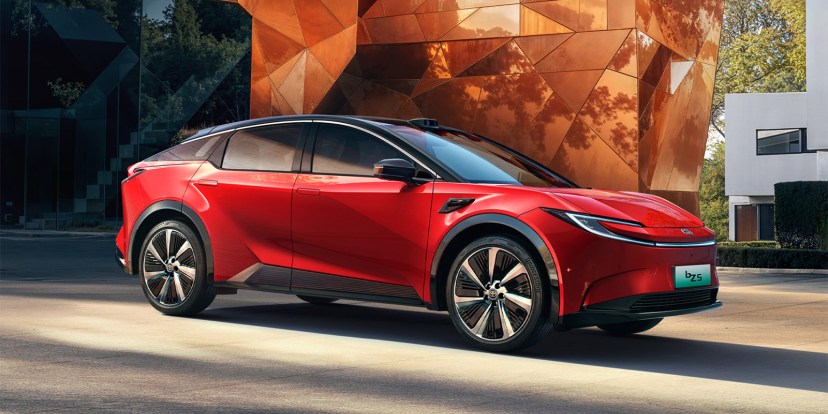
The Chinese electric vehicle (EV) landscape has evolved into a high-stakes arena where traditional market logic often takes a backseat to sheer survival. Faced with an unrelenting price war ignited by domestic manufacturers, Toyota has opted for a radical departure from its conservative playbook. By discarding its usual pricing strategy, the automotive giant has launched the refreshed 2027 bZ5, a vehicle that challenges the status quo with a price point that initially seems like a clerical error.
### A New Benchmark for Affordability
Produced through the FAW-Toyota joint venture, this updated five-door electric crossover is positioning itself as a disruptor. The official MSRP for the 2027 model spans from RMB 129,800 to RMB 199,800 (approximately €16,600 to €26,000). However, in the hyper-competitive Chinese market, the sticker price is merely a suggestion. Through aggressive early-bird incentives, the entry-level cost is effectively driven down to a staggering RMB 109,800-roughly €14,100.
To put this into perspective, this price point is significantly lower than what consumers in Europe or North America would pay for a basic, entry-level subcompact car equipped with manual features. Toyota is essentially offering a spacious, modern electric crossover for the price of a budget-tier city car.
### Why the Shift Matters
This move signals a profound shift in Toyota’s global strategy. As domestic Chinese brands like BYD and Xiaomi continue to capture market share with high-tech, low-cost offerings, legacy automakers are being forced to adapt or risk obsolescence. By slashing margins to remain relevant in the world’s largest EV market, Toyota is demonstrating a newfound willingness to prioritize volume and market presence over short-term profit margins.
Industry analysts note that this “price-first” approach is essential for survival in China, where EV penetration recently surpassed the 50% mark in monthly sales for the first time in 2024. For Toyota, the bZ5 is no longer just a product; it is a defensive tool designed to reclaim ground in a territory where the brand’s traditional reputation for reliability is being challenged by the rapid innovation of local tech-focused competitors.