





### Snap’s New AR Glasses: A Leap Toward Wearable Computing
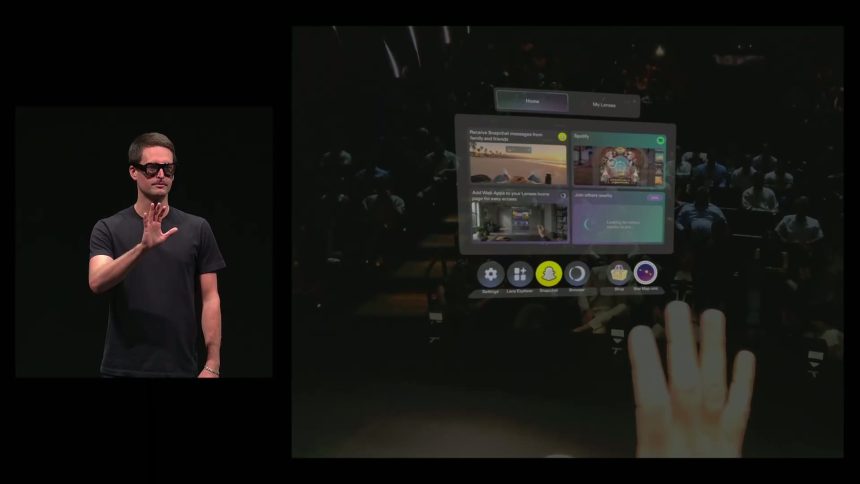
Snap has officially showcased its latest hardware innovation, with CEO Evan Spiegel providing a live demonstration of the company’s upcoming standalone augmented reality (AR) glasses. The presentation highlighted the device’s capabilities by featuring an immersive *Harry Potter* experience developed in collaboration with HBO, offering a glimpse into how digital overlays will soon integrate with our physical surroundings.
### Pioneering the Standalone AR Market
First teased earlier this summer, these high-end wearables are positioned to disrupt the tech landscape. With a price point of $2,195, the device is carving out a unique niche as the first truly standalone, high-fidelity AR glasses available to consumers outside of the Chinese market. By bringing this technology to the public now, Snap is effectively outpacing industry giants like Meta and Apple, who have yet to release a comparable, fully self-contained AR headset for general purchase.
### Strategic Rollout and Availability
The path to this launch began when Snap Opens Preorders For Specs, True AR Glasses Shipping This Fall For $2195. The company confirmed that these units are slated for distribution across the United States, the United Kingdom, and France.
While the current price tag reflects the cutting-edge nature of the hardware-much like the early days of the first smartphones or high-end VR headsets-it signals a significant shift in Snap’s strategy. Rather than focusing solely on social media filters, the company is pivoting toward becoming a hardware powerhouse. By prioritizing a tether-free experience, Snap is betting that users prefer the freedom of movement over the limitations of wired or phone-dependent devices.
### The Future of Immersive Entertainment
The live demo served as a proof-of-concept for developers and consumers alike. By integrating a major intellectual property like *Harry Potter*, Snap is demonstrating that its AR ecosystem is ready for high-quality, interactive content. As the industry moves toward a future where digital information is seamlessly layered over the real world, Snap’s early entry provides a critical benchmark for what is possible in wearable computing today.