




Beyond Boundaries: An Exploration of ZULI’s Sonic Evolution
By Henry Ivry | June 24, 2026
The Enigma of Genre-Defying Soundscapes
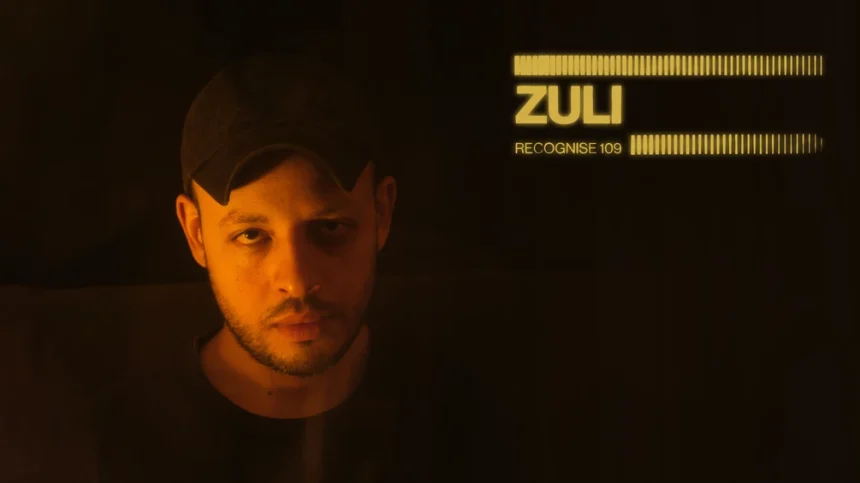
When listening to the latest output from Berlin-via-Cairo producer Ahmed El Ghazoly-better known to the electronic music world as ZULI-one might find themselves questioning the very definitions of dance music. His newest EP, The Screaming Abdabs, serves as a prime example of his refusal to adhere to traditional rhythmic structures or stylistic expectations. As he contemplates the viability of these tracks in a club setting, El Ghazoly acknowledges the inherent tension in his work: is it truly “club music” if it defies the standard pulse of the dancefloor?
A Multi-Genre Mutation for the Recognise Series
ZULI’s contribution to the Recognise mix series is nothing short of a cerebral workout. The set functions as a kaleidoscopic journey through various mutations of electronic sound, blending disparate textures into a cohesive, albeit disorienting, experience. By weaving together fragmented beats and abrasive sound design, he challenges the listener to abandon their preconceived notions of what a DJ set should accomplish. This mix is not merely a collection of tracks; it is a manifesto on the fluidity of modern club culture.
Geography and Identity: The ZULI Philosophy
For El Ghazoly, the act of creation is deeply tied to a rejection of labels. Whether it is the geographical tag of being an “Egyptian artist” or the stylistic pigeonholing that often plagues experimental producers, he remains steadfast in his pursuit of artistic autonomy. His move to Berlin has provided a new backdrop for his creative process, yet he insists that his sound is not a product of his location, but rather an extension of his internal, instinctual drive.
In an era where global electronic music is increasingly homogenized, ZULI’s approach is a breath of fresh air. He treats his discography as a living, breathing entity, allowing his intuition to dictate the direction of each release. This “multiplicity” of sound-where grime, industrial, and avant-garde electronics collide-is what makes his work so difficult to categorize, and ultimately, so compelling.
The Instinctual Approach to Production
The Screaming Abdabs EP encapsulates this philosophy perfectly. Rather than aiming for the predictable drops or loops that dominate mainstream dance music, ZULI opts for a more visceral, unpredictable path. His production style relies on a “gut-check” method, where the emotional resonance of a sound takes precedence over its technical classification. By prioritizing instinct over industry standards, he has carved out a unique space for himself in the international underground scene.
As he continues to evolve, ZULI remains a pivotal figure for those who seek music that challenges the status quo. His work serves as a reminder that the most exciting developments in electronic music often occur in the spaces between genres, where the rules are not just bent, but entirely rewritten.
ZULI: Redefining the Boundaries of Apocalyptic Club Music
Since his debut, ZULI-the moniker of producer Ahmed El Ghazoly-has consistently challenged the conventional definitions of “club music.” His discography serves as a timeline of sonic evolution: 2018’s Trigger Finger acted as a melting pot of trap, techno, bass, and IDM, while subsequent projects like 2021’s jungle-infused All Caps and 2023’s Komy pushed those boundaries further, dismantling traditional genre constraints. If his work is categorized as club music, it is undoubtedly the soundtrack for a collapsing world.
The Sonic Intensity of ‘The Screaming Abdabs’
Even when measured against his own eclectic history, his latest release, The Screaming Abdabs, stands out as particularly unsettling. The EP dives headfirst into the most abrasive textures of El Ghazoly’s repertoire. Comprising six tracks of frenetic energy, the record blends caustic drum machine patterns, harsh noise aesthetics, and eerie, spectral synthesizers. This jarring atmosphere is intentional; as El Ghazoly noted during a recent interview, the project serves as a deliberate exploration into the extreme thresholds of distortion and audio saturation.
Finding the Groove in the Chaos
Despite its aggressive exterior, The Screaming Abdabs maintains a tether to dancefloor sensibilities. El Ghazoly insists that the music remains “groovy,” a quality refined through years of rigorous road-testing. These tracks were not merely produced in a vacuum; they were reworked and refined across four years of live performances. For the attentive listener, the rhythmic complexity becomes clear-whether it is the mutated, shifting pulse of “Half Empty” or the jagged, electro-inspired swagger of “Functional Rekordbox Track.” While the latter’s title is tongue-in-cheek, it highlights the producer’s ability to inject a sense of movement into even the most volatile soundscapes.
A Singular Visionary in Electronic Music
El Ghazoly’s career is defined by his refusal to conform to industry standards. Much like his live performances-which oscillate between seated, contemplative listening experiences and high-energy dancefloor sets-his recorded output occupies the space where avant-garde sound design meets the global club circuit. By forcing these disparate worlds to collide, he highlights the structural imbalances and historical biases inherent in the music industry.
Ultimately, ZULI has become a central figure in the experimental vanguard of electronic music, not by chasing trends, but by operating entirely on his own terms. His creative process is refreshingly unburdened by technical dogma:
“When I let my intuition lead, things come out kind of messy. I never think of BPM. I never think about keys. I just play.”
The Sonic Evolution of ZULI: From Hip-Hop Roots to Experimental Mastery
The musical identity of El Ghazoly has long been defined by its inherent versatility. Before cementing his reputation as a singular force in electronic music, he navigated a diverse landscape of genres. Early in his career, he operated as a hip-hop producer under the moniker Swag Lee, working closely with artists like Abyusif-who has since ascended to become a major figure in the regional music scene. Beyond the world of rap beats, Ghazoly’s creative footprint extended into the gritty realms of trip-hop and post-punk, where he served as both a band member and a producer.
The Emergence of the ZULI Project
While his collaborative work flourished, the ZULI project remained his most personal endeavor, simmering in the background before gaining significant momentum in 2016. This breakthrough arrived with the release of the Bionic Ahmed EP via Lee Gamble’s UIQ label. Following a decade-long hiatus from the DJ booth, Ghazoly returned to live performance in 2017. This shift in focus signaled a renewed interest in dancefloor-oriented compositions, a trajectory that became increasingly evident with the Trigger Finger EP on Haunter Records and culminated in the rhythmic intensity of his 2021 release, All Caps.
Navigating Adversity and Critical Acclaim
A pivotal moment in his discography arrived in 2018 with the release of Terminal. This project was a complex tapestry of fractured rhythms and experimental production, featuring vocal contributions from a diverse array of artists including Mado $am, R-Rhyme, MSYLMA, Abanoub, and Abyusif. The album received widespread critical acclaim, solidifying his status as an international talent. This momentum faced a sudden hurdle in 2019 when the theft of his studio equipment forced a temporary halt to his production plans, yet his reputation remained untarnished, proving the lasting impact of his work.
The Duality of Sound: Club Rhythms vs. Ambient Landscapes
Throughout his evolution as ZULI, Ghazoly has maintained a delicate balance between high-energy club music and the more cerebral, abstract edges of sound design. This oscillation between extremes is a hallmark of his artistic philosophy. His 2024 LP, Lambda, serves as a prime example of this range; recognized by DJ Mag as one of the standout albums of the year, the record traded the abrasive, jagged textures found in earlier works like The Screaming Abdabs for expansive, atmospheric ambient soundscapes.


Reflecting on his refusal to be pigeonholed into a single genre or aesthetic, Ghazoly notes, “I’ve never been interested in sticking to one sound.” This commitment to constant reinvention ensures that his output remains unpredictable, challenging listeners to move beyond conventional expectations of electronic music.
ZULI: Redefining Artistic Identity and Sonic Intuition
The complexity of ZULI’s sound is often mistaken for a deliberate attempt to be cryptic, yet the Cairo-based producer insists that his work is far from exclusionary. While his intricate compositions might push the technical limits of even the most seasoned DJs, his primary objective is connection rather than confusion. He emphasizes that his creative practice is not an exercise in self-indulgence or isolation; instead, he views his output as a bridge, striving to foster a genuine dialogue with his audience.
This commitment to authenticity is rooted in a deeply spontaneous creative process. ZULI describes his production style as inherently organic, often bypassing the rigid constraints of music theory. By ignoring traditional metrics like beats per minute (BPM) or specific musical keys, he allows his intuition to dictate the flow of his tracks. He embraces the resulting “messiness,” viewing it as a necessary byproduct of a process that prioritizes raw feeling over clinical precision.
Navigating the Western Gaze
Hailing from Cairo, El Ghazoly has frequently navigated the frustrating landscape of the Western music industry, which often imposes an “orientalist” lens on artists from the region. This systemic bias manifests as an expectation for creators to conform to tired, exoticized tropes to satisfy international audiences. El Ghazoly has been vocal about the toll these reductive expectations take on an artist’s creative freedom.
In the lead-up to his project Terminal, he addressed these pressures head-on, critiquing the industry’s tendency to favor a marketable caricature over the reality of a complex, multifaceted human being. He argues that the industry’s appetite for a “digestible” narrative often strips artists of their individuality. By speaking out against these unfair standards, he aims to dismantle the narrow boxes that global music institutions attempt to place him in.
Cultural Nuance and Community Building
Despite his resistance to being pigeonholed, El Ghazoly remains deeply connected to his cultural roots, though he chooses to express them on his own terms. He frequently incorporates Arabic elements into his compositions, yet he avoids the predictable, stereotypical applications often favored by Western producers. For those familiar with the nuances of Arabic music, his work contains subtle, sophisticated nods that resonate far beyond the surface level.
His dedication to his local scene is further evidenced by his collaborative efforts. In 2019, he teamed up with fellow artist Rama to establish Irsh, a Cairo-based digital platform dedicated to live-streaming local talent. The initiative was born out of a desire to rectify the lack of visibility for regional producers and DJs who were consistently overlooked by international promoters. By providing a high-quality stage for these artists, Irsh serves as a vital infrastructure for the Cairo electronic scene, ensuring that local creators receive the recognition and platform they rightfully deserve.
Beyond Borders: The Evolution of ZULI and the Irsh Collective
At its core, the project was always intended as a spotlight-a deliberate gesture to say, “Pay attention to these artists.” What began as a focused initiative eventually blossomed into a full-fledged record label, Irsh. The imprint marked its official entry into the music industry in 2020 with a debut compilation featuring a powerhouse lineup, including Abadir, 3Phaz, Assyouti, and Kareem Lofty. Over the past half-decade, the label has continued to curate a distinct sonic identity, delivering projects like the evocative ElMosameh Sherine LP by Qow, ltfll’s intricate Nested Skins EP, and their latest offering, The Screaming Abdabs.
The Creative Impulse: An Unfiltered Process
For El Ghazoly, the act of creation is less about calculated strategy and more about surrendering to an internal rhythm. “I find it impossible to manufacture music just for the sake of output,” he explains. “I lack the ability to force a creative direction. In many ways, I am merely a passenger to the sounds I produce; I have very little control over the final result.”
Transcending Geography: Berlin and Beyond
Following the easing of pandemic-related restrictions, El Ghazoly relocated to Berlin. Alongside Rama, he launched a residency at the renowned OHM venue, curating nights of experimental noise that bridged the gap between Egyptian producers and the international underground. This transition into the Berlin circuit served as a catalyst, effectively dismantling the narrative that his work was tethered to a specific regional identity.
“I have never identified with a scene defined by a physical location,” El Ghazoly notes. “My work exists within a digital network. There is a persistent tendency for observers to categorize artists based on their cultural background or geographic origin, but I find those labels to be increasingly inaccurate.”
Defying Categorization
ZULI actively resists the urge of critics and listeners to box him into a “Cairo-based” narrative. While his artistic journey undoubtedly took root in Egypt, his sound has long since outgrown the limitations of a map. His recent contribution to the DJ Mag Recognise series-engineered through a complex saturation chain to mirror the raw, high-octane energy of his latest EP-serves as a masterclass in sonic synthesis. Within his tracks, one can trace a dizzying array of influences, blending the explosive, high-tempo rhythms of cumbia, gqom, and rkt into a singular, borderless experience.
The Uncompromising Sonic World of ZULI: Navigating the Fringe
The sonic landscape curated by ZULI is a chaotic, exhilarating collision of global underground currents. His recent output serves as a masterclass in genre-defying curation, weaving together the rhythmic sensibilities of Argentinian innovator jaijiu with the abrasive, industrial textures favored by Italy’s exmantera. The mix further expands into the experimental realms of leftfield bass and post-club deconstruction, featuring contributions from artists like bfft, Yraki, dj galen, GRRL, and Ikävä Pii. To keep listeners on their toes, he punctuates these avant-garde selections with jarring, high-energy remixes of heavy hitters like Flava D, Dizzee Rascal, and Playboi Carti. It is, in every sense, a high-octane auditory journey.
The Economic Reality of Experimental Music
El Ghazoly operates within a niche of the underground that prioritizes artistic integrity over commercial viability. However, this commitment to creative purity comes with significant hurdles. Recently, he and his collaborator Rama were forced to suspend their residency at the Berlin venue OHM. The decision was driven by the same harsh financial realities currently stifling promoters worldwide: the events rarely covered their own costs, let alone generated a surplus.
“A major drawback of scenes that lack a fixed geographical anchor is the difficulty in gathering a local audience large enough to maintain consistent operations,” El Ghazoly explains. “We are essentially operating within a fragile, artificial economy that relies heavily on the personal sacrifices of those involved-much like the historical model of art patrons subsidizing culture just to keep it alive.”
A Fraying Global Network
From his perspective, this reliance on goodwill is a ticking time bomb. The international infrastructure that has historically supported the fringes of experimental music is showing signs of severe strain. While the quality of production remains at an all-time high-he speaks with genuine fervor about the technical prowess of artists like KAVARI and Klaudio PRC-the financial logistics of sustaining a career in this space have become increasingly precarious.
Staying True to the Craft
Despite these systemic pressures, ZULI shows no interest in pivoting toward more accessible, mainstream sounds. While he acknowledges that producing straightforward, functional techno might lead to more lucrative bookings and a larger profile, the idea is met with a dismissive laugh. “Even if I wanted to pivot for the sake of convenience, I simply couldn’t,” he admits. “I lack the capacity to force my creative output. I’m barely in control of the music I make as it is; it’s an organic process that I can’t manufacture.”
Ultimately, ZULI remains committed to his own path, working in lockstep with a community of collaborators who are pushing the boundaries of what club music can be. It is a jagged, uncompromising, and vital edge of the industry, and it is exactly where he intends to stay.
Experience the full scope of ZULI’s vision by listening to his latest Recognise mix and reviewing the tracklist below.
Tracklist:
Nine Inch Nails – ‘Starfuckers, Inc.’
COIDO – ‘Whipped Cream’
Jenasi, Trust True – ‘Damage’
Playboi Carti – ‘Die4Guy’
Sonic Extremism: A Curated Selection of High-Voltage Experimental Tracks
The landscape of contemporary electronic music is currently undergoing a radical transformation, characterized by a fusion of high-BPM intensity, industrial grit, and deconstructed club aesthetics. This collection highlights a series of tracks that push the boundaries of sound design, blending chaotic rhythms with visceral, noise-heavy production. Whether you are exploring the depths of Gqom-infused edits or the abrasive textures of modern noise-wall bootlegs, these selections represent the cutting edge of underground sonic experimentation.
The Vanguard of High-BPM and Deconstructed Club
The following tracks exemplify the shift toward hyper-kinetic, high-energy soundscapes. By manipulating tempo and layering aggressive percussion, these artists redefine what it means to create “club” music in a post-genre era.
* KAVARI (Silver Bullet Mix & Nightshade – Bleed Mix): A masterclass in industrial tension, KAVARI’s work remains a benchmark for those seeking dark, atmospheric, and punishing soundscapes.
* jaijiu’s Rhythmic Experiments: By bridging the gap between Brazilian funk influences and high-speed Gqom (125bpm to 280bpm), jaijiu demonstrates the global fluidity of modern electronic production.
* FLAVA D & P MONEY (KAVARI NOISE WALL BOOTLEG): A prime example of how classic grime elements can be completely dismantled and reconstructed through a lens of pure, distorted noise.
Industrial Grit and Mechanical Textures
For listeners who gravitate toward the more mechanical and abrasive side of the spectrum, these tracks offer a deep dive into “process fatigue” and sonic distortion. These compositions often utilize harsh synthesis and rhythmic repetition to create a sense of urgency.
* Punishment (COMBUST & PHOBIA): These tracks serve as a testament to the power of raw, unadulterated industrial energy.
* Ikävä Pii (Process Fatigue): A sonic exploration of burnout, utilizing repetitive, grinding textures that mirror the exhaustion of the digital age.
* exmantera (DISTILL): A refined approach to noise, focusing on the extraction of pure, crystalline sound from chaotic foundations.
Genre-Defying Remixes and Reinterpretations
The art of the remix has evolved into a form of sonic alchemy. By taking established tracks and injecting them with new, often jarring, stylistic choices, these producers create entirely new experiences.
* KLAUDIO (Ω MIX of Playboi Carti’s ‘POP OUT’): A bold reimagining that strips away the original’s polish, replacing it with a jagged, experimental edge.
* Dizzee Rascal (HØST Remix of ‘Ice Rink’): A nostalgic nod to grime history, updated with the cold, precise production techniques of the current underground scene.
* R1R1R1R1R1R1R1R1R (FFForga no talento): A track that thrives on its own eccentricity, proving that unconventional structures often yield the most memorable results.
Essential Listening: The Full Spectrum
To fully grasp the current state of experimental electronic music, one must engage with the full breadth of these artists. From the glitch-heavy, internet-native aesthetics of excel dj and Patricia Taxxon to the rhythmic precision of BFTT and GRRL, this list serves as a comprehensive guide to the sounds currently shaping the underground.
Curated Tracklist Summary
* Deft – It’s Made of Shine
* N1L – Reality Distortion Field
* Ben Pest X Kursa – Having An Obnoxious Moment
* AMANTRA – quiero todo regala’o
* 7 Orbits – NISQ
* Comechelet – V47Flatline
* Yraki – Craw
* KLAUDIO – ◙◙
* CHOCA – From The South To Everywere
* RAVL – Doomsday Clockmakers
* dj galen – brain juice
This selection is not merely a playlist; it is a snapshot of a movement that prioritizes sonic innovation over traditional musicality. As these artists continue to experiment with noise, tempo, and texture, they ensure that the future of electronic music remains as unpredictable as it is exhilarating.