





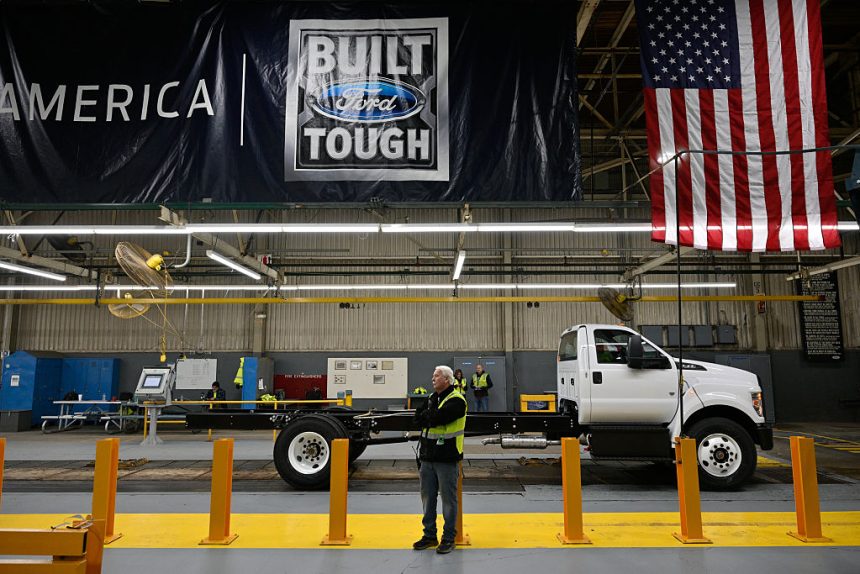

Ford Pivots Back to Human Expertise to Solve Quality Control Challenges
In a significant strategic shift, Ford Motor Company has recently onboarded 350 seasoned engineers to bolster its manufacturing quality standards. This move comes after the automaker discovered that an over-reliance on artificial intelligence and automated inspection protocols failed to meet the company’s rigorous production benchmarks.
The Limits of Automation in Manufacturing
For a period, Ford leaned heavily into automated quality assurance systems, operating under the assumption that AI-driven design ingestion would naturally result in superior vehicle output. However, the reality proved more complex. According to Charles Poon, Ford’s Vice President of Vehicle Hardware Engineering, the company realized that software alone could not replicate the nuanced judgment required to identify subtle manufacturing flaws.
COO Kumar Galhotra recently explained to the press that the company’s previous strategy of delegating quality oversight to algorithms yielded underwhelming results. To rectify this, Ford has actively recruited veteran technical specialists-many of whom are former employees or experts sourced from the company’s supply chain network. These professionals are now tasked with identifying potential failure points in the design phase, long before components ever arrive at the assembly line.
The “Gray Beard” Strategy: Blending Experience with Innovation
Rather than a total retreat from modern technology, Ford is adopting a hybrid approach. The newly hired “gray beard” engineers-a term used to describe industry veterans with decades of hands-on experience-are not just performing inspections; they are serving as mentors. Their primary objective is to train the next generation of staff while simultaneously refining and reprogramming the company’s existing AI tools to be more effective.
This integration of human intuition and machine learning is already yielding tangible benefits. By catching defects earlier in the development cycle, Ford expects to slash operational costs by approximately $1 billion throughout the current fiscal year. Furthermore, the efficacy of this human-centric pivot is reflected in recent industry rankings; Ford secured the number one position among mainstream automotive brands in the latest J.D. Power Initial Quality Survey.
Industry Implications
Ford’s experience serves as a cautionary tale for the broader automotive sector regarding the limitations of “black box” automation. While AI remains a powerful tool for data processing and efficiency, the complexity of vehicle hardware requires the oversight of human experts who understand the physical realities of engineering. By re-centering human expertise, Ford is demonstrating that the most successful manufacturing processes are those that leverage technology to augment, rather than replace, the seasoned professional.