


From Partners to Adversaries: The Apple vs. OpenAI Legal Conflict
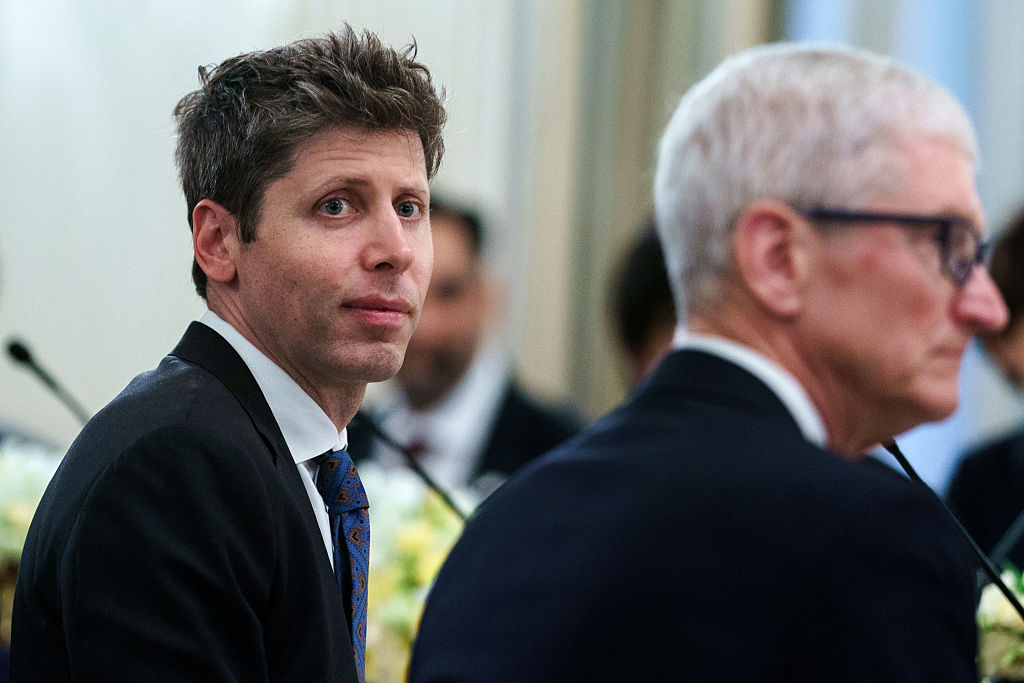
For the past two years, the tech industry viewed the alliance between Apple and OpenAI as a cornerstone of the modern AI era. By integrating ChatGPT into the core of Apple Intelligence and allowing Siri to offload complex reasoning tasks to OpenAI’s models, the two companies seemed to be building a symbiotic future. However, this high-profile collaboration has hit a massive roadblock, shifting from a strategic partnership to a high-stakes legal battle.
The Allegations: Intellectual Property Theft and Corporate Espionage
Apple has officially initiated legal proceedings against OpenAI, leveling serious accusations of a systematic campaign to misappropriate trade secrets. According to the court filing, Apple contends that OpenAI has been aggressively poaching talent to gain unauthorized access to confidential engineering schematics, proprietary product roadmaps, and sensitive technical specifications for unreleased hardware.
The complaint paints a picture of a calculated effort by OpenAI to fast-track its own hardware ambitions by leveraging Apple’s internal knowledge. Apple’s legal team asserts that this behavior permeates the organization, stating, “At every level, from members of its technical staff to its chief hardware officer, and in coordination with business partners, OpenAI has been stealing Apple’s trade secrets and confidential information.”
Central to the lawsuit are two high-profile former Apple employees now at OpenAI:
- Tang Tan: Formerly Apple’s Vice President of Product Design, Tan now serves as OpenAI’s Chief Hardware Officer. His previous tenure involved overseeing the development of flagship products like the iPhone, AirPods, and Apple Watch.
- Chang Liu: A former hardware engineer for the iPhone, Liu is accused of downloading a vast repository of proprietary data-including engineering presentations and unreleased project specifications-immediately prior to his departure for OpenAI.
Apple’s Demands and the Path to Litigation
This is not merely a request for financial compensation. Apple is seeking a comprehensive legal remedy that could fundamentally disrupt OpenAI’s hardware roadmap. The company is demanding that OpenAI cease the use of any misappropriated data, destroy all stolen proprietary materials, and potentially undergo a complete redesign of any future hardware products that were developed using Apple’s intellectual property.
Industry analysts note that this move follows a period of failed diplomacy. Reports indicate that Apple attempted to address these grievances through private channels before escalating to litigation, only to be met with silence from OpenAI’s leadership.
Why This Conflict Reshapes the AI Landscape
The gravity of this lawsuit cannot be overstated. It represents a total collapse of a relationship that was essential to Apple’s recent AI strategy. As Apple struggled to keep pace with competitors like Google’s Gemini and Microsoft’s Copilot, the integration of ChatGPT into the Apple ecosystem was intended to be the “silver bullet” that modernized Siri and provided a competitive edge.
The irony is palpable: OpenAI provided the foundational intelligence that helped Apple catch up in the AI race, yet it is now accused of using that proximity
The Race for the Next AI Frontier: OpenAI’s Hardware Ambitions and the Apple Connection
The landscape of personal technology is shifting rapidly as artificial intelligence moves from software-based chatbots to physical, handheld, and wearable devices. At the center of this evolution is a high-stakes tug-of-war between industry titan Apple and the rapidly expanding OpenAI.
The Jony Ive Factor: Designing the Future of AI
OpenAI is making aggressive moves to transition from a software-first company to a hardware powerhouse. The most significant indicator of this shift is the partnership between OpenAI CEO Sam Altman and legendary industrial designer Jony Ive. Known for his pivotal role in crafting the aesthetic and functional identity of the iPhone, iPod, and MacBook, Ive’s involvement suggests that OpenAI is prioritizing a premium, user-centric hardware experience.

Through the acquisition of Ive’s firm, LoveFrom, and the strategic hiring of former Apple hardware executive Tang Tan, OpenAI is clearly signaling its intent to build a dedicated “AI-first” device. While the specifics remain under wraps, industry analysts anticipate a wearable form factor that moves beyond the limitations of current smartphone interfaces. Unlike the Humane AI Pin-which struggled with latency and limited utility-an OpenAI-led device would likely leverage the full, sophisticated backbone of the GPT-4o model to provide real-time, context-aware assistance.
A Complex Relationship: Collaboration Amidst Competition
The tension between these two tech giants is paradoxical. On one hand, Apple is aggressively building out its own Apple’s AI ecosystem, integrating intelligence directly into the iPhone, iPad, Mac, and Apple Watch. On the other hand, Apple has integrated ChatGPT directly into its operating systems, creating a symbiotic relationship that complicates the competitive narrative.
This dynamic is further strained by legal and professional friction. Reports indicate that Apple has expressed concerns regarding OpenAI’s hardware trajectory, particularly regarding the potential use of proprietary design philosophies or confidential methodologies. Despite these underlying tensions, the two companies remain tethered by their current software integrations.
The Timeline for the Next Generation
The industry is watching closely to see when these ambitions will materialize. While the hardware market is notoriously difficult to penetrate-as evidenced by the lukewarm reception of recent AI-focused wearables-OpenAI’s deep pockets and talent acquisition strategy provide a significant advantage.
Current market data suggests that the global AI hardware market is expected to grow at a compound annual growth rate (CAGR) of over 25% through 2030, driven by the demand for edge computing and localized AI processing. If rumors hold true, we could see the first iteration of an OpenAI-designed device as early as 2025.
As the race to define the “iPhone of AI” intensifies, the industry is witnessing a fundamental pivot. The question is no longer just about which company has the smartest model, but which company can successfully package that intelligence into a device that feels as essential as the smartphone did nearly two decades ago.