





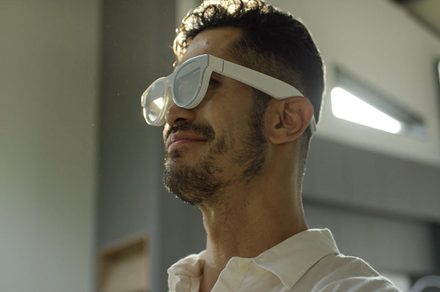
Redefining Clarity: A Breakthrough in Augmented Reality Transparency
The primary allure of augmented reality (AR) lies in its potential to weave digital elements into our physical surroundings with perfect fluidity. However, current AR hardware often creates a frustrating paradox: to see the virtual, you must sacrifice the clarity of the real. A collaborative team of researchers-spearheaded by Assistant Professor Xiaodan Hu of the Shibaura Institute of Technology (SIT), alongside experts from Shanghai Jiao Tong University and the Nara Institute of Science and Technology-has unveiled a novel display methodology designed to resolve this visual conflict. Their findings, recently detailed in IEEE Transactions on Visualization and Computer Graphics, suggest a path toward high-fidelity digital overlays that do not compromise the user’s perception of their environment.
The Visibility Dilemma: Why Current AR Falls Short
The fundamental challenge facing today’s optical see-through head-mounted displays (OST-HMDs) is not the rendering of virtual objects, but the degradation of the physical world. Traditional AR glasses function by projecting light into the user’s line of sight, which frequently results in a “dimming” effect. This makes the real world appear murky or shadowed, creating a significant barrier to safety and immersion. For instance, imagine trying to read a street sign or navigate a crowded room while wearing sunglasses at night; the current generation of AR hardware often forces users into a similar visual compromise.
A Perception-Centric Approach to Display Technology
Rather than chasing incremental hardware upgrades, the research team pivoted toward a perception-driven display architecture. By leveraging how the human eye processes light and depth, they developed a system that dynamically balances the opacity of virtual content against the ambient light of the real world. This intelligent masking technique ensures that digital assets appear solid and realistic without casting a “veil” over the user’s surroundings.
This shift is critical as the AR market continues to expand. According to recent industry projections, the global AR market is expected to reach a valuation of over $100 billion by 2030, yet widespread adoption remains stalled by user discomfort and visual fatigue. By prioritizing the preservation of the physical environment, this new display logic addresses one of the most significant hurdles to long-term wearable integration.
Balancing Digital Integration and Real-World Awareness
The proposed “mask balancing” technique acts as a sophisticated filter, adjusting the light transmission in real-time. Think of it as an adaptive lens that knows exactly when to let the world shine through and when to emphasize a digital interface. By optimizing the see-through transparency, the researchers have created a framework where virtual objects feel anchored in space rather than floating as distracting, semi-transparent ghosts. This advancement is a vital step toward making AR glasses as unobtrusive and functional as a standard pair of spectacles.