




Digital Trends may earn a commission when you buy through links on our site. Why trust us?
The “M3 Extreme” That Never Was: Why Apple Shelved Its Most Powerful Silicon
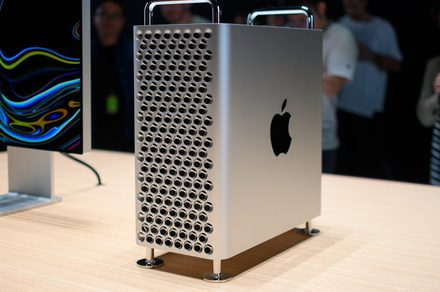
For two decades, the Apple Mac Pro stood as the undisputed flagship of the company’s desktop ecosystem. However, the transition to Apple Silicon signaled a major shift in strategy, eventually leading to the retirement of the iconic tower design in favor of the more compact Mac Studio. Behind the scenes, however, Apple engineers were reportedly architecting a beast of a processor that could have redefined professional computing.
The Vision: Doubling Down on Performance
Recent insights from Bloomberg’s Mark Gurman reveal that Apple had high-level ambitions for an “M3 Extreme” chip. This silicon was designed to be a massive leap forward, featuring double the CPU and GPU core counts found in the M3 Ultra.
In the world of high-end workstations, core count is king. For context, while the M3 Ultra is already a powerhouse, an Extreme variant would have likely pushed the Mac Pro into a league of its own, potentially rivaling high-end server-grade hardware. To put this into perspective, modern AI training and 8K video rendering workflows are increasingly hungry for parallel processing power; an Extreme chip would have provided the necessary headroom to handle these tasks without breaking a sweat.
Why the Extreme Tier Was Abandoned
Despite the technical potential, the project never reached the consumer market. The primary culprit? Economics. Manufacturing a chip of that complexity involves massive silicon dies, which significantly increases the risk of defects during production. When you factor in the low yields and the astronomical costs associated with advanced packaging, the price tag for a finished Mac Pro equipped with an M3 Extreme would have been prohibitive for all but the most niche enterprise clients.
Apple ultimately determined that the return on investment simply wasn’t there. With the market shifting toward modular, efficient computing solutions like the Mac Studio, the demand for a hyper-expensive, ultra-niche workstation didn’t justify the R&D and manufacturing overhead.
A Long-Standing Ambition
The concept of an “Extreme” tier wasn’t a sudden pivot; it was a long-term goal for Apple’s silicon team. Speculation regarding a top-tier processor first surfaced back in 2022. At that time, reports suggested that Apple was actively prototyping an M2 Extreme, which was intended to be the crown jewel of the first Apple Silicon-powered Mac Pro. The fact that the company pursued this architecture across multiple generations highlights just how committed they were to pushing the boundaries of desktop performance before ultimately deciding that the “Ultra” tier was the sustainable ceiling for their current manufacturing capabilities.