





## A New Era for Regional Aviation: Loganair’s Electric Fleet Expansion
The landscape of European commercial aviation is set for a radical transformation as Loganair prepares to integrate a fleet of at least five all-electric aircraft into its operations by 2029. This strategic move positions the carrier as a pioneer, marking the first instance of a commercial airline in Europe deploying a dedicated electric fleet for both passenger transport and logistics.
### From Experimental Trials to Commercial Reality
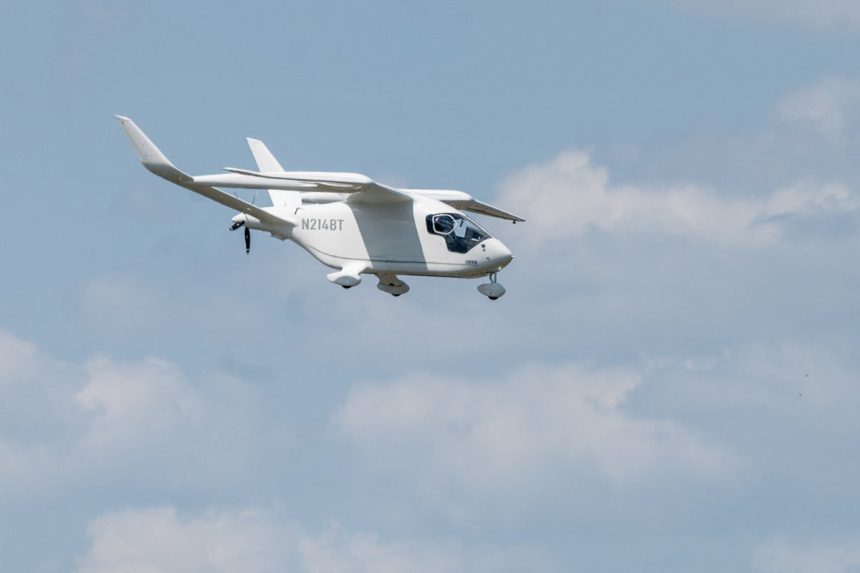
This commitment follows the successful completion of a trial of a plane conducted in early 2026, which served as the proof-of-concept for the airline’s green transition. During the opening of the Farnborough Airshow, the Scottish airline finalized the acquisition of the Beta Alia CX300, an advanced all-electric model, with an additional option to procure five more units depending on future demand.
### Operational Efficiency and Sustainability
The choice of the CX300 is highly strategic. With a significant portion of Loganair’s current flight paths covering distances of under 100 miles, the aircraft’s 336-nautical-mile range is perfectly aligned with the airline’s regional network.
Beyond environmental benefits, the transition promises significant economic advantages. Luke Farajallah, Chief Executive of Loganair, emphasized the shift in industry standards:
“This is a truly historic moment for Loganair and for European aviation. Our demonstration programme earlier this year proved that electric aviation is no longer a future concept; it is a viable commercial opportunity.”
Farajallah noted that the aircraft demonstrated the potential to slash operating costs by as much as 80 percent. This efficiency is achieved without compromising the essential connectivity that remote communities rely on. Furthermore, the infrastructure requirements are minimal; the planes are designed to utilize existing runways and feature rapid-charging capabilities, requiring only 20 to 40 minutes to power up between flights.
### The Future of Short-Haul Travel
As the aviation industry faces increasing pressure to decarbonize, Loganair’s investment serves as a blueprint for short-haul travel. By replacing traditional combustion engines with electric propulsion, the airline is not only reducing its carbon footprint but also insulating itself against the volatility of fossil fuel prices. As battery density continues to improve-with current industry projections suggesting a 5-8% annual increase in energy storage capacity-the viability of these short-range electric routes is expected to grow even further, potentially opening up new, previously unserved regional connections.