




The Art of the Invisible: How Koki Enomoto’s ‘Lightly’ Collection Redefines Movement
For designer Koki Enomoto, the spark of creativity often ignites in the most mundane environments. During a routine jog earlier this year, a brief pause to catch his breath led to a moment of profound realization. His gaze caught a fragment of industrial gray netting suspended from an overpass, dancing rhythmically in the breeze.
“It felt as though I had stumbled upon something typically hidden from view,” Enomoto explained while presenting his latest work. “The wind itself is intangible, yet the way the fabric reacted to it rendered the invisible visible. That observation sparked a question: how could I translate that ephemeral interaction into the medium of fashion?”
### Designing for the Air Between
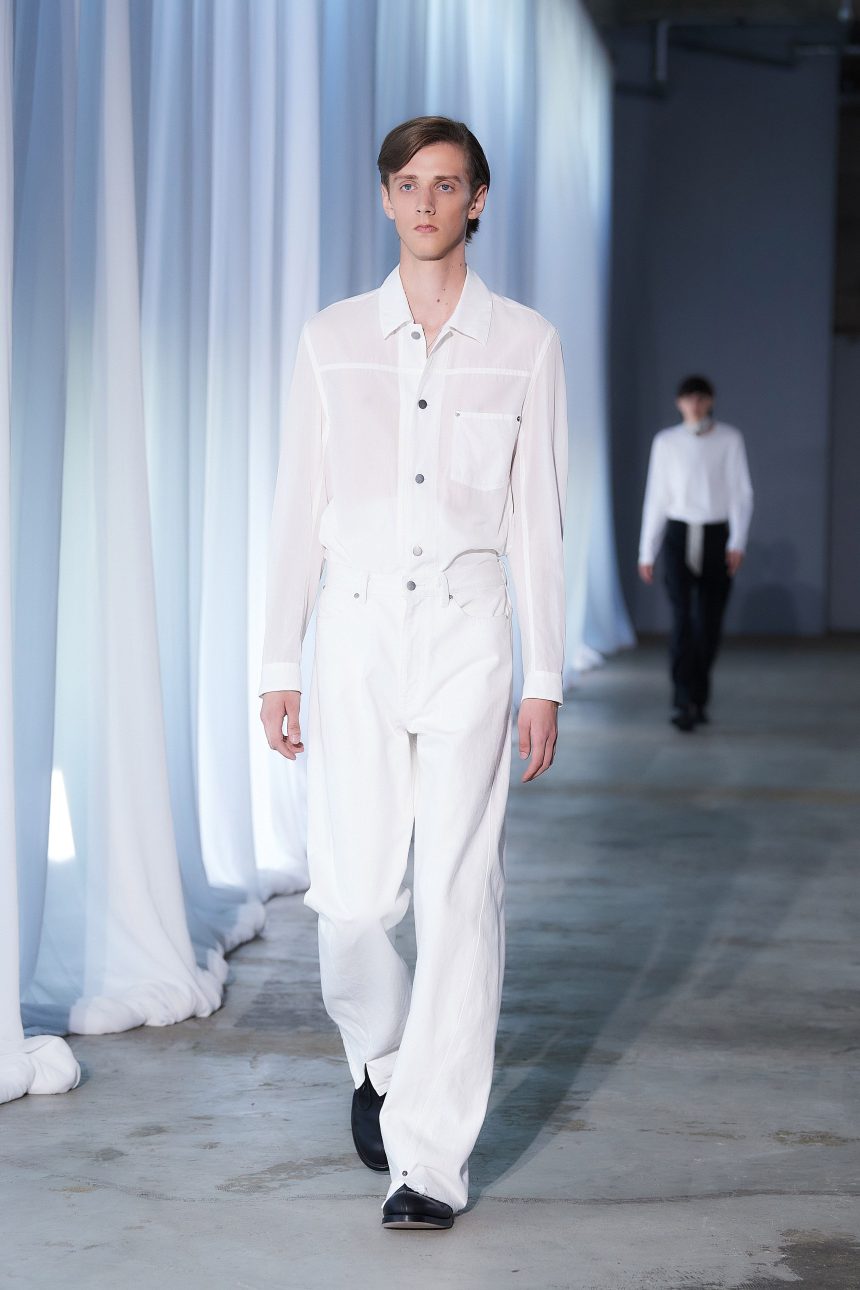
This inquiry served as the foundation for his latest Attachment collection, aptly titled ‘Lightly.’ The presentation took place within the stark, industrial confines of a concrete warehouse, anchored by a singular, backlit sheer curtain that set a meditative tone.
Enomoto’s design philosophy remains rooted in materiality. He prioritizes the kinetic relationship between textile and anatomy, meticulously studying how garments behave in motion. By blurring the lines between traditional categories-fusing the structure of a shirt with the utility of a blouson-he has stripped away the unnecessary. The result is a collection of effortless tailoring that feels like a relic from a minimalist sci-fi future, yet retains a tactile, grounded comfort.
### The Architecture of Silhouette
In the current fashion landscape, where “quiet luxury” and functional minimalism continue to dominate-with market reports indicating a 15% year-over-year increase in consumer demand for versatile, trans-seasonal pieces-Enomoto’s approach feels particularly timely. He isn’t just designing clothes; he is engineering the negative space.
“The core challenge was calibrating the precise distance between the textile and the wearer,” Enomoto noted. “It isn’t merely about the physical weight of the garment. It is about the personality and the architectural silhouette that emerges once the piece is actually worn.”
By focusing on the interplay of volume and air, Enomoto has successfully captured the essence of the wind that first inspired him, proving that the most impactful designs are often those that leave room for the wearer to breathe.