



Breaking Barriers: The North American MLBB Landscape
Success in competitive gaming is a double-edged sword. While securing a victory brings immediate prestige, the true value lies in the subsequent access to high-pressure environments and the accelerated professional development that follows. For emerging regions, these opportunities are the lifeblood of long-term sustainability.
A Historic Milestone for North American Esports
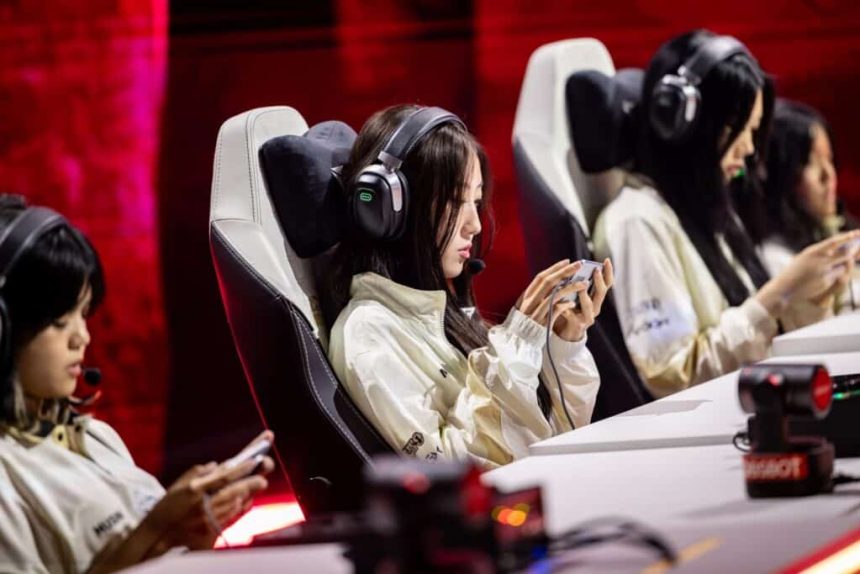
The year 2025 marked a watershed moment for the North American scene, as Gaimin Gladiators shattered expectations by becoming the first squad from the region to reach the international grand finals of the Mobile Legends: Bang Bang (MLBB) Women’s Invitational at the Esports World Cup.
This achievement was particularly significant given the roster’s composition. Featuring a core of four American talents-Ashley “Ashlay” Ann, Cindy “Panda” Zhou, Jessica Qi-Yao “Sayori” Cao, and Nicole “Nicholette” Huang-the team proved that North American players could compete at the highest level in a title that has historically struggled to gain a foothold in the domestic market. Despite this breakthrough, the momentum faced an abrupt plateau, highlighting the fragile nature of growth in non-traditional regions.
The Structural Paradox of MLBB in the U.S.
The current ecosystem for MLBB in North America presents a classic “catch-22.” Players are often forced to endure a grueling, year-long wait for a single shot at international qualification. This scarcity of high-stakes competition creates a bottleneck; without frequent exposure to global playstyles, teams struggle to refine their strategies, yet they cannot access that experience without first navigating a sparse domestic circuit.
To put this into perspective, consider the contrast with established regions like Southeast Asia, where professional leagues operate year-round with weekly broadcasts. In North America, the lack of a consistent tournament infrastructure means that even the most talented rosters are essentially training in a vacuum. When the stakes are this high-where one tournament determines the entire trajectory of a team’s year-the pressure to perform without adequate “match fitness” becomes an almost insurmountable hurdle.
Related Insights
- “Our preparation was pretty intense”: How Team Vitality’s MLBB roster breaks stereotypes about mobile gaming and women’s esports
- “The spirit of the FGC is still there”: Cuddle_Core talks old-school gatekeeping, grassroots to mainstream, and making a career out of Tekken
- Even the Dota 2 pros are bored with Tier 1 tournaments: Let’s shake it up with Fearless Draft and Tier 2 teams
The journey for teams like Gaimin Gladiators serves as both a blueprint and a warning: talent exists in North America, but the infrastructure must evolve to support it beyond a single tournament cycle.