





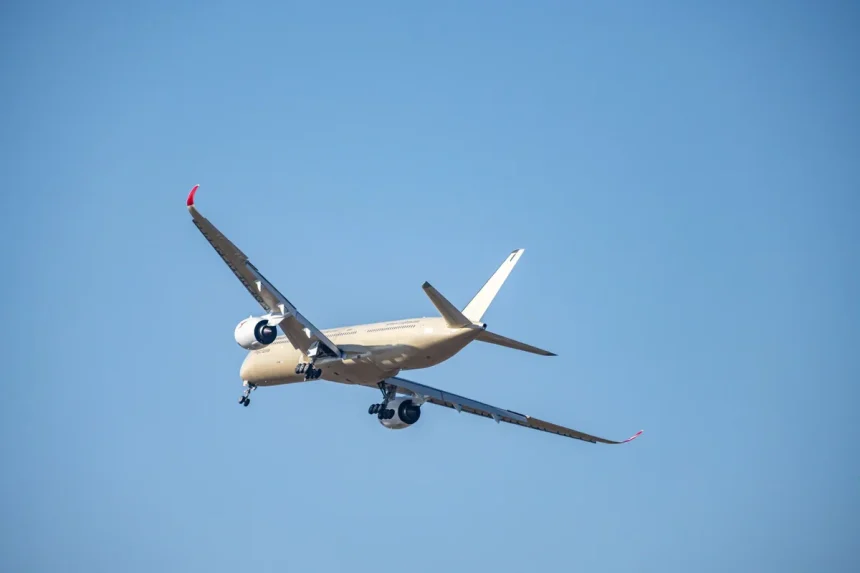
A New Era for Aviation: Qantas Completes Record-Breaking Ultra-Long-Haul Flight
The aviation industry has reached a monumental milestone as Qantas successfully executed a historic flight that pushed the boundaries of modern travel. By remaining airborne for more than 24 hours, the airline effectively bridged three continents and spanned two vast oceans, witnessing the sun rise and set twice during the singular journey. This feat is widely recognized as the longest direct commercial flight ever recorded.
The Technology Behind Project Sunrise
This groundbreaking expedition was conducted using the MSN707, a specialized Airbus A350-1000ULR. The flight served as a critical stress test for the carrier’s ambitious “Project Sunrise” initiative, which aims to connect the world’s most distant cities through non-stop commercial routes. Unlike standard commercial operations, this test flight was conducted without passengers, allowing engineers to focus entirely on aircraft performance and endurance metrics.
Mapping the 12,460-Nautical-Mile Journey
The aircraft departed from Melbourne, Australia, and concluded its mission in Toulouse, France, on the morning of July 28. The total duration of the flight was 24 hours and 24 minutes, covering an impressive distance of 12,460 nautical miles. To put this in perspective, this distance is roughly equivalent to flying halfway around the circumference of the Earth, demonstrating the immense capabilities of the A350-1000ULR platform.
This return leg was significantly more complex than the initial delivery flight from Toulouse to Melbourne, which took approximately 19 hours. The extended duration of the return trip was the result of a strategic flight path optimization. The aircraft navigated across the Pacific Ocean toward Los Angeles, traversed the North American continent, crossed the Atlantic south of Greenland, and finally flew over the United Kingdom before landing in southern France.
Why This Matters for Global Travel
As airlines look to reduce the friction of international travel, the success of these ultra-long-haul trials is vital. Current industry data suggests that passenger demand for direct, non-stop flights is at an all-time high, as travelers increasingly prioritize time-efficiency over traditional layovers. By eliminating the need for refueling stops, Qantas is positioning itself to redefine the passenger experience for routes that were previously considered impossible to fly without a break.
Under the guidance of experts like Airbus Test Pilot Xavier Pepin, these trials provide the essential data needed to ensure that both the aircraft and the crew can handle the physiological and mechanical demands of such extended periods in the air.