



Uncovering the Nutritional Value of Onions: Fact vs. Fiction
When we examine the role of onions in human health, it is essential to look past the sensationalized headlines and focus on what randomized, controlled clinical trials actually reveal. While onions are a staple in kitchens worldwide, their specific physiological impacts are often misunderstood or exaggerated.
The Hidden Power of the Outer Layers
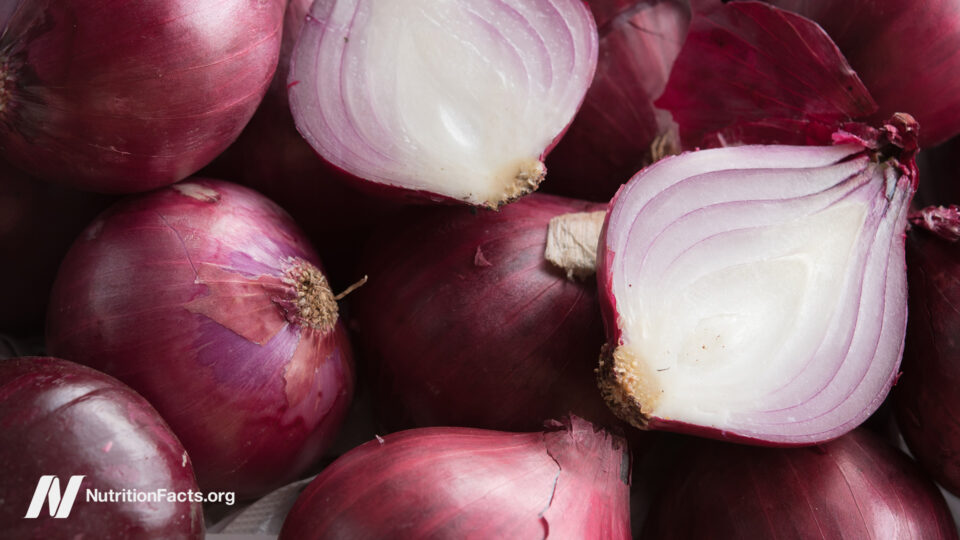
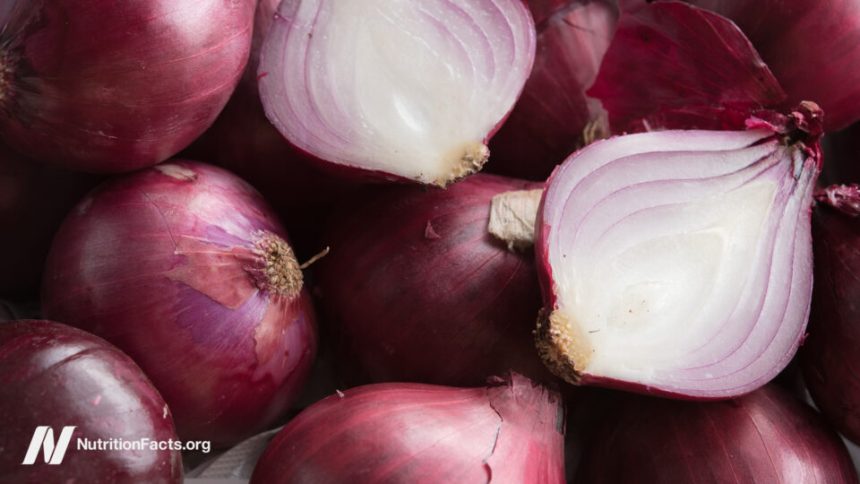
A common culinary mistake is the aggressive peeling of onions. Research indicates that onions are potent reservoirs of antioxidants, but these compounds are not distributed evenly. Instead, they are highly concentrated in the papery outer layers. For instance, in white onions, the outermost portion contains more than ten times the antioxidant density found in the center. By discarding these layers, we are essentially throwing away the most nutrient-dense parts of the vegetable.
When comparing varieties, the color of the onion serves as a reliable indicator of its antioxidant profile. While yellow onions generally outperform white ones, red onions beat both varieties across multiple testing methodologies, as detailed in the video Are Onions Beneficial for Testosterone, Osteoporosis, Allergies, and Cancer?
Evaluating Clinical Claims
While red onions are scientifically superior in terms of antioxidant concentration, yellow and white onions still offer significant nutritional value. However, the leap from “nutritious food” to “miracle cure” is where the medical literature often becomes murky. Numerous studies touting extraordinary health outcomes frequently rely on preliminary data or animal models rather than robust human evidence.
Take, for example, the recurring narrative purporting that onion consumption can significantly boost testosterone levels in men. While such claims make for compelling reading, they often lack the rigorous, large-scale human trial data required to substantiate such a physiological shift. In the context of modern nutrition, it is vital to distinguish between the general health benefits of a vegetable-rich diet and the specific, often unproven, therapeutic claims attributed to individual ingredients.