




Why Circle Could Be the Next Global Payments Titan
While the broader crypto market often fixates on volatile assets, a quiet revolution is brewing in the stablecoin sector. According to Ryan Rasmussen, Head of Research at Bitwise, the market is significantly undervaluing Circle-the issuer of USDC-as it pivots from a simple stablecoin provider to a foundational pillar of global finance.
The Trillion-Dollar Stablecoin Horizon
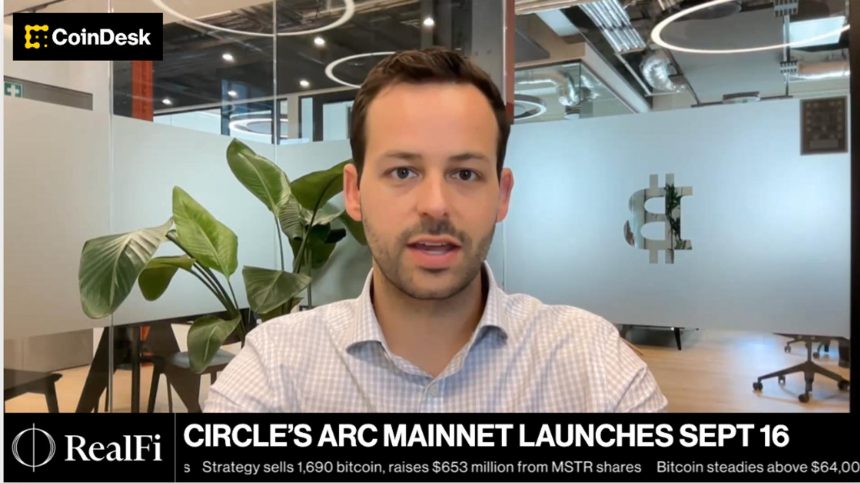
During a recent appearance on CoinDesk’s Public Keys, Rasmussen highlighted a massive disconnect between current market sentiment and the long-term trajectory of stablecoins. While the sector currently hovers around a $300 billion valuation, Rasmussen projects an explosive expansion, forecasting a total market cap reaching between $3 trillion and $5 trillion in the coming years.
This growth isn’t just theoretical. As global economies increasingly digitize, stablecoins are becoming the preferred “on-ramp” for institutional capital. With U.S. regulatory frameworks finally beginning to crystallize, Circle’s proactive compliance strategy has granted it a significant competitive moat, positioning it to capture the lion’s share of this incoming liquidity.
Beyond Reserves: The Infrastructure Play
The common narrative surrounding Circle focuses almost exclusively on the interest revenue generated from its dollar reserves. However, Rasmussen argues that this perspective is shortsighted. He suggests that the real value lies in the company’s aggressive development of payments infrastructure.
* A New Financial Backbone: Circle is actively engineering the plumbing for a digital-first economy. By creating seamless APIs and settlement layers, they are enabling businesses to bypass traditional, slow-moving banking rails.
* The “Mispriced” Opportunity: Because investors are hyper-focused on reserve yields, they are largely ignoring the scalability of Circle’s payment services. Rasmussen believes this oversight creates a unique window for those who recognize that Circle is evolving into a utility provider rather than just a token issuer.
* Challenging the Incumbents: To understand the scale of this ambition, consider the evolution of legacy giants like Visa or PayPal. Just as these companies revolutionized how we move fiat currency, Circle is positioning itself to become the primary settlement layer for the internet of value. If successful, Circle won’t just be a stablecoin issuer; it will be a dominant force in global payment processing.
A Five-Year Outlook
Rasmussen’s long-term vision is bold: he anticipates that in five years, the industry will view Circle not merely as a stablecoin giant, but as a comprehensive payments powerhouse. As the gap between traditional finance and blockchain-based settlement continues to shrink, Circle’s infrastructure-first approach may prove to be the most significant development in fintech this decade.