




Identifying the True Cause of Discolored Turf
When you notice unsightly brown patches marring the appearance of your otherwise vibrant grass, it is easy to jump to conclusions. Many homeowners immediately suspect a grub infestation. However, the reality is often more nuanced. Discoloration can be triggered by a variety of environmental and biological stressors, including drought conditions, chemical burns from pet waste, fungal disease, or even an over-application of nitrogen-rich fertilizer.
It is a common misconception that grubs are the primary enemy of every struggling lawn. In many cases, these larvae are not the source of the problem at all. Furthermore, even if a small number of grubs are discovered, they rarely cause enough damage to warrant chemical intervention. According to turf management experts, a healthy lawn can typically tolerate a modest population of grubs without showing any visible signs of decline.
The Importance of Timely Diagnosis
Before you reach for pesticides, you must verify that grubs are truly the culprit. Applying treatments blindly is not only a waste of resources but can also harm beneficial soil organisms. The key to effective management is timing; there is a narrow seasonal window when monitoring is most accurate and treatments are most effective. That critical period is currently underway.
Understanding the Grub Lifecycle
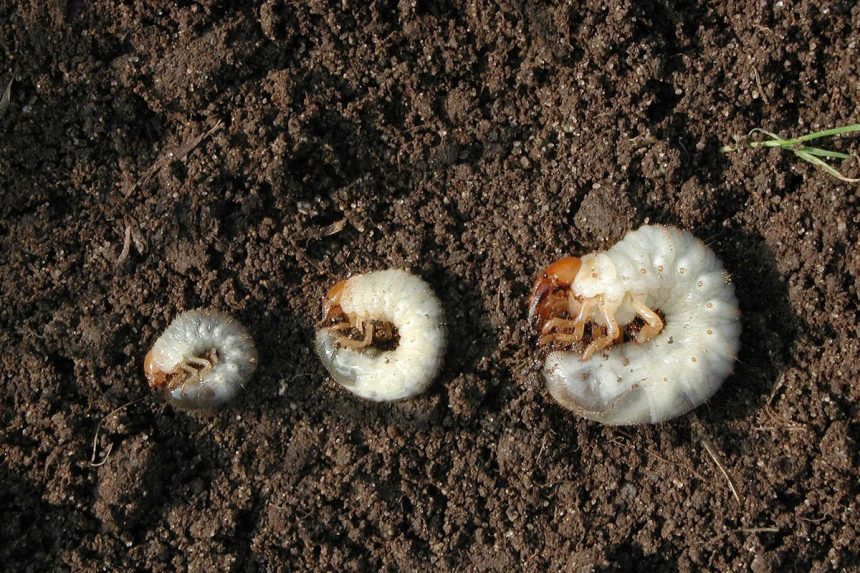
Grubs are the larval stage of various beetle species, such as the Japanese beetle, European chafer, and Oriental beetle. These pests reside just beneath the soil surface, where they feast on the root systems of lawns and ornamental plants. By severing the roots from the blades above, they effectively starve the grass, leading to the characteristic brown, loose patches that can be easily lifted like a piece of carpet.
How to Inspect Your Soil
To determine if you have a genuine infestation, you need to perform a simple physical inspection. Select a few areas where the grass is showing signs of stress. Using a spade, cut a square section of turf about 3 to 4 inches (7.6 to 10 centimeters) deep and peel it back to examine the root zone. If you find a significant number of C-shaped, white larvae, you may have a problem that requires attention. If you find only one or two, your lawn is likely healthy enough to withstand them without intervention.