



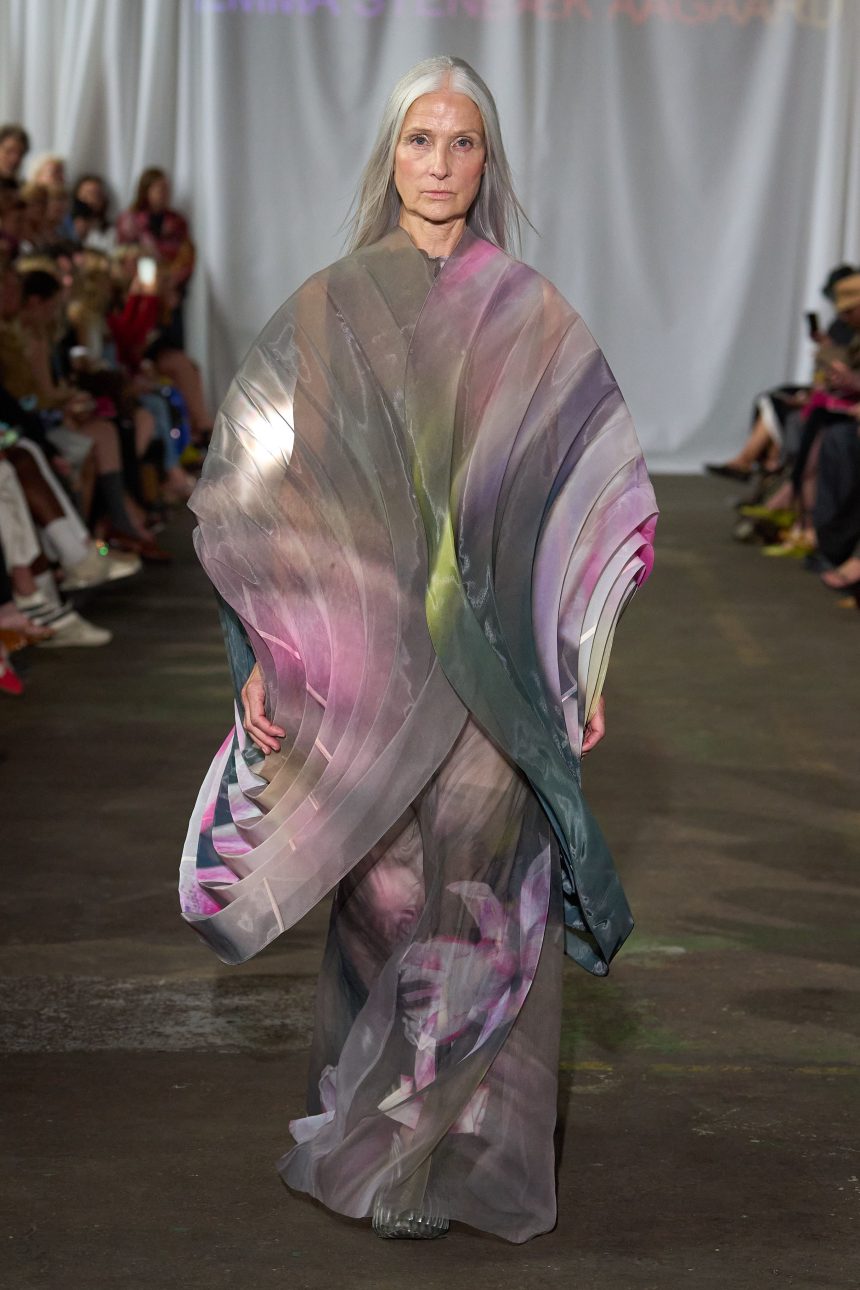
The Evolution of Design: Royal Danish Academy’s Visionary Class of 2026
The upcoming generation of designers is redefining the intersection of personal philosophy and textile art. According to Marcus Aminaka Wilmont, an assistant professor at the Royal Danish Academy, the Class of 2026 is defined by a fearless commitment to their own interpretations of value, manifested through bold, vibrant palettes. This shift toward high-saturation hues is not merely a student trend; it mirrors a broader industry movement. Recent global menswear runways have similarly embraced an extroverted aesthetic, proving that both emerging talent and established fashion houses are prioritizing mood-boosting, vivid color stories to capture the public imagination.
Architectural Precision and Geometric Innovation
Structural experimentation served as the backbone for many of this year’s standout portfolios. Rather than relying on traditional tailoring, students pushed the boundaries of form through mathematical precision:
- Modular Efficiency: David Sierstad pioneered a zero-waste construction methodology, utilizing basic squares and rectangles to eliminate fabric scraps entirely.
- Circular Dynamics: Emma Stenbæk Aagaard focused on the geometry of the circle, employing intricate pleating and curved folds to imbue her garments with a fluid, kinetic energy.
- Sculptural Enclosures: Shurong Coa experimented with volume by wrapping foam around the human silhouette, effectively creating a wearable, shell-like sanctuary.
- Origami-Inspired Textiles: Yu Lin Eain drew from the nostalgia of childhood play, successfully adapting the complex folding patterns of paper fortune tellers into sophisticated fabric structures.
This focus on geometry is timely; according to recent industry reports, sustainable, zero-waste pattern cutting is projected to become a standard practice for 40% of luxury brands by 2030 as the industry pivots toward circular manufacturing.
Deconstructing Modern Masculinity
A significant portion of the graduating class turned their lens toward the shifting landscape of contemporary masculinity. For three standout male designers, the creative process became a narrative vehicle to explore the psychological journey from adolescence to maturity. Their collections specifically mapped this transition through the lens of geography, contrasting the simplicity of rural upbringing with the complex, fast-paced demands of urban life. By juxtaposing these environments, the designers challenged traditional archetypes, offering a nuanced look at how modern men navigate identity in an increasingly globalized world.