
The Paradigm Shift: Why the BYD Seal 06 Redefines Affordable Mobility
For years, the automotive industry has conditioned consumers to associate “budget-friendly electric vehicles” with significant compromises. Typically, opting for an entry-level EV meant settling for flimsy interior materials, sluggish acceleration that struggles to keep pace with highway traffic, and infotainment systems that feel like relics from the early 2000s. Models like the Dacia Spring have become the poster children for this “bare-minimum” approach. However, the narrative is shifting rapidly, led by Chinese manufacturers who are proving that low cost does not have to equate to low quality.
The unveiling of the 2027 BYD Seal 06 is a watershed moment for the industry. By offering a staggering twelve distinct configurations-ranging from versatile plug-in hybrids (PHEVs) to high-performance battery electric vehicles (BEVs)-BYD is effectively dismantling the traditional barriers to entry. When you analyze the technical specifications against the price point, the value proposition is so aggressive that it forces even the most skeptical industry analysts to search for hidden flaws.
### A New Aesthetic Language: The “Wave Star River” Evolution
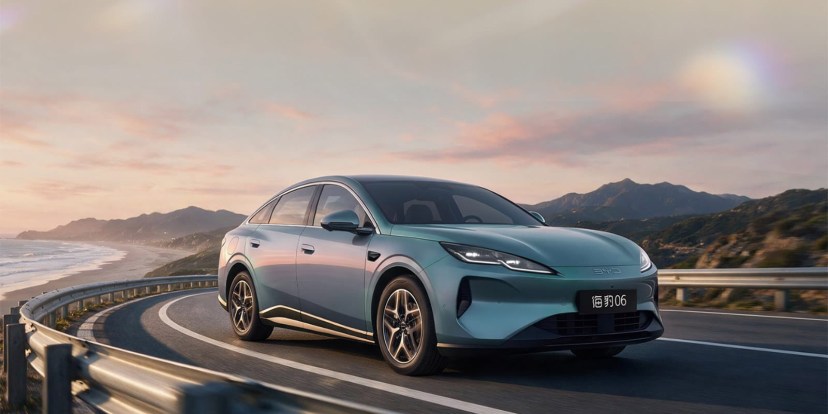
Beyond the impressive mechanical versatility, the Seal 06 showcases a significant maturation in BYD’s design philosophy. The brand’s “Ocean-series” aesthetic has moved away from experimental styling toward a refined, sophisticated look that commands presence without being overly aggressive.
The front fascia is dominated by the “Wave Star River” dual-lens LED headlight assembly. These units are seamlessly integrated into a redesigned bumper featuring 3D air ducts, which serve a dual purpose: they enhance the vehicle’s aerodynamic efficiency-a critical factor for maximizing range-and provide a modern, sculpted look that rivals premium European sedans.
### Why This Matters for the Global Market
The significance of the Seal 06 extends beyond its design. With the global EV market currently facing a “price war,” BYD is leveraging its vertical integration to offer features previously reserved for luxury segments-such as advanced AI-driven ADAS (Advanced Driver Assistance Systems) and ultra-fast charging capabilities-at a price point under $15,000. As of 2024, while many Western manufacturers are struggling to bring EV prices below the $30,000 threshold, BYD’s ability to deliver a 2,300 km combined range (in hybrid configurations) at this price point represents a massive competitive disruption.