




## The Hidden Mechanics Behind Uncharted’s Challenging Gameplay
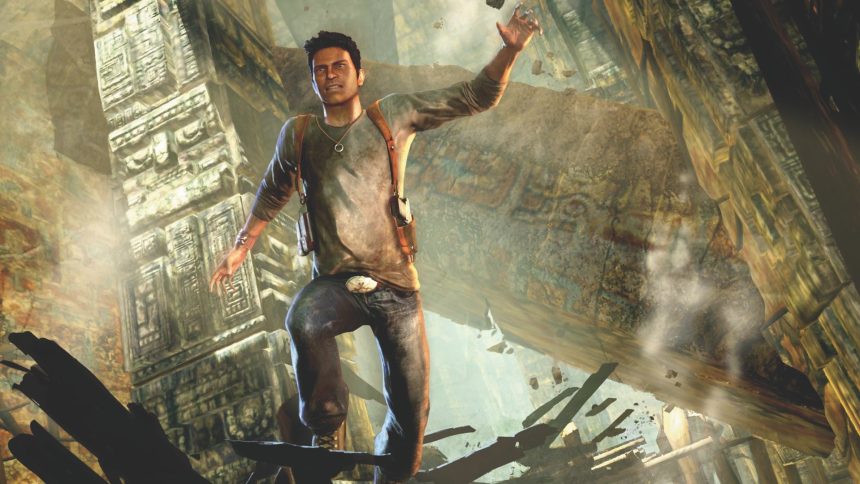
The original *Uncharted: Drake’s Fortune* is often remembered for its intense combat encounters, but a former Naughty Dog developer has pulled back the curtain on a secret mechanic that influenced that difficulty: dynamic scaling.
In a recent discussion with FRVR, former Naughty Dog designer Benson Russell shared insights into the turbulent production cycle of the studio’s first *Uncharted* title. According to Russell, the team faced significant hurdles, including designing sprawling environments before fully mapping out how combat would function within those spaces. This led to a frantic effort to retrofit gameplay mechanics into pre-existing levels. However, the most pressing issue emerged once the game began to take its final shape: the total runtime was alarmingly brief.
### Stretching the Experience: Why Uncharted 1 Feels So Tough
Russell candidly admitted that releasing a title with a five-hour campaign and zero multiplayer support for a $60 price point was commercially unviable. To bridge the gap between the game’s actual length and consumer expectations, the developers implemented a “dynamic difficulty” system.
Rather than simply providing a challenge for the sake of gameplay, this system was engineered as a pacing tool. By monitoring player performance in real-time, the game could subtly adjust its parameters to impede progress.
“We ended up putting a dynamic difficulty system in, but its key thing was to slow the player down if they were too good,” Russell explained. “That’s one of the big ones. That’s one of the reasons why *Uncharted 1* gets so hard. If you’re doing really well for the difficulty level you have it set on – it’s all time-based!”
### The Evolution of Difficulty in Modern Gaming
This approach is a stark contrast to modern game design, where developers often prioritize accessibility and “flow state” over artificial padding. Today, many titles utilize “rubber-banding” in racing games or adaptive AI in shooters to keep players engaged, but rarely is it used as a blunt instrument to extend a game’s length. For context, while *Uncharted: Drake’s Fortune* relied on these hidden adjustments to reach a standard length, modern action-adventure games now frequently exceed 20 to 30 hours of content without needing to artificially throttle player skill.
For those looking to revisit the series, you can check out the [Uncharted Games in (Chronological) Order](https://www.ign.com/articles/uncharted-drakes-fortune-developer-reveals-the-game-had-dynamic-difficulty-to-stop-players-from-finishing-it-too-quickly) to see how the franchise evolved beyond its initial, experimental roots.