

![It Ends Director Alex Ullom On Why Liminal Horror Is So Popular [Exclusive]](https://www.mixtv1.com/wp-content/uploads/2026/08/24022-attachment.jpg)



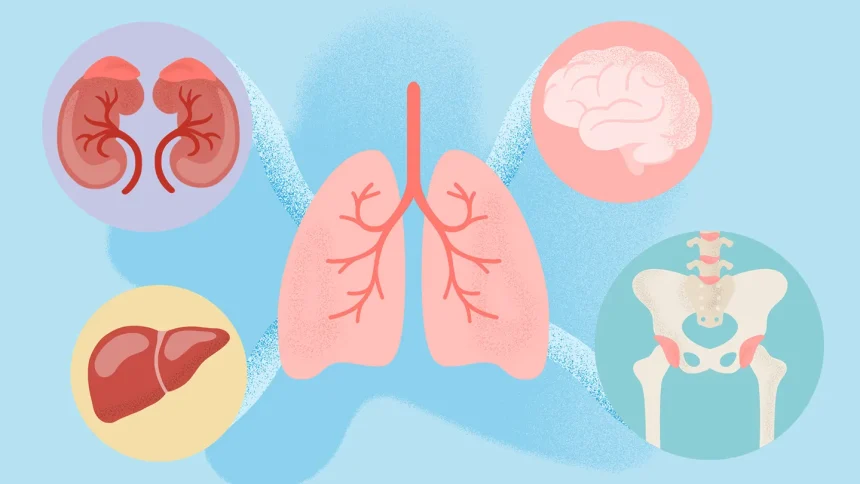
Understanding Metastatic Pathways: Where Lung Cancer Frequently Migrates
When lung cancer advances beyond its primary site, it follows specific biological pathways to colonize other regions of the body. While the disease has the potential to affect various organs, clinical data highlights specific areas that are statistically more susceptible to secondary tumor growth.
Skeletal Involvement: The Prevalence of Bone Metastasis
The skeletal system is one of the most frequent destinations for metastatic non-small cell lung cancer (NSCLC). Current clinical research indicates that between 30% and 40% of NSCLC patients will experience bone involvement during their illness. Notably, roughly 60% of individuals may already present with skeletal metastases at the moment of their initial diagnosis.
While the disease can theoretically infiltrate any part of the skeletal structure, it shows a distinct preference for the spine, pelvis, ribs, and the long bones of the limbs. Often, these secondary growths remain asymptomatic in the early stages, meaning they are frequently identified only after the patient reports localized discomfort or structural complications.
To identify these metastatic sites, oncologists utilize a variety of diagnostic imaging tools. These include:
* CT scans
* Bone scintigraphy (bone scans)
* Magnetic resonance imaging (MRI)
* Positron emission tomography (PET) scans
* Standard X-ray radiography
Neurological Spread: Brain Metastases
The brain is another primary site for metastatic progression. Depending on the specific genetic profile and mutation status of the primary tumor, approximately 16% to 20% of lung cancer patients will develop secondary tumors within the brain. Because the blood-brain barrier can sometimes shield cancer cells from certain systemic treatments, monitoring neurological health is a critical component of comprehensive cancer care.