



Unearthing the Shadows: A Look at Sophie McIntosh’s Benevolent
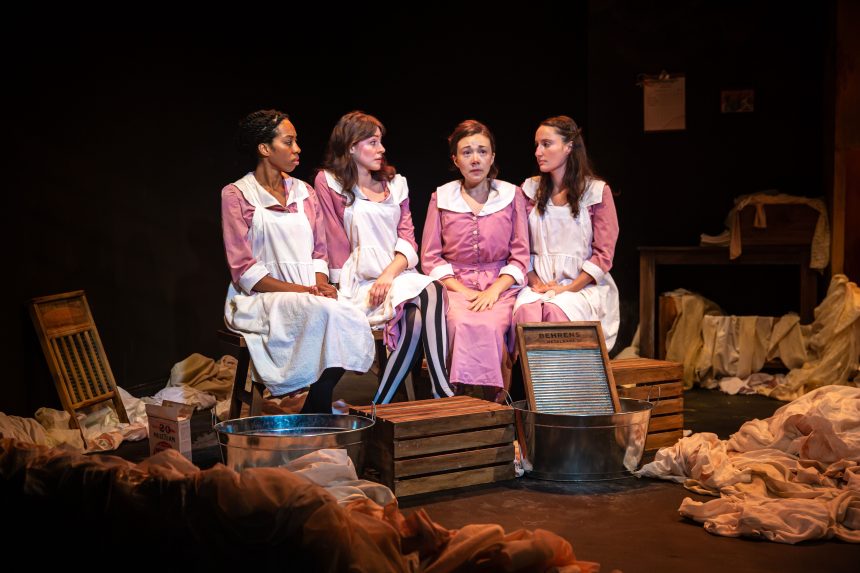
Set against the backdrop of 1917, the theatrical production Benevolent offers a harrowing glimpse into the lives of marginalized women confined to the Inwood Benevolent Home. Written by playwright Sophie McIntosh-known for her previous work Macbitches-and helmed by director Nina Goodheart, the play transforms a claustrophobic basement laundry room into a stage for resilience and systemic critique.
The Cycle of Labor and Confinement
The production’s staging is intentionally oppressive. The central focus is a laundry chute that relentlessly deposits soiled linens, forcing the four protagonists into a Sisyphean cycle of scrubbing. This repetitive, grueling labor serves as a visceral metaphor for the societal expectations placed upon “fallen” women during the early 20th century. Much like the historical reality of the Inwood House, which operated as a reformatory for women deemed “wayward” by the state, the play highlights how institutions often prioritized the erasure of individuality through forced domestic servitude.
Portraits of Resilience
The narrative centers on four distinct women, each navigating the trauma of their incarceration through different lenses:
* Abby (Livvy Marcus): At 17, she is the youngest of the group, struggling to reconcile her sheltered upbringing with the harsh reality of the home.
* Emma (Mia Fowler): A Black woman whose background as a sex worker in a low-cost establishment provides a grounded, mature perspective on the intersection of race and class.
* Margaret (Chani Reese): Possessing a sharp, abrasive edge, Margaret’s experience in higher-end brothels highlights the racial disparities that even existed within the sex trade of the era.
* Sarah (Rachel Ravel): The group’s emotional anchor, Sarah brings a sense of optimism despite her past as a panhandler on the Coney Island Boardwalk-a location famously dubbed “Sodom by the Sea.”
As the play progresses, these characters move past their initial frictions, forming a fragile but necessary bond. Their interactions serve as a microcosm for the broader struggles of women in the 1910s, a decade where, according to historical labor statistics, women were increasingly entering the workforce yet remained largely unprotected by the legal systems meant to “reform” them.
The Vision Behind the Collective
The creative synergy between McIntosh and Goodheart is the driving force behind the production. As co-founders of the Good Apples Collective, the duo continues to prioritize stories that challenge traditional theatrical narratives. By focusing on the forgotten voices of the Inwood Home, they invite audiences to reconsider how history remembers-or chooses to ignore-the women who were pushed to the fringes of society.
Photo: Nina Goodheart