



The Future of Game Testing: Side and Modl.ai Forge a Strategic AI Partnership
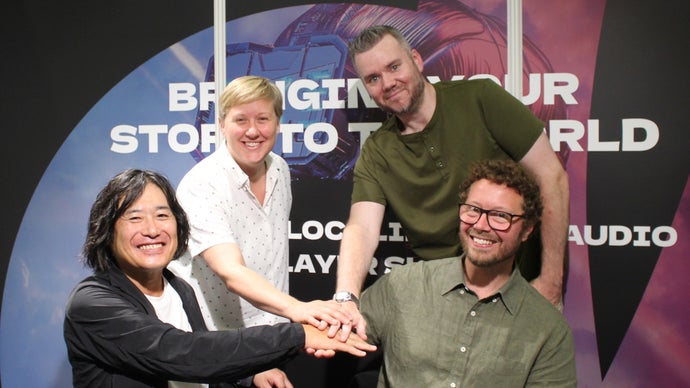
The landscape of game development is shifting as industry veterans and emerging tech innovators join forces to solve one of the most persistent bottlenecks in production: quality assurance (QA). Recently, the service provider Side (formerly known as PTW) entered into a formal memorandum of understanding (MOU) with the Copenhagen-based artificial intelligence specialist, Modl.ai. This six-month binding agreement marks a significant step toward integrating machine learning into the standard QA pipeline.
Bridging Experience with Innovation
Side brings decades of industry expertise to the table, having established itself as a cornerstone in the gaming services sector. In contrast, Modl.ai represents the new wave of game-tech startups. Since its inception in 2018, Modl.ai has gained significant traction, notably securing $1.7 million in seed funding by 2020 to refine its proprietary AI engines.
According to Martin McBride, Chief Commercial Officer at Side, this collaboration is designed to tackle the “holy grail” of game development: the seamless augmentation of human-led QA through intelligent automation. While many firms have attempted to solve this, McBride believes the industry has yet to see a truly comprehensive solution-until now.
Redefining the QA Workflow
Historically, AI-driven testing tools have been cumbersome. Developers were often required to package and transmit entire game builds to external QA firms, creating significant friction and security concerns. This traditional “black box” approach meant that testing was often reactive rather than iterative.
By combining Side’s deep understanding of testing methodologies with Modl.ai’s technical infrastructure, the partnership aims to move away from these legacy bottlenecks. The goal is to create a more fluid, integrated system that allows for real-time testing without the logistical overhead that has plagued previous iterations of automated QA.
Why Human Oversight Remains Non-Negotiable
Despite the excitement surrounding AI, both companies emphasize that automation is not a replacement for human intuition. In the current market, where game complexity is at an all-time high-with open-world titles often requiring thousands of hours of testing-AI serves as a force multiplier rather than a substitute.
Human testers provide the nuanced feedback, emotional resonance, and creative problem-solving that algorithms currently lack. By automating repetitive, low-level tasks, the partnership allows human experts to focus on high-level gameplay experience and edge-case scenarios that require a human touch. This “human-in-the-loop” philosophy ensures that while the speed of testing increases, the quality of the final player experience remains protected.