


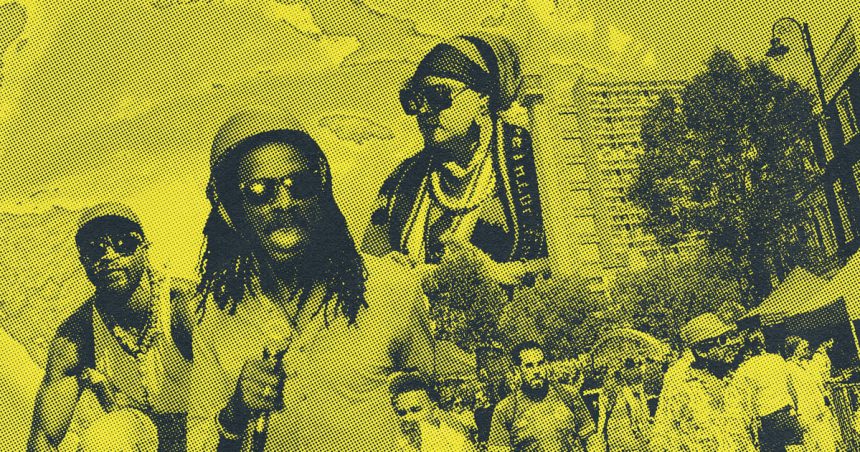
Beyond the Bank Holiday: Why Caribbean Soundscapes Deserve Year-Round Recognition
With the Notting Hill Carnival marking its monumental 60th anniversary, industry expert and Caribbean culture advocate Ray Paul argues that the vibrant rhythms of the islands should be a permanent fixture in our cultural consciousness, rather than a seasonal indulgence.
- By: Ray Paul | Photography: Holly Ziegler
- 27 August 2026
For many of us, the transition from late August into September serves as a natural checkpoint. It is a time when the crispness of autumn begins to replace the lingering warmth of summer, signaling the inevitable shift from light layers to the heavy-duty protection of winter coats and scarves. Yet, for those of us based in West London, this period is defined by something far more rhythmic: the arrival of the Notting Hill Carnival.
This year’s festivities carry a unique weight. Celebrating six decades of the 60th anniversary of the Notting Hill Carnival is a milestone that demands more than just a weekend of revelry. It arrives at a moment when the UK is navigating a turbulent social climate, marked by the alarming rise of far-right ideologies and a pervasive sense of national discord. In an era where social cohesion is being tested, the unifying power of Caribbean music is more vital than ever.
Defining Identity Through Rhythm
As a Black Briton, my sense of self has always been rooted in my ancestry rather than a colonial label. I do not identify with the traditional constructs of “Englishness” or “Britishness.” Instead, my identity is firmly anchored in my Caribbean heritage; I am, first and foremost, an islander. This distinction is crucial because it highlights how Caribbean music-from the deep basslines of reggae to the high-energy pulse of soca-acts as a vessel for cultural preservation and pride.
A Call for Consistent Celebration
The danger of limiting Caribbean culture to a single weekend in August is that it risks turning a profound historical legacy into a mere performance. Just as the global influence of dancehall and calypso continues to shape modern pop music, our appreciation for these genres should be constant. We must move toward a model where the spirit of Carnival is integrated into our daily lives, ensuring that the contributions of the Windrush generation and their descendants are honored throughout the calendar year, not just when the sound systems are out on the streets.