




## The Daisy Chain Phenomenon: A New Era of Festival Culture
Stepping off the transport bus and onto the grounds of Daisy Chain Fields, the atmosphere was immediately palpable. Even with the mercury climbing past a sweltering 103 degrees, the collective energy of the crowd remained remarkably high. This isn’t just another music event; Daisy Chain has cultivated a unique identity rooted in philanthropy and empowerment. To date, the festival has generated an impressive $20 million-a figure bolstered by a generous matching grant from Melissa French Gates-which is distributed among ten non-profits dedicated to advancing the lives of women and girls globally.
### A Lineup Defined by Legacy and Innovation
At the heart of this movement is festival founder and pop powerhouse Olivia Rodrigo. By curating a stage dominated by female voices, Rodrigo has created a space that feels both revolutionary and inclusive. The roster featured a dynamic mix of rising stars like Chappell Roan and Doechii alongside the raw, influential energy of Bikini Kill.
The event also served as a bridge between generations of female icons. Seeing legends like Stevie Nicks and Alanis Morissette share the spotlight with the next generation of talent was a highlight for many. Notably, the presence of Sarah McLachlan-the visionary behind the iconic Lilith Fair-felt like a passing of the torch. Rodrigo has frequently cited McLachlan as her primary creative influence, and that lineage of female-led musical spaces was evident throughout the weekend.
### The Aesthetic of Empowerment: Daisy Chain Style
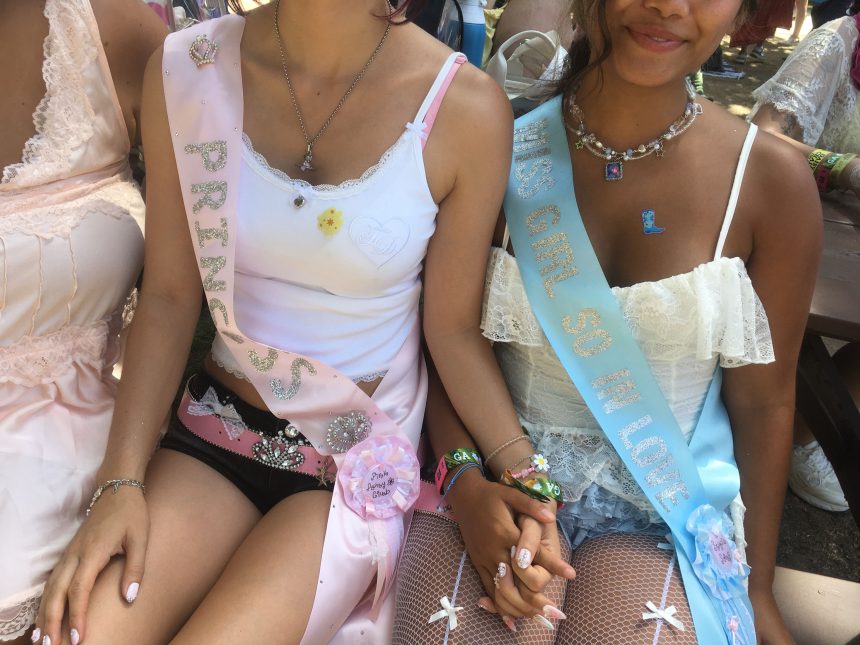
The fashion at Daisy Chain was as much a statement as the music itself. Despite the oppressive heat, attendees leaned into a distinct, expressive aesthetic. While classic festival staples like sneakers and denim cut-offs were present, they were elevated by a specific, intentional style.
Floral crowns fashioned from daisies were ubiquitous, reflecting the festival’s namesake, while hair crystals caught the desert light. Political expression also took center stage, with tote bags and lapels adorned with protest-style pins. However, the true sartorial MVP of the weekend was the babydoll dress. Perfectly capturing the moody, romantic aesthetic of Rodrigo’s *You Look Pretty Sad for a Girl So in Love* era, the garment proved that comfort and high-fashion sensibilities can coexist, even in triple-digit temperatures.