





## Beyond Aesthetics: Elena Velez and the Architecture of Conflict
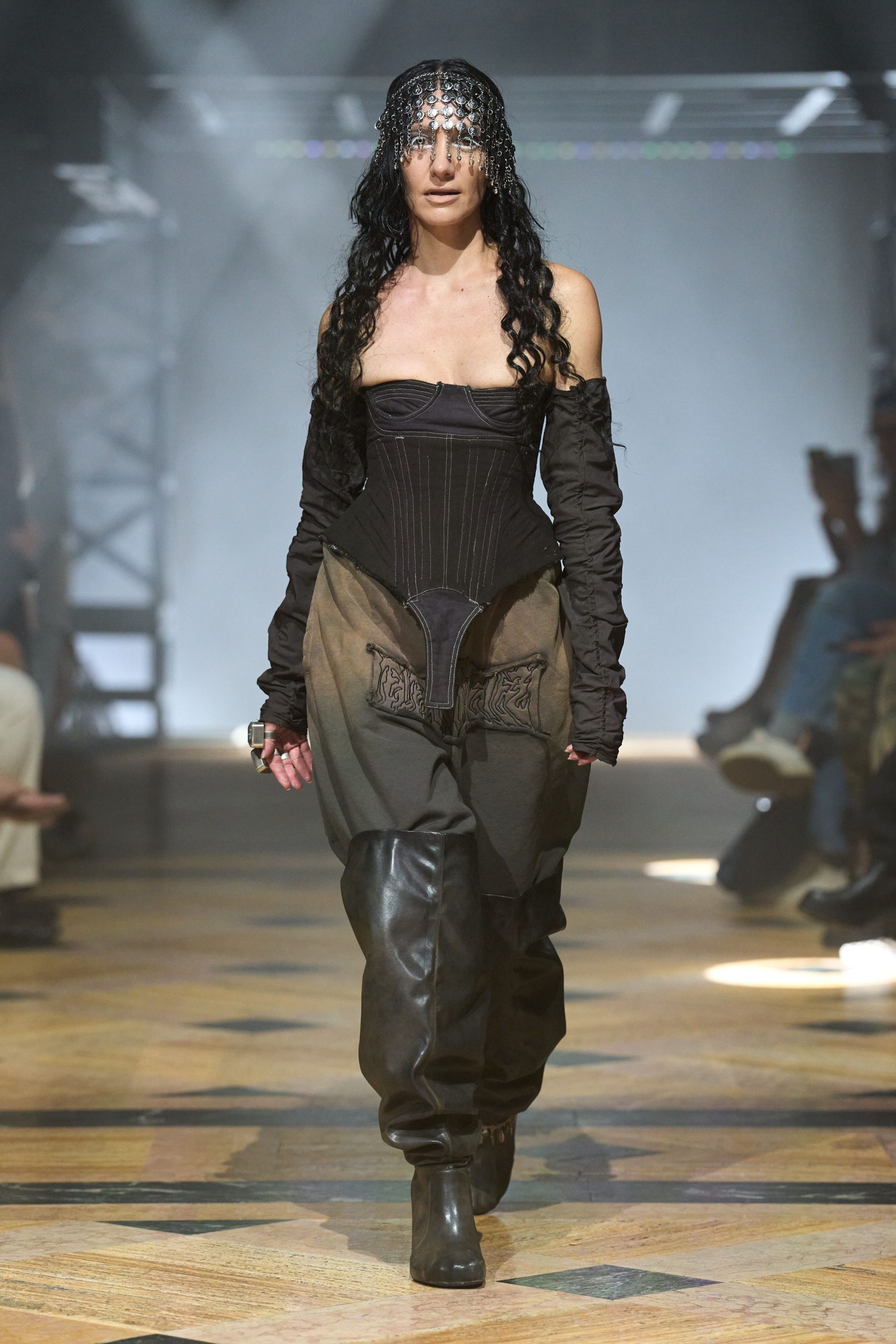
While many fashion designers draw their creative spark from the escapism of a cinematic masterpiece or the serene imagery of a beach getaway, Elena Velez operates in a different intellectual sphere. Her work is deeply rooted in the visceral realities of the modern geopolitical landscape. Her spring collection, *SMITE*, serves as a prime example of this departure from traditional design inspiration. Rather than focusing on seasonal trends, the collection functions as a complex critique of systemic aggression, questioning the thin line between righteous indignation and outright brutality.
### Fashion as a Socio-Political Mirror
Velez’s approach is less about seasonal color palettes and more about translating the collective anxiety of our era into wearable art. In a recent interview following her runway presentation, Velez explained that her process involves internalizing global instability-ranging from the fragmentation of political discourse to the harsh realities of modern warfare-and transmuting those heavy themes into garments that are as confrontational as they are sophisticated.
This season, the designer leaned heavily into the concept of “weaponized morality.” By exploring the paradoxes of human behavior, Velez challenges the audience to reconsider the binary labels of “good” and “evil.” Her work suggests that the clothes we wear can act as a medium for examining militant tribalism and the cyclical nature of interpersonal violence. As the industry shifts toward more conscious consumption, Velez’s work aligns with a growing trend of “activist fashion,” where designers use their platforms to address the 70% of Gen Z consumers who report preferring brands that take a stand on social issues.
### The Duality of “Aggressively Delicate” Design
Velez has cultivated a reputation as a provocateur, a label she embraces by leaning into the tension between opposing forces. She describes her signature aesthetic as “aggressively delicate,” a phrase that perfectly encapsulates the juxtaposition found in her silhouettes.
By blending raw, industrial elements with refined craftsmanship, she creates a visual language that mirrors the hyper-polarity of contemporary society. Her collections do not merely decorate the body; they interrogate the wearer’s relationship with power, morality, and the societal structures that govern our daily lives. In a world increasingly defined by division, Velez’s work stands as a stark reminder that fashion remains one of our most potent tools for cultural commentary.