





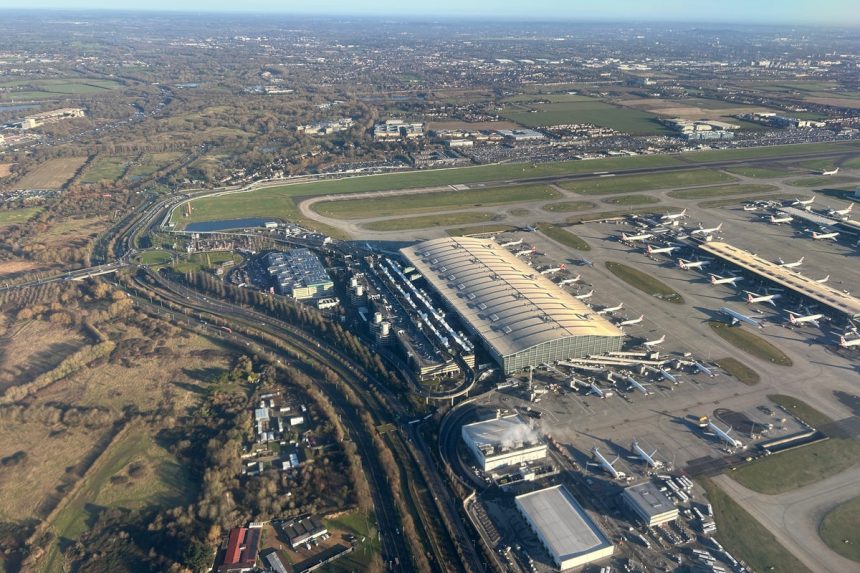
Balancing Heathrow’s Growth with Net-Zero Ambitions
The long-debated third runway at Heathrow remains a contentious issue, with recent guidance suggesting that expansion should be strictly contingent upon the aviation industry achieving significant milestones in lowering carbon dioxide emissions.
A Conditional Green Light
According to a comprehensive analysis by the Climate Change Committee (CCC)-the statutory body tasked with monitoring the UK’s progress under the 2008 Climate Change Act-the airport’s growth plans are incompatible with national environmental targets unless specific, rigorous conditions are met. The committee emphasizes that any increase in capacity must be tethered to a verifiable transition toward cleaner energy sources.
Strategies for Decarbonization
To align with the UK’s legal commitment to reach net-zero by 2050, the CCC has proposed a multi-faceted approach for the aviation sector:
* Mandatory Decarbonization Costs: The government is encouraged to enforce policies where the industry bears the financial burden of its environmental footprint.
* Sustainable Aviation Fuel (SAF) Integration: A massive scale-up in the production and adoption of SAF is essential to replace traditional kerosene.
* Carbon Removal Technology: The report advocates for the deployment of engineered carbon capture and storage (CCS) systems, which actively extract CO2 from the air to offset unavoidable flight emissions.
The committee maintains that these measures are the only viable pathway to ensure that expanding Heathrow does not derail the nation’s carbon budget.
The Economic Impact on Travelers
While these environmental safeguards are necessary, they come with a clear economic trade-off. The CCC acknowledges that the costs associated with transitioning to greener fuels and investing in carbon removal infrastructure will almost certainly be reflected in consumer costs.
As the industry shifts toward these cleaner technologies, passengers should anticipate a rise in airfares. Projections suggest that by 2050, the cost of a return flight could see significant surcharges to cover these green initiatives. For instance, a trip to a European destination like Alicante could see an increase of approximately £150, while long-haul travel to hubs like New York might become £400 more expensive.
Ultimately, the future of Heathrow’s expansion hinges on whether the aviation sector can successfully decouple its growth from its environmental impact, or if the cost of flying will become the primary mechanism for curbing demand.