



The Rise of Voice AI and the Critical Need for Synthetic Testing
The landscape of artificial intelligence is currently dominated by the rapid expansion of Voice AI. From automated customer service agents and high-efficiency sales bots to sophisticated meeting transcription tools and wearable smart glasses, voice has become the primary interface for human-machine interaction. As venture capital firms inject billions into this sector, the race is on for AI labs to release more capable models and for hardware manufacturers to refine the user experience.
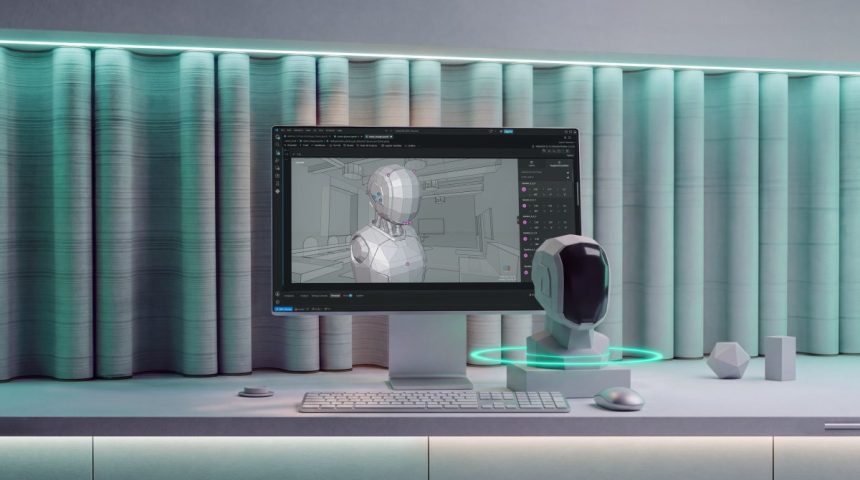
However, the sheer speed of innovation creates a significant challenge: how do you ensure these systems perform reliably in the real world? To bridge the gap between laboratory development and consumer-ready performance, developers require robust testing environments and continuous feedback loops. This is where Treble, an Iceland-based startup, is carving out a vital niche by providing a simulation platform designed specifically for the needs of robotics firms, hardware manufacturers, and AI model developers.
Bridging the Gap: Treble’s Simulation Ecosystem
Founded in 2020 by acoustic engineering experts Finnur Pind and Jesper Pedersen, Treble addresses the complexities of sound in virtual environments. By simulating how audio behaves in various physical spaces, the company allows developers to train their AI models on synthetic data that mirrors real-world acoustic challenges-such as background noise, echoes, and spatial audio interference-before a device ever hits the market.
The industry’s reliance on such tools is growing as consumer expectations for voice-activated devices rise. According to recent market analysis, the global voice and speech recognition market is projected to reach over $50 billion by 2029, driven by the integration of AI into everyday consumer electronics. Treble’s platform acts as a digital twin for sound, ensuring that voice-enabled hardware can “hear” and process commands accurately, regardless of the environment.
Strategic Growth and Industry Adoption
Treble’s approach has garnered significant attention from both the investment community and major tech players. The company recently secured $18 million in a Series A extension round, spearheaded by Paladin Capital Group. This latest injection of capital, which follows a $12 million round in 2024, brings the startup’s total funding to more than $40 million. Existing backers, including KOMPAS VC, Frumtak Ventures, EIC, and Omega ehf, continue to support the company’s vision.
The startup’s credibility is further bolstered by its impressive client roster, which includes industry giants like Amazon and Logitech. By integrating Treble’s simulation technology, these companies can accelerate their product development cycles, reducing the need for costly and time-consuming physical prototyping in sound-proof chambers.
The Future of Acoustic Simulation
As Voice AI continues to evolve, the demand for high-fidelity simulation will only intensify. Treble is currently focusing on several key verticals, ranging from advanced acoustic modeling to synthetic data generation, ensuring that the next generation of voice-first devices is more intuitive and reliable than ever before.