




The Paradox of Aging: Why Your Calendar Seems to Accelerate
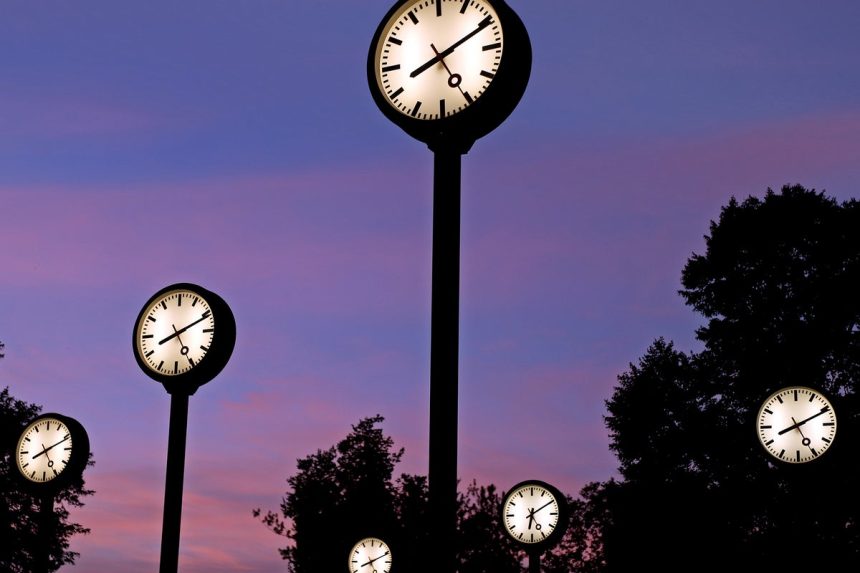
We often remark that “time flies,” a sentiment that feels increasingly accurate as we transition from childhood into adulthood. While the clock on the wall ticks at a constant, rhythmic pace, our internal experience of those seconds, hours, and years often feels like it is shifting into high gear. Is this merely a nostalgic illusion, or is there a biological and psychological basis for the sensation that life is moving faster?
The Disconnect Between Chronology and Perception
Scientific inquiry into the nature of temporal perception has revealed a fascinating discrepancy. A pivotal 2019 study featured in the European Review by Cambridge University Press highlights a fundamental “misalignment between mental-image time and clock time.”
In essence, while we rely on the objective 24-hour cycle to organize our society, our brains do not process duration with the same mechanical precision. Instead, our perception of time is deeply tethered to the density of new information and experiences we process. When we are young, the world is a constant stream of novel stimuli, forcing the brain to work harder to encode memories. As we age, we rely more on routines and familiar patterns, which requires less cognitive effort-making the days feel as though they are blurring together.
The Proportional Theory: A Mathematical Perspective
One of the most compelling explanations for this phenomenon is the “proportional theory,” a concept explored by experts at ReachLink. This theory suggests that our perception of a year is relative to the total amount of time we have already lived.
To visualize this, consider the following:
* At age 5: A single year represents 20% of your entire existence. It feels like an eternity because it is a massive chunk of your life history.
* At age 50: That same 12-month period accounts for only 2% of your life.
Because each passing year represents a smaller fraction of your total memory bank, the brain perceives it as a shorter, less significant interval. This mathematical reality explains why a summer vacation felt like a lifetime when you were a child, yet a decade seems to vanish in the blink of an eye during middle age.
Why Routine Makes Time “Disappear”
Beyond the math, the way we structure our lives plays a critical role. Research suggests that the brain uses “memory markers” to measure time. When you are a child, you are constantly hitting milestones-learning to ride a bike, your first day of school, or discovering a new hobby. These unique events act as anchors in your memory.
As adults, we often fall into repetitive cycles-commuting, working, and managing household chores. Because these activities are predictable, the brain stops recording them as distinct, vivid memories. When you look back at a month spent in a repetitive routine, your brain struggles to find unique “files” to retrieve, leading to the sensation that the time simply evaporated.
To combat this, psychologists often suggest introducing “novelty” into your schedule-traveling to new places, learning a complex skill, or changing your daily environment-to force the brain to slow down and pay closer attention to the present moment.