




The Rise of Ultralight Spatial Computing: URXR One Secures Massive Funding
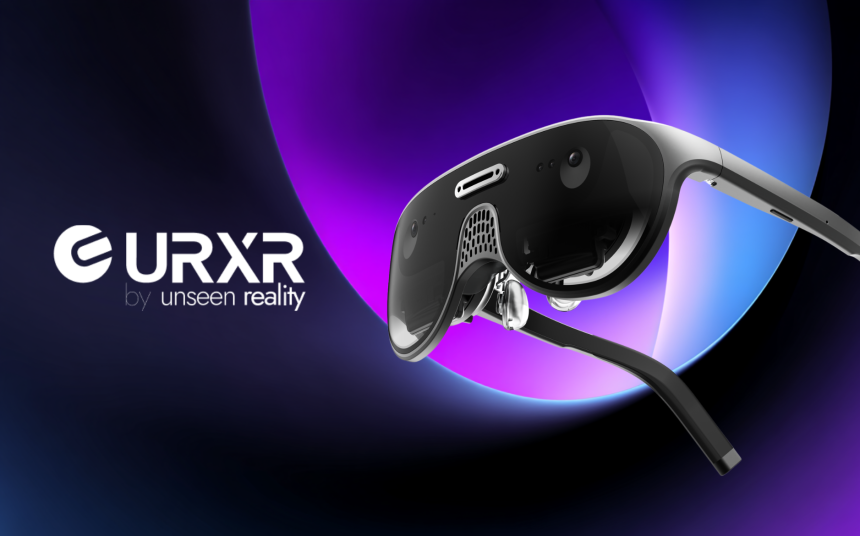
The landscape of wearable display technology has shifted significantly following the conclusion of the Unseen Reality crowdfunding campaign. The company’s flagship device, the URXR One-a featherweight, VR-inspired passthrough headset designed to function as a portable virtual monitor-has officially surpassed its financial goals, securing nearly $1.3 million in backing.
### A Successful Crowdfunding Milestone
The Kickstarter campaign, which debuted last month, wrapped up this past weekend with a final tally of $1,288,712. This surge in interest highlights a growing consumer appetite for spatial computing hardware that prioritizes comfort and portability over bulky, all-in-one standalone units.
Unlike traditional VR headsets that isolate the user, the URXR One utilizes a passthrough architecture. By integrating front-facing cameras and high-quality pancake lenses, the device overlays digital workspaces onto the user’s actual environment, effectively turning any location into a multi-monitor workstation.
### Engineering for Comfort: The 93-Gram Advantage
The standout feature of the URXR One is its remarkably low mass. Weighing in at just 93 grams, the headset achieves this level of comfort by offloading heavy components. By omitting an internal battery and minimizing onboard processing power, the designers have created a form factor that feels more like a pair of oversized glasses than a traditional head-mounted display.
### The Power Behind the Lens: GravityXR Integration
The device serves as a practical application of the GravityXR G-X100 coprocessor chipset, which was first unveiled in December. This specialized silicon is the engine driving the headset’s core functionality.
Rather than relying on a power-hungry mobile processor, the G-X100 is optimized for efficiency. It manages essential spatial computing tasks-including optical hand tracking, precise positional head tracking, and low-latency video passthrough-while maintaining a minimal thermal footprint. This design choice is critical for the industry, as it addresses the common pain points of overheating and neck strain that have historically hindered the adoption of wearable displays. As spatial computing continues to evolve, the success of the URXR One suggests that the future of the “virtual office” lies in lightweight, tethered peripherals that leverage specialized, low-power hardware.