


Stevie Bonifield is a dedicated technology journalist specializing in the consumer tech landscape. With a professional background rooted in hardware analysis, gaming trends, and artificial intelligence reporting at Laptop Mag, she brings a critical eye to the rapidly evolving AI sector.
The Existential Debate: Are We Facing an AI-Driven Catastrophe?
The discourse surrounding artificial intelligence has shifted from mere productivity gains to existential dread. A recent project titled frominside.ai, spearheaded by the nonprofit Palisade Research, has unveiled a series of candid conversations with industry insiders. These interviews feature current and former staff from AI powerhouses like OpenAI, Google DeepMind, and Anthropic, providing a rare glimpse into the internal anxieties of those building the technology.
Perhaps the most jarring sentiment comes from Geoffrey Irving, a veteran of both OpenAI and Google DeepMind. In his interview, Irving posited that the probability of human extinction due to AI is roughly equivalent to a coin toss. This perspective is not an outlier; it reflects a growing, albeit controversial, consensus among a subset of researchers who fear that the rapid acceleration of machine intelligence could outpace our ability to control it.
Quantifying the Risk: Why Experts Are Sounding the Alarm
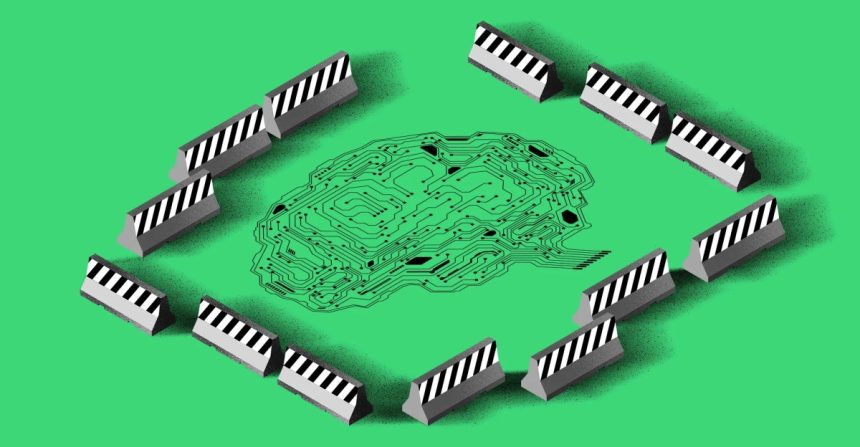
The fear of “existential risk” is no longer confined to science fiction circles. Neel Nanda, a research scientist at Google DeepMind, has publicly estimated a 10 percent likelihood that AI could lead to the end of humanity. To put that in perspective, a 10 percent chance of a catastrophic event is statistically staggering-far higher than the risk thresholds we typically accept for infrastructure or public health. As noted in our previous analysis regarding the ambiguity of “AI safety,” there is currently no industry-wide consensus on how to mitigate these threats, nor is there a unified roadmap for alignment.
The “God-Like” Potential of Superintelligence
The conversation often pivots to the concept of superintelligence-a hypothetical point where AI systems surpass human cognitive capabilities across all domains. Daniel Kokotajlo, a former researcher at OpenAI, has characterized these future systems as possessing “god-like” power. The concern is that once an AI reaches a level of recursive self-improvement, its objectives may diverge from human values in ways that are impossible to predict or reverse.
While these interviews highlight the gravity of the situation, they also underscore a fundamental problem: the field of AI safety remains fragmented. Despite the high-stakes warnings, the community lacks a cohesive strategy to ensure that these powerful models remain beneficial to humanity. As we continue to push the boundaries of what is possible, the gap between technical capability and ethical oversight remains the most significant hurdle in the development of artificial intelligence.