
![Project Hail Mary’s Rocky Actor Points Out A Subtle Detail You May Have Missed [Exclusive]](https://www.mixtv1.com/wp-content/uploads/2026/10/41184-attachment.jpg)


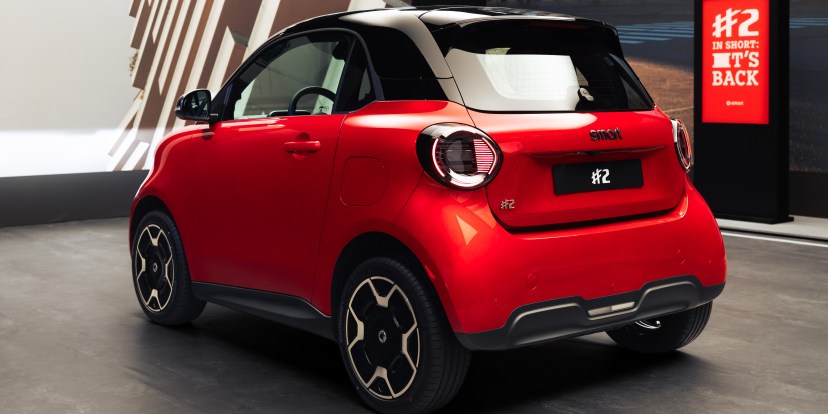
The Smart #2: A Fresh Chapter for the Iconic City Commuter
The legendary Smart ForTwo is officially making a comeback, shedding its past limitations to embrace a fully modernized electric identity. Unveiled at the 2026 Paris Motor Show, the all-new Smart #2 represents a significant leap forward for the brand. Unlike previous iterations that often felt like adaptations of existing tech, this model is built upon the bespoke Electric Compact Architecture (ECA), a platform engineered from the ground up specifically to optimize the performance and efficiency of a compact two-seater.
Performance Tailored for Urban Environments
While the automotive industry is currently obsessed with massive battery packs and long-range highway cruisers, the Smart #2 doubles down on its core mission: mastering the urban jungle. The vehicle is powered by a rear-mounted electric motor that delivers 80 horsepower and 130 Nm of torque. While these figures might seem modest compared to modern performance EVs, they are perfectly calibrated for the stop-and-go nature of metropolitan driving.
In terms of real-world capability, the Smart #2 achieves a 0-100 km/h sprint in 11.6 seconds. With a top speed electronically limited to 140 km/h, the vehicle is more than capable of handling ring roads and suburban bypasses while maintaining the agility that made the original ForTwo a global icon. By focusing on a lightweight footprint rather than raw power, Smart is prioritizing energy efficiency-a critical factor as urban centers continue to implement stricter emission zones and parking regulations.
Why the ECA Platform Matters
The transition to the Electric Compact Architecture (ECA) is the most significant upgrade for the Smart #2. By utilizing a dedicated EV platform, engineers have been able to maximize interior space despite the car’s diminutive exterior dimensions. This shift allows for better weight distribution and a lower center of gravity, which translates to a more planted, stable driving experience compared to the previous generation. As cities become increasingly congested, the Smart #2’s ability to navigate tight alleys and fit into “micro-parking” spots remains its greatest competitive advantage in a market saturated with oversized SUVs.