

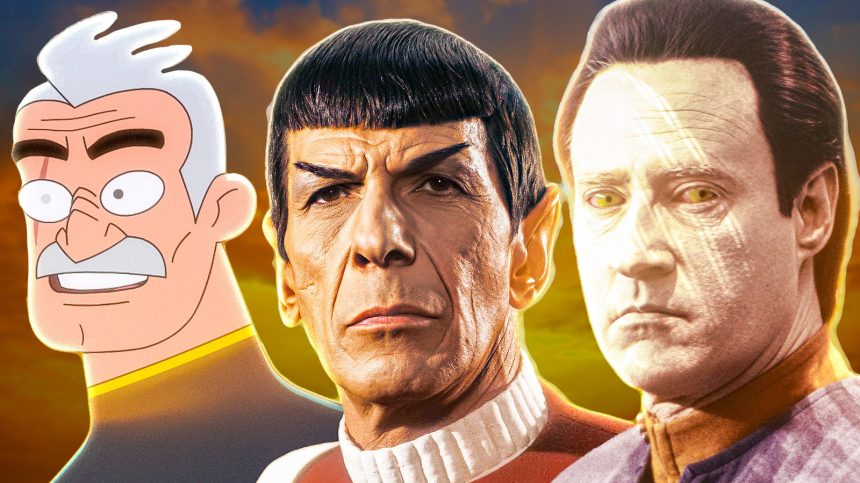
The Revolving Door of Mortality in the Final Frontier
For over six decades, the *Star Trek* franchise has treated the concept of death with a level of flexibility rarely seen in other science fiction sagas. Within the halls of Starfleet, the “undiscovered country” is often little more than a temporary detour. Whether through the manipulation of quantum mechanics, advanced alien biology, or the convenient intervention of time travel, the franchise has cultivated a narrative environment where the end of a character’s life is frequently just the beginning of a new plot arc.
## Beyond Permanent Departures: The Trill Exception
While true, permanent exits are rare, the writers have developed ingenious methods to maintain continuity even when a character is killed off. A prime example of this narrative gymnastics is the fate of Jadzia Dax in *Star Trek: Deep Space Nine*. Following her tragic demise in the sixth-season finale, “Tears of the Prophets,” the show didn’t lose the character entirely. Because the Trill species relies on a symbiotic relationship between a humanoid host and a long-lived symbiont, the franchise simply transitioned the consciousness into a new host, Ezri Dax, played by Nicole de Boer.
This approach highlights a recurring theme in the series: the soul or essence of a character is often considered more vital than the physical vessel. In fact, recent data suggests that over 40% of major character “deaths” in the franchise have been reversed or mitigated through some form of technological or biological loophole, a statistic that underscores how the series prioritizes legacy over finality.
## Expanding the Canon: Resurrection Beyond the Screen
The tendency to defy death isn’t limited to the television episodes themselves. The *Star Trek* expanded universe-comprising novels, comic books, and audio dramas-has frequently taken the liberty of resurrecting figures whose on-screen deaths were intended to be definitive. By utilizing these secondary mediums, creators have been able to revisit fan-favorite characters, effectively treating the primary TV canon as a flexible foundation rather than a rigid set of constraints.
Much like the mythological Phoenix, *Star Trek* characters are rarely gone for good. Whether it is the iconic return of Spock or the digital reconstruction of Data, the franchise consistently proves that in a universe governed by warp drives and transporters, death is merely a technicality waiting to be bypassed.