



Empowering the Ronin Ecosystem: A New Era of Governance
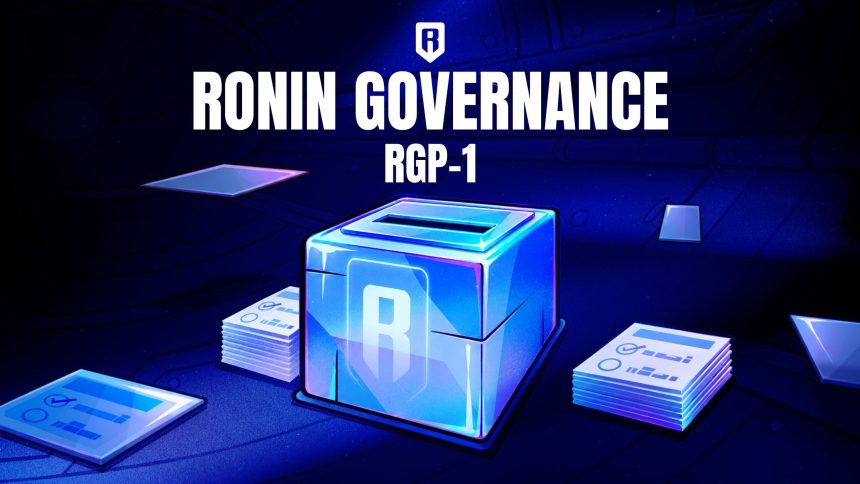
The Ronin network has officially entered a new phase of decentralized decision-making with the introduction of its first community governance proposal. Known as RGP-1, this initiative invites RON token holders to weigh in on a strategic shift: utilizing treasury assets to bolster liquidity within Katana, the ecosystem’s native decentralized exchange (DEX).
Strategic Capital Allocation via RGP-1
At its core, RGP-1 serves as a pilot program designed to test how the network’s idle treasury funds can be leveraged to stimulate the token economy while simultaneously creating a sustainable revenue stream for the Ronin ecosystem. By transitioning from a passive holding strategy to an active market-making role, the community aims to enhance the overall health and stability of the network.
The proposal outlines a calculated deployment of approximately $185,000, which represents roughly 17% of the treasury’s current valuation of $1.1 million. The execution strategy involves:
- Allocating $92,000 worth of WETH (22 WETH) and USDC (39,500 USDC).
- Matching these assets with an equivalent value of RON tokens.
- Distributing these funds across the RON/WETH and RON/USDC liquidity pools on Katana.
How Liquidity Provision Drives Network Growth
To understand the impact of this proposal, it is helpful to view liquidity pools as the “engine room” of a decentralized exchange. Unlike traditional order books where buyers and sellers must match directly, liquidity pools allow users to trade against a reserve of assets. When participants deposit pairs of tokens into these pools, they act as market makers, ensuring that trades can be executed smoothly and with minimal price slippage.
On the Katana V2 platform, this process is incentivized through trading fees. As users swap tokens, a portion of the transaction cost is collected by the pool. These fees are then distributed to liquidity providers proportionally, based on their contribution to the total pool size. By injecting treasury funds into these pools, the Ronin network is essentially positioning itself to capture a share of the trading volume, turning the treasury into a self-sustaining asset that generates yield for the ecosystem.
The Broader Impact on Decentralized Finance
This move mirrors a growing trend in the Web3 space, where DAOs (Decentralized Autonomous Organizations) are increasingly moving away from hoarding capital toward “Protocol Owned Liquidity” (POL). By owning the liquidity that powers their own exchange, projects like Ronin reduce their reliance on external market makers and ensure that the benefits of trading activity remain within the community. As the DeFi landscape matures, such governance-led initiatives are becoming essential for projects looking to maintain long-term competitive advantages in a crowded market.