


Transforming Education: How Google Gemini’s Immersive Explorations Bring Concepts to Life
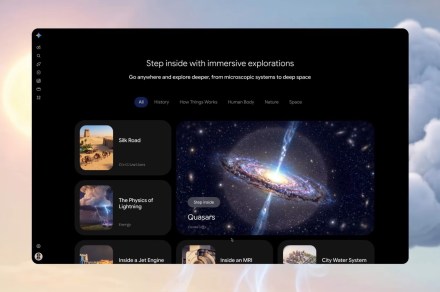
Traditional academic study often feels stagnant, relying on static diagrams or dense paragraphs that fail to capture the imagination. To bridge the gap between abstract theory and genuine understanding, Google is evolving its Gemini platform to prioritize visual engagement. Through a new initiative called Immersive Explorations, the tech giant is transforming how users interact with intricate subjects, moving away from rote memorization toward a dynamic, hands-on learning model.
A New Era of Interactive Learning
The core philosophy behind Immersive Explorations is to replace passive reading with active discovery. By leveraging AI-driven visual storytelling, Gemini allows users to peel back the layers of complex systems. Instead of simply reading about how a mechanism functions, you can now interact with it, effectively “dissecting” the topic to see how individual components contribute to the whole.
This shift is timely; recent educational research suggests that interactive, multimodal learning can improve information retention by up to 40% compared to text-only instruction. By integrating these visual tools, Google is positioning Gemini as a powerful supplement for students and lifelong learners alike.
How the Technology Functions
At its heart, the feature utilizes a layered interface that prioritizes user-led inquiry. Rather than presenting a wall of text, the system provides a high-level overview that users can expand upon at their own pace.
* Layered Discovery: Users can start with a broad concept and drill down into granular details, such as the molecular structure of a material or the specific physics governing a natural phenomenon.
* Guided Interaction: By clicking on specific labels or zooming into particular segments of a 3D model, the AI provides context-aware explanations that adapt to the user’s focus.
* Visual Context: Whether you are examining the mechanics of a turbine or the historical geography of ancient civilizations, the visual feedback loop ensures that the information remains grounded in a tangible, observable format.
Beyond the Textbook: Real-World Applications
Google’s initial rollout of this feature demonstrates a wide range of utility. For instance, rather than just reading about the Silk Road, a user can visualize the expansion of trade networks across continents, clicking on specific hubs to understand the economic impact of those routes. Similarly, exploring the internal combustion of a jet engine becomes an exercise in mechanical engineering, where users can isolate parts to see how airflow and fuel injection interact in real-time.
This approach mirrors the “learning by doing” methodology, which has long been considered the gold standard for mastering technical subjects. By making these experiences accessible directly within the Gemini interface, Google is effectively democratizing access to high-level visual simulations that were previously reserved for specialized software or expensive educational tools.