



Beyond Theology: The Secular Case Against Mandatory AI Integration
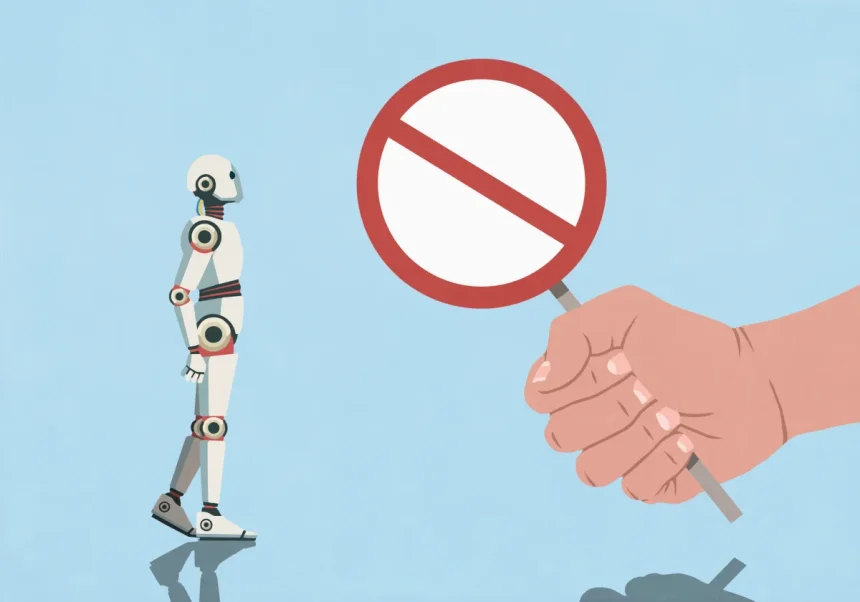
The debate surrounding artificial intelligence often centers on religious leaders, such as Pope Leo XIV, who have voiced concerns regarding the technology’s potential to undermine human dignity. However, the apprehension toward AI is not confined to traditional religious circles. A growing movement of secular individuals is now challenging the mandatory adoption of AI in the workplace, citing deeply held philosophical convictions that mirror the protections typically afforded to religious beliefs.
Defining Humanism in the Age of Automation
David Durman, an administrator at the University of Kentucky, recently made headlines by successfully obtaining a religious exemption from using AI tools in his professional duties. As a nontheistic Humanist, Durman argues that his opposition to AI is rooted in a structured ethical framework rather than a belief in a deity.
“Humanism is a collection of beliefs about the human experience and how humans interact with the world,” Durman explained in an interview. He emphasizes that the core of his philosophy is the pursuit of individual and collective flourishing. For Durman, the ethical imperative is to actively enhance one’s own well-being and contribute positively to the lives of others. This perspective is increasingly relevant as recent data from the 2024 Pew Research Center reports indicate that nearly 30% of U.S. adults now identify as religiously unaffiliated, a demographic that is increasingly seeking to apply their secular values to modern workplace challenges.
The Philosophical Conflict: Cognitive Agency vs. Algorithmic Reliance
Durman’s journey began when he reached out to the American Humanist Association (AHA), a prominent organization dedicated to promoting secular humanism. He sought to understand how his philosophical stance could be legally recognized as a protected belief system, shielding him from being forced to utilize AI systems that he views as fundamentally incompatible with his worldview.
The crux of his argument lies in the nature of moral agency. Durman posits that human morality is forged through the rigorous, active application of the mind. By delegating cognitive tasks to algorithms, he fears that individuals are effectively outsourcing their moral development. Much like a student who relies on a calculator to learn basic arithmetic might lose the ability to grasp the underlying logic of mathematics, Durman argues that relying on AI to draft communications or make decisions diminishes the human capacity for critical thought and ethical discernment.
Setting a Precedent for Workplace Autonomy
This case highlights a shifting landscape in labor law and corporate policy. As AI becomes ubiquitous, the definition of “sincerely held beliefs” is being tested in new ways. Just as an employee might request an accommodation for a dietary restriction or a day of worship, the legal system is beginning to grapple with how to accommodate those whose secular philosophies dictate a rejection of specific technologies.
By framing his objection through the lens of Humanism, Durman is not merely expressing a personal preference; he is asserting that the preservation of human cognitive effort is a moral necessity. As organizations continue to push for rapid AI integration, the tension between corporate efficiency and individual philosophical autonomy is likely to become a defining labor issue of the decade.