
Co-streaming shouldn’t count towards actual esports tournament viewership: Esports Insider debates
- Details
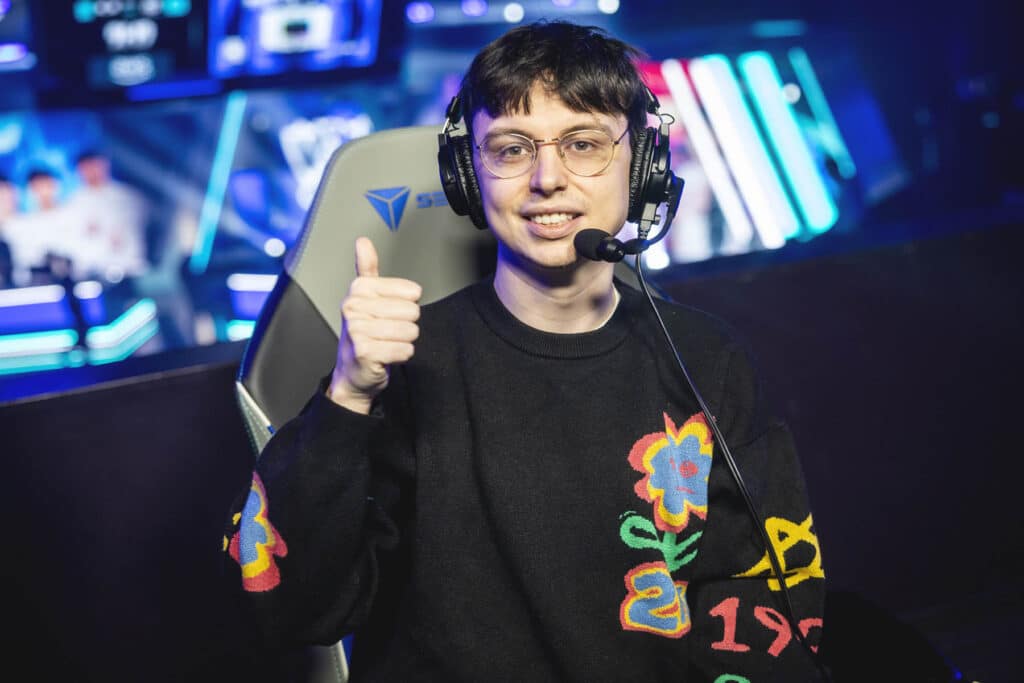 Image credit: Colin Young-Wolff, Riot Games
Co-streaming has become a huge part of the esports ecosystem, for better or worse. The industry has mixed feelings about co-streaming’s place in esports, so we figured we’d share our own opinions.
Aaron Alford is a professional debater, and I’m just here to rant and rave about a topic. But we are both just having some fun looking at an interesting and complex topic in our industry. However, see if either of us convinced you of anything.
Olivia’s Opening Argument: Co-Streaming Boosts Viewership, But It Doesn’t Reflect the Truth
I was recently covering the RLCS 2026 Paris Major because Rocket League fans were wondering why this major had such a massive viewership decline compared to the Boston Major. I know people love to say that things are “dying” constantly around here, but it’s actually the opposite. Rocket League was never super popular, and Boston’s numbers did not reflect the actual fanbase.
That’s because Boston had massively inflated viewership since extremely popular variety streamer Nicholas “Jynxzi” Stewart had been co-streaming. With nearly 16 million followers between his Twitch and YouTube, Jynxzi had plenty of built-in, loyal viewers that would have watched him whether it was the RLCS Boston Major or just him farting and playing Among Us.

When Jynxzi didn’t co-stream the Paris Major, the fans didn’t stick around to keep watching the RLCS. They remained on Jynxzi’s Twitch watching him play whatever game was next on his schedule. Rocket League didn’t gain a massive number of fans and the viewership went back to normal.
I’m here to argue that co-streamers are an awesome addition to the esports ecosystem in many ways, but they don’t actually prove that esports tournaments have a large number of viewers.
Another example of that is League of Legends esports. League of Legends is viewed far more than Rocket League, but its numbers are still inflated by co-streamers. In 2025, co-streamers surpassed official broadcasts for tournament hours watched. The esports community even acknowledged that Marc “Caedrel” Lamont was practically required to co-stream LoL Esports or the viewership would decline drastically.
I’m not here to say that viewership doesn’t increase when popular co-streamers are involved. That’s is obvious. I’m here to say, once more, that these viewership stats don’t actually mean that esports is gaining popularity or fans. These people are watching because they would watch anything the streamer does. Therefore, I don’t count these viewership numbers towards the esports event itself. They count in the sense that they are a number, but it doesn’t count as genuine interest in esports.
And why does this matter? It doesn’t. I just like debating with Aaron (even though it’s intimidating). But I would like to point out that many esports scenes, like the FGC, are also frustrated by publishers’ and tournament organizers’ desperation to inflate esports’ popularity rather than focus on actual fans.
Shoving streamers and content creators into events will get random people to tune in and make the tournament get more ad revenue or fake popularity, sure. But it takes away from the realness of these events. It shouldn’t be about the streamers and their fans. It should be about the top pro players and their talent. It should be about the community, the ones that actually care about the game and the players.
Co-streaming isn’t terrible. A few people may stick around and become fans of the esport title on their own after seeing the content creator stream it. And that’s the point. However, I don’t think this happens as often as people think. Based on numbers.
But again, don’t listen to me. I’m just here to see if I can hold my own in this debate.
Aaron’s Counter-Argument: Community Matters, Community Is Real
Co-streaming, a broadcast format that allows certain streamers to watch-party an event, has become a mainstay of the esports broadcast scene, as Olivia pointed out.
Not only have costreams helped build community and awareness around different esports, but they are also contributing significant numbers of viewers to events — this I do not question. In some cases, co-streamers have been known to exceed even the official broadcast in viewers, as was the case at the peak of Tarik’s viewership for VALORANT esports events.
But does that mean, saying that the esport isn’t popular, because the views are coming through watch parties instead?

I disagree with those who would question the validity of these views. While it is true that some number of viewers on a co-stream would not have otherwise tuned into the event, the popularity of costreams does not take away from the success of an esport — it shows that the esport is a spectacle that can hold the attention of casual and hardcore fans alike when its brought to their attention.
But more importantly, it demonstrates that success in esports isn’t just about how many people can name all the players on stage, it’s about the ability to foster community.
Unlike traditional franchise sports, esports don’t have the benefit of tens millions of dollars in corporate sponsorship on every event, with their athletes showing up on cereal boxes (unless it’s Faker), and where their tournaments are celebrated across broadcast television and broader culture as the next big thing (perhaps with the exception of something like League of Legends Worlds).
They rely on word of mouth and organic growth, and one of the methods of organic growth is co-streaming.
Competitive scenes aren’t just about sick nasty gameplay. They are about connecting with like-minded people and experiencing the drama of sports together. They are, in a very real sense, about connection. Even in the case of Jynxi watching RLCS, suggesting they weren’t a valid part of the viewership is like suggesting that Swifties who tuned in to watch the Chiefs don’t demonstrate the NFL’s success.
Speaking of the NFL, even in that league, co-streamers are becoming an extension of sports culture. Much like how the NFL has its ManningCast, where Eli and Peyton Manning watch American football games, so too does esports costreaming culture add to the ecosystem of esports — even when only a temporary boost. The mistake is believing that costreaming audiences are somehow separate from the esport and its culture.
Even if Jynxi doesn’t show up to every RLCS event, the fact that he tuned in at all shows the esport is reaching broader audiences.
I think the mistake here is believing there is such a thing as absolute popularity, a quantity that can be measured and derived absent cultural context. There is a reason people go to Super Bowl parties in the United States, even if they don’t watch the regular season. There is a reason that everyone gets together to watch the World Cup, even if they don’t watch soccer regularly. It’s because sports are more fun together, and sports peak at certain moments due to a variety of factors — all of them valid.
Esports is still pretty niche. It doesn’t have the same physically located locus of culture that sports has in the form of sports bars. It simply hasn’t grown big enough in many parts of the world to support esports bars (though they exist in some places). For many fans, if you want the experience of watching esports with a community, with fellow fans of the sport or the same team, watch parties are the best way to do that.
To suggest that these viewers aren’t valid, even if they are just there because their favorite streamer is costreaming, is to ignore almost entirely the social aspect of watching sports.
Sports is social, esports is too, and every viewer is valid no matter who.
Olivia’s Final Argument: Esports Isn’t Growing Just Because Streamers Inflate Numbers
The thing is, esports isn’t a traditional sport. There are no pay-per-view games (usually), merch barely sells, there aren’t men breaking televisions when Team Liquid loses at a Counter-Strike major. Esports are nowhere near as big, which could explain why so many companies and publications focus on views. It’s like they are trying to prove that fans exist, that esports is growing.
Because it needs to.
Watch parties are super fun for esports fans who don’t feel so isolated in their fandom anymore. Maybe they even force their friends to go and see what it’s like. Maybe. And co-streaming is neat, temporarily boosting viewership and engagement as non-esports fans check out what’s going on because they want to see what their favorite streamer is yapping about.
But again, these kinds of things shouldn’t really count as factual viewership numbers, especially if we want to pretend that the viewership increased. All viewers are valid as people. I hope they had a fun time checking it out. However, these viewership stats still don’t count for me if we are talking about strict data and attempting to prove esports is growing. Or getting watched at all.
Claiming that the RLCS Boston Major was massive and counts as some Rocket League record is just silly. People see that and run with it, claiming that the game is growing and has all this potential. The reality? Those Jynxzi fans did not stick around. All it did was make the Paris Major look sorta like a failure when in reality the Boston Major was just a farce. Yes, those views did happen. But if we want to really look at how an esport is doing, it’s all skewed now.

Remember when Ludwig said he wanted to have the “biggest” Rivals of Aether II tournament ever so he bought people’s tickets to get them to register? Same idea. It’s now the biggest one. Congrats. But it’s not real if we want to go by actual interest. Many of those people will drop out and do something else at Evo, which will actually negatively impact that bracket. You can argue that it’s “all in good fun” or that it’s “supporting community” or “getting people out there.”
And I’d agree. But the interest is still fake. Those numbers are exaggerated. Those people are not clamoring to compete in Rivals of Aether. They are just supporting Ludwig, a streamer they like, and getting free tickets to an event. Some people even said on Reddit that they weren’t going to Evo at all. They were selected after signing up for the free three-day pass, but couldn’t actually get to Las Vegas. It’s all just a publicity stunt at the end of the day.
That “word-of-mouth” tactic inflated numbers for the weekend, but didn’t create an impactful number of fans that will stick around for the next one.
Going by patterns, the next tournament will have waaay less registration. And very little viewership. And those are the numbers I’m going by. I’m not saying that Evo won’t be fun or that these guys with free tickets won’t fiddle around with the game. I’m saying that the true fighting game players are still quite low compared to the exaggerated hype. Do with that information what you will.
But at the end of the day, co-streamer numbers don’t count when you’re trying to calculate esports’ actual growth and success. They only create temporary fun moments.
Aaron’s Closing Argument: Co-Stream Viewership Counts, And It’s Valid
You have asserted that co-streaming shouldn’t be considered real views that show a growing interest in an esport. Unfortunately, you have failed to provide a standard by which we can delineate “real” from “fake” co-streamers. If we have to choose between throwing out all the viewership data from co-streams, or keeping it all, we should err on the side of keeping it all.
In your response, you started by arguing that sports and esports differ in size, and that’s why focus on views matters more in esports than in sports. This is not true. Ratings for sports is a big discussion in traditional sports – views matter for both.
Whether sports and esports are the same size is irrelevant to the question of whether or not we should count costreamer views as part of the valid viewership of an event. The goal of viewership data is to accurately represent the number of people who watched an event, period. If millions of viewers tuned in via costreamering instead of the official stream, regardless of who those costreamers are or their relationship to the esport, they should be counted to maintain the most accurate view count possible.
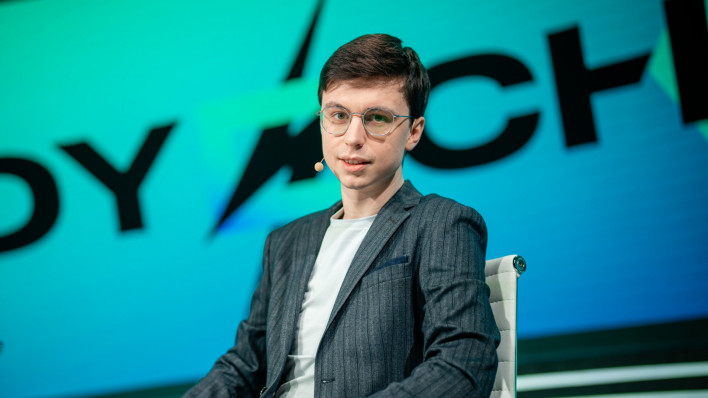 Image Credit: Michal Konkol/Riot Games
Sure, interpretation of that data from an intelligent person will take into account factors like Jynxi co-streaming the event, where the event was held, the time zone it was held in, the popularity of the teams that did well at the event, and more. Strong data analysis will easily control for outliers. But your suggestion isn’t that we should adjust our understanding of growth based on costreaming, your argument is that we should ignore costreaming data, because it is irrelevant to the question of whether an esports is growing or not.
This is analytically flawed.
Nothing you have said here in any way demonstrates that co-streaming views aren’t actual valid views. Given that many people who are watching co-streams would have watched the official stream if there was not a co-streamer watch partying the event, there is no way to fairly determine which viewers were just casuals passing through and which ones would have watched another streamer or the official stream, so throwing out all costreamer data doesn’t actually improve your understanding of the growth of the esport.
The thrust of your objection is that Jynxi watching a Rocket League event is an outlier, so it doesn’t speak to the growth of the esport generally. But the fact is, you have presented no criterion to decide which views should be thrown out and which ones should be kept. Viewership did go up because Jynxi watched, that’s factual.
Going back to my previous example, should NFL viewership for Super Bowl LVll be thrown out because Travis Kelce brought Switfies out of the woodwork? After all, those Swifties won’t watch now that he retired, right? But the NFL had no issue bragging about its 113 million viewers who tuned in to watch.
Why should esports hold itself to an arbitrary standard, where we split hairs to determine which views are valid, when the biggest sports leagues in the world don’t?
Your entire discussion about the Ludwig drama is irrelevant to this topic. Nothing about it is about co-streamers or esports viewership, that is a discussion of a streamer who allegedly manipulated Evo’s rules to promote his game. Jynxi didn’t manipulate his view count, he didn’t engage in the inflation of views, he just co-streamed an event fair and square. The situations aren’t similar, and can’t be compared.
These are the facts. Co-streaming is here, it’s here to stay, and the views garnered for an event when an opinion leader co-streamed it are fair game to include when we discuss the event’s total viewership.
The post Co-streaming shouldn’t count towards actual esports tournament viewership: Esports Insider debates appeared first on Esports Insider.
PROČITAJ VIŠE... https://esportsinsider.com/2026/06/co-streaming-counts-tournament-viewership-debate
MIXTV PUSH

VEZANE VIJESTI ZDRAVLJE
Jelovnik za vrijeme zračenja prostate: Koja hrana pomaže?
Sve što morate znati o beta-glukanu: Moćno vlakno koje dokazano čuva srce i jača imunitet
G2 Esports Brings Fantasy Webcomic Red Aura to Global Audiences on WEBTOON
May-Thurnerov sindrom: skriveni poremećaj cirkulacije koji povećava rizik od duboke venske tromboze
7 vrsta magnezija: Koji je oblik najbolji za vas?
Esports or Stock Market? Valve's New CS2 Sticker System Makes Top 100 Cologne 2026 Stickers Cost $19,447!
CoD Black Ops 7 Season 4 Update: New Modes, Battle Pass Rewards, and Patch Notes Overview
Kada tijelo šalje signale upozorenja: 9 znakova da vam je hitno potreban predah
Novi trend u svijetu parfema: osvježavajuće voćne note trešanja i višanja vraćaju se u fokus

POPULARNO
DJI starts teasing the Osmo Pocket 4P, confirms its cameras
RedMagic officially unveils the 11S Pro's launch date
DJI Osmo Mobile 8P smartphone gimbal is here with a detachable remote control
iQOO Neo12 key specs tipped, may offer an active cooling fan
Pair of upcoming Xbox controllers emerges in listings
Total Wireless announces new unlimited plans backed by Verizon's 5G network
DJI reveals the Osmo Pocket 4P tailored for independent filmmakers
Biste li preživjeli udar asteroida koji je izbrisao dinosaure? Znanstvenici objavili jezivu simulaciju
U Zagrebu se održava AI radionica na kojoj će polaznice učiti vibe coding
LLM, RAG, RLHF... Ako vas zbunjuju izrazi iz svijeta AI-a, ovo je vodič za vas
Samsung Galaxy M47 runs Geekbench, reveals the chipset powering it
Punisher: Posljednje ubojstvo – Frank Castle protiv Disneyjeve igre na sigurno
Kuo: Apple is testing iPhone chipset production at Intel
Hakom: Kakvoće komunikacijskih usluga za drugo polugodište 2025.
Zaigrali smo Forza Horizon 6: Jurcanje Japanom prilagođeno svakome
AYANEO teases its upcoming Game Boy-like gaming device called KONKR Pocket BLOCK
Startup dobio 650 miilijuna USD za AI koji se sam razvija i popravlja
Samsung's Exynos 2700 SoC for Galaxy S27 series to reportedly ditch WLP technology
Jedan je Neptunov mjesec drukčiji od ostalih. Uz pomoć Jamesa Webba sad možda znamo zašto
The Samsung Galaxy Watch Ultra 2 might have a 5G-less version
MediaTek unveils Dimensity 8550 with LLM Booster and support for Gemini Nano V3
Span Cyber Security Arena otvorila teme AI-a, ransomwarea i sigurnosti u cloudu
Meta lansirala Forum, Reddit izgubio šest posto vrijednosti u jednom danu
Xiaomi gives us our best official look yet at the 17T, reveals magnification of 17T series' telephoto cameras
Lažni regruteri, zaraženi videopozivi i špijunaža: Ovako su djelovali iranski hakeri
Spotify's new Personal Podcast feature lets you create podcasts with text prompts
Oppo Reno16 series stars in quick videos just a few days ahead of the official unveiling
OpenAI launches ChatGPT Finance, lets you connect your bank accounts
Virtualna stvarnost daje ti krila: VR reprogramira mozak
Verizon joins Project Glasswing to test Anthropic's Claude Mythos model on its infrastructure
Samsung Galaxy Tab S10 FE and FE+ receive One UI 8.5 stable update, rollout for S23 FE begins in India
Tecno Pova 8 Pro certifications reveal its battery capacity, RAM and storage
The Huawei Mate 90 series will feature a 3nm-like Kirin chip
Roboti osvajaju burze: Tko će pobijediti u novoj investicijskoj groznici teškoj milijarde?
Procesor svemirskog superračunala 500 puta brži od drugih
Najveći AI incidenti mnogo su prozaičniji od očekivanog
Najudaljenija svemirska letjelica gotovo svjetlosni dan od Zemlje
Realme announces return to Finnish market on May 18 with three devices
These Android phones will soon receive AirDrop support in Quick Share
Muzej povijesti videoigara slavi prvi rođendan uz poklone i gostovanje legende igraće industrije
I vaš digitalni život treba temeljito sezonsko čišćenje. Imamo nekoliko ideja i prijedloga
Nije trajalo ni godinu dana: Starbucks odustao od praćenja zaliha umjetnom inteligencijom
AT&T's Build-A-Plan lets you pick and choose what you need and how much you pay
Hakerske prijetnje rastu, a Hrvatska priprema nove obrambene mehanizme
Koliko god zvučalo nevjerojatno, Bungie je najavio kraj Destinyja 2 u lipnju
Trump Mobile confirms that it exposed customer data
A1 Hrvatska i Ericsson Nikola Tesla nastavljaju suradnju u području radijske mreže
ViennaUP 2026 okupio preko 14.000 sudionika iz više od 90 zemalja
Apple snima MLS utakmicu iPhoneom, cijeli prijenos bez klasičnih TV kamera
Napušio se pa izgubio lozinku za bitcoine, Claude mu nakon 13 godina otključao bogatstvo
Trump ima vlastitu društvenu mrežu, ali na TikToku broji milijune pregleda
Honor Win 2 specs leak alongside some details about the Win 2 RT
The future may not be very bright for the Oppo Find X10 Pro Max
Korisnici Androida sada mogu dijeliti datoteke s iPhoneom putem QR koda
SpaceX najavio prvi komercijalni let Starshipa s posadom oko Marsa
Verizon partners with David Beckham to give its customers free tickets to the FIFA World Cup
Godinama nakon Snapchata, Instagram je omogućio nestajuće fotografije
Originalni ključ za Office Pro 14,49 €, ključ za Windows 6,29 € – isporuka u 1 sekundi
Svi je imamo na računalu, a malo tko je koristi: Ova aplikacija otključava niz genijalnih opcija
Apple već testira Intelovu proizvodnju čipova za iPhone

XTRA
- 1
- 2
- 3

Netko je patentirao WC ugrađen pod suvozačko sjedalo? Seres!
18-04-2026
Kineski proizvođač automobila Seres zatražio je patent za inovativni sustav toaleta ...

'Ako je samo pola od onoga što se govori o Mythosu točno, to je već zastrašujuće'
18-04-2026
Alat za obranu ili potencijalno najopasnije kibernetičko oružje dosad? AI sustav koj...

Sedam godina nakon Exodusa, najavljen Metro 2039
18-04-2026
Glavni protagonist novog nastavka serijala Metro je nepoznati junak koji se u djetin...

The best islands in Thailand to visit for family holidays, yoga retreats and parties on the beach
17-04-2026
There is a Thai island for every type of traveller, including party-goers, chilled-...

Najbolji ljetni festivali 2026: od Szigeta do skrivenih regionalnih dragulja
15-04-2026
Ljetna sezona u Hrvatskoj i široj regiji ponovno nudi nevjerojatan raspon glazbenih...

Sony osjetno podiže cijene PlayStationa 5
27-03-2026
Sve verzije PlayStationa 5 u Europi poskupljuju, a najviše je nastradao PlayStation ...
Austrija uvodi zabranu društvenih mreža za mlađe od 14 godina
27-03-2026
Austrijska trostranačka vlada, predvođena konzervativcima, planira uvesti zabranu ko...

Ultra Miami 2026 Drop Set Times And Announce Swedish House Mafia Takeover
26-03-2026
Ultra Music Festival 2026 has officially dropped its set times and site map just da...

Artificial Detective je nova akcijska avantura koju nam donose veterani gaming i filmske industrije okupljeni u novom st…
26-03-2026
VIVIX, novi studio iz San Francisca koji je okupio brojna poznata imena iz gaming ind...