



The Retention Crisis: Why Netflix Struggles to Keep Subscribers Hooked
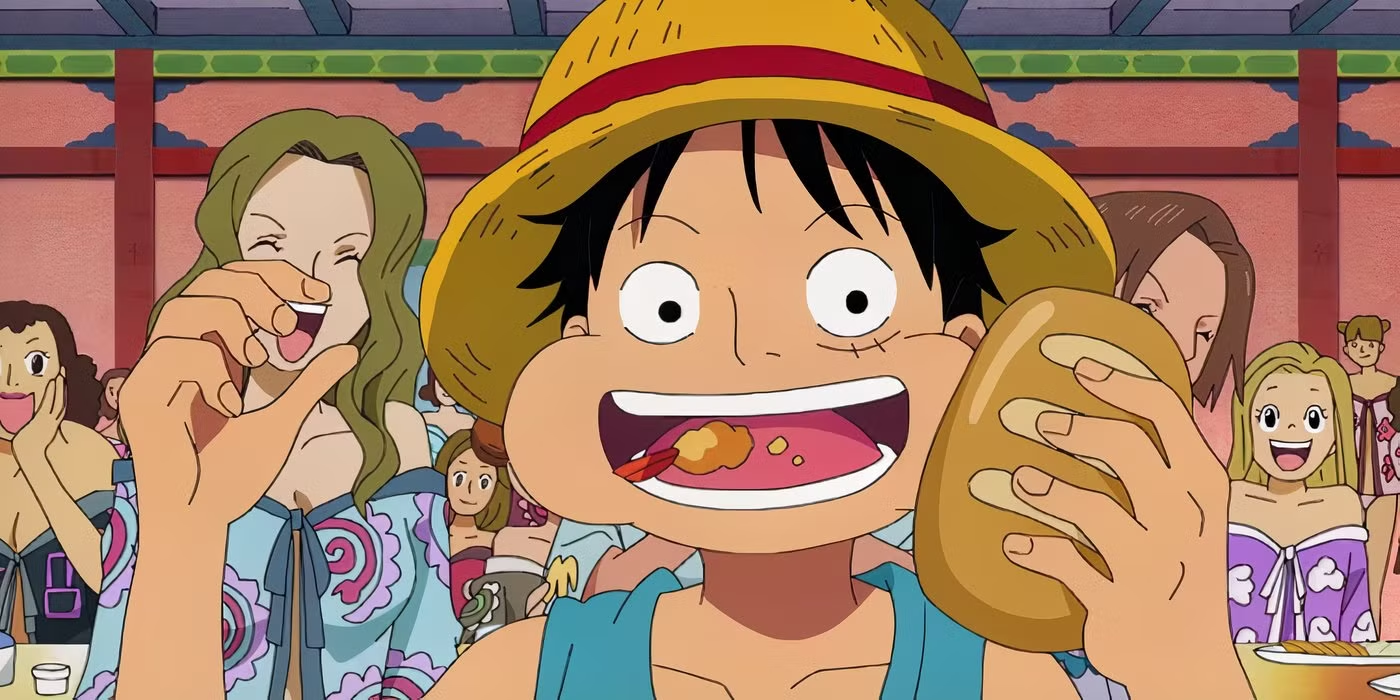
Despite maintaining its status as the world’s dominant subscription video-on-demand service, Netflix is facing a persistent, structural challenge: keeping audiences engaged beyond the initial season of its original programming. Data indicates a significant “drop-off” phenomenon, where high-profile hits fail to retain their momentum upon returning. For instance, recent anthology projects have seen viewership plummet by as much as 70% between installments. Even massive, high-budget adaptations like Avatar: The Last Airbender and One Piece have struggled to convert their initial hype into long-term, multi-season loyalty.
The Internal Friction: Production Costs and Scheduling
A primary driver of this attrition is the platform’s own operational strategy. Netflix has developed a reputation for “churning” series-canceling shows just as they reach the point of peak production costs. This creates a cynical feedback loop: viewers become hesitant to invest time in new narratives, fearing they will be left with unresolved cliffhangers.
Furthermore, the “content gap” has widened significantly. Industry reports show that the average hiatus between seasons of scripted television has expanded, often stretching to two years or more. In an era of instant gratification, this delay acts as a natural deterrent, causing viewers to lose their emotional connection to characters and plotlines before a follow-up ever arrives.
The Battle for Attention: The Rise of Short-Form Media
Netflix is no longer just competing with Disney+ or HBO; it is fighting for the finite attention span of the modern consumer against the algorithmic dominance of TikTok and YouTube. Recent data suggests that the average American adult now spends nearly as much time scrolling through short-form video feeds as they do watching long-form streaming content.
This shift has forced Netflix to pivot toward diversification. By integrating mobile gaming, live sports broadcasts, and video-based podcasts, the company is attempting to capture the “micro-moments” of leisure time. However, there is a fundamental economic hurdle: TikTok and YouTube are free, ad-supported ecosystems. Netflix’s attempt to mimic this by experimenting with short-form clips faces an uphill battle, as it is difficult to justify a monthly subscription fee for content that is readily available elsewhere at no cost.
The “Binge” Paradox and the Erosion of Cultural Longevity
Netflix’s original claim to fame-the “binge-watch” model-has arguably become its greatest liability. By training audiences to consume entire seasons in a single weekend, the platform effectively kills the “water cooler” effect. In the past, weekly releases allowed shows to build cultural capital and word-of-mouth buzz over several months. Today, a show is often the center of the social media conversation for exactly three days before being discarded for the next trending title.
While the company has experimented with splitting seasons or releasing episodes weekly, this shift feels like a reactive measure rather than a proactive strategy. The binge-culture genie is out of the bottle, and it has fundamentally altered
The Netflix Dilemma: Why Consistency Matters More Than Ever
For years, Netflix relied on massive cultural touchstones like Stranger Things to anchor its platform. Even as the narrative quality of that series fluctuated, its massive, built-in fanbase ensured that viewership numbers remained astronomical. However, the streaming giant is discovering that this “too big to fail” model doesn’t apply to every new intellectual property. Recent high-profile attempts to launch flagship series, such as the live-action Avatar: The Last Airbender, have struggled to capture the same magic, often facing immediate backlash from long-time devotees of the source material.
Beyond the Hype: The Cost of Creative Instability
The current landscape of streaming is far more competitive than it was a decade ago. With platforms like Disney+, Max, and Apple TV+ aggressively vying for market share, Netflix can no longer afford to treat its original programming as disposable content. When a show launches with a “limping” start, it doesn’t just lose viewers; it erodes brand trust.
According to recent industry analysis, audience retention is the primary metric that separates long-term streaming success from short-term spikes. While Netflix has historically prioritized rapid growth and high-volume output, the current market climate suggests that a shift in philosophy is necessary. Instead of constantly chasing the next viral hit, the company must pivot toward cultivating “sticky” content-shows that foster deep, long-term engagement rather than just a weekend of binge-watching.


A Strategic Pivot: Patience Over Profitability
To regain its competitive edge, Netflix needs to commit to a strategy of endurance. This involves:
- Investing in Long-Term Development: Rather than rushing adaptations to market, the platform should prioritize creative fidelity and narrative depth to satisfy existing fanbases.
- Commitment to Renewal: The “cancel-first” culture that has plagued many mid-tier Netflix shows needs to be replaced with a willingness to let series find their footing over multiple seasons.
- Quality Control as a Growth Metric: While stockholders often demand immediate quarterly gains, the long-term health of the platform depends on building a library of prestige content that keeps subscribers paying month after month.
This approach is admittedly a difficult sell for investors who prioritize immediate returns. However, in an era where consumers are increasingly selective about which subscriptions they maintain, the cost of “churn”-subscribers canceling their accounts-is far higher than the cost of nurturing a show until it finds its audience. If Netflix wants to prevent its rivals from capturing its market share, it must stop treating its shows like temporary experiments and start treating them like the foundational pillars of a sustainable entertainment ecosystem.