
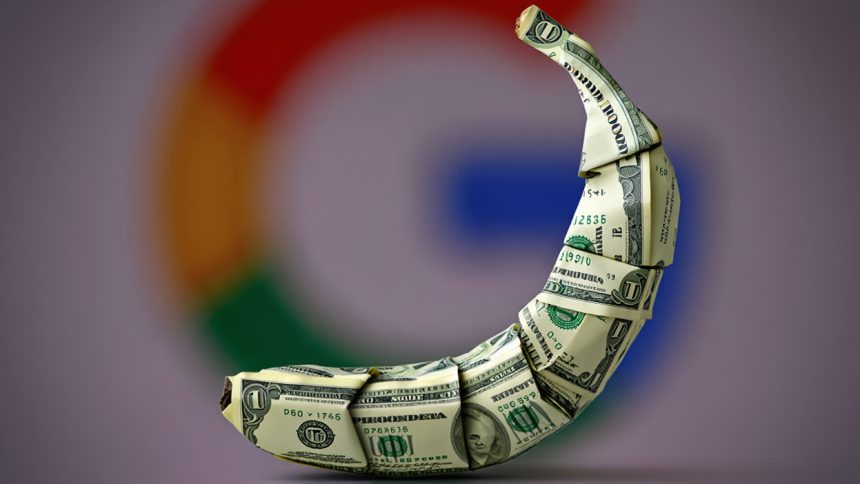
The Evolution of Google’s Image Generation: Meet Nano Banana 2 Lite
Google has officially expanded its generative AI portfolio with the introduction of Nano Banana 2 Lite (technically identified as gemini-3.1-flash-lite-image). Designed to serve as the new entry-level tier in Google’s image generation hierarchy, this model sits beneath the standard Nano Banana 2 and the high-end Nano Banana Pro. By prioritizing efficiency, Google is positioning this model as the successor to the original Nano Banana (gemini-2.5-flash-image), promising a more streamlined experience that maintains integration within the Google ecosystem while significantly reducing latency and overhead costs.
Performance and Cost Efficiency
The primary value proposition of Nano Banana 2 Lite is its speed-to-cost ratio. Generating images in approximately four seconds, it operates 2.7 times faster than its predecessor, Nano Banana 2. From a financial perspective, it is highly competitive, priced at roughly $0.034 per 1K resolution image-effectively cutting the cost of the standard Nano Banana 2 ($0.067) in half.
To put this in context, the market for budget-friendly AI image generation is becoming increasingly crowded:
- Seedream 5.0 Lite: A direct rival, typically priced between $0.031 and $0.035 per image.
- Reve 2.0: An aggressive low-cost alternative at approximately $0.0067 per image, though it lacks the robust enterprise-grade infrastructure and ecosystem support provided by Google.
- Qwen Image Edit: A viable open-source, free-to-use alternative for developers who prefer self-hosting or standard use cases.
Deployment and Ecosystem Integration
Nano Banana 2 Lite is not an isolated tool; it is deeply embedded across Google’s infrastructure. Developers can access it via the Gemini API, Google AI Studio, and the Enterprise Agent Platform. For the average consumer, the model is already integrated into everyday workflows, including Google Photos, NotebookLM, the Gemini app, and Search. Furthermore, it functions in tandem with the new video generation model, Gemini Omni Flash, via the Interactions API, allowing for complex, multi-step creative sessions where users can chain up to three sequential edits.
Comparative Analysis: Is “Lite” Enough?
To determine if the performance trade-off is worth the savings, we conducted a head-to-head evaluation across five distinct categories. The results suggest that while the Lite model is highly capable, the “Pro” and standard versions remain superior for high-fidelity requirements.
The Realism Benchmark
We tested both models using a complex, multi-constraint prompt: “A cinematic portrait of a 32-year-old female architect on a rooftop at sunset, wearing a beige trench coat and round glasses, holding rolled blueprints in her left hand, with a defocused city skyline, golden hour lighting, 50mm lens depth-of-field, and realistic skin texture.”
Nano Banana 2 Lite Performance: The model successfully captured the core elements-the rooftop setting, the attire, and the props. However, it struggled with anatomical precision and lighting nuance. The subject’s hand appeared disproportionately large, and the “rim light” effect was subtle to the point of being negligible. While the image is perfectly suitable for social media or quick mockups, it lacks the photographic depth required for professional-grade editorial work.
Evaluating AI Image Generation: Lite Models vs. Full-Scale ArchitectureWhen choosing between a “Lite” AI model and its full-scale counterpart, the decision often hinges on the intended final output. If your goal is rapid prototyping or generating quick visual references, the Lite version is perfectly adequate; it captures the essence of an idea without the overhead. However, if the image is destined to be a client deliverable, a high-impact hero asset, or a professional portfolio piece, the Lite model’s limitations become glaring. At resolutions beyond a thumbnail, these models often reveal structural weaknesses, particularly in photographic fidelity, where the architecture consistently sacrifices detail for speed.
Stress-Testing Prompt Adherence
To determine if an AI model can handle complex creative briefs, we must move beyond simple prompts and test for “multi-element density.” In our evaluation, we utilized a complex steampunk cityscape scene. This prompt required the model to simultaneously render ten specific constraints: a hot air balloon with a precise company name and date, a cable car with a named route, a gear-driven clock tower, a gargoyle clutching a specific document, and a foreground newspaper featuring a unique headline.
The logic is simple: if a model can juggle ten simultaneous, specific constraints, it is reliable enough for professional creative workflows. While both the Lite and full-scale models produced aesthetically pleasing steampunk environments, their performance diverged significantly when scrutinized.
Performance Breakdown
- The Lite Model: While it successfully placed the gargoyle, clock tower, and balloon, it struggled with text rendering. The balloon’s date was transposed (1942 instead of 1842), the cable car signage was garbled, and the newspaper headline lacked legibility. It prioritized visual atmosphere over textual accuracy.
- Nano Banana 2 (Full Model): This model excelled in precision. It rendered the “Atlas & Sons” text perfectly, provided a clear cable car route, and produced a legible newspaper headline. By opting for brighter, editorial-style lighting, it ensured that the fine details remained sharp rather than being obscured by heavy shadows.
For the casual user, a single-digit error in a fictional date is negligible. However, for worldbuilders, concept artists, and narrative illustrators, these errors represent a significant bottleneck. The Lite model’s tendency to blur or misinterpret text necessitates manual post-production, which becomes a major liability when scaling up a project.
Spatial Awareness and Depth Perception
Beyond text, we tested how these models handle multi-depth composition. We tasked the models with rendering a medieval alchemist’s study-a scene requiring complex layering: foreground objects (an hourglass, a skull, a glowing jar), a mid-ground human subject, and a background featuring an arched window and atmospheric depth.
Both models demonstrated a solid grasp of “spatial grammar.” They correctly scaled foreground objects, maintained proper occlusion relationships between the alchemist and his desk, and established a clear sense of recession toward the window. There were no major spatial contradictions or collapsed depth planes in either output.
The Nuance of Volumetric Depth
The distinction lies in the quality of the atmosphere. Nano Banana 2 creates a superior depth gradient; the candlelight interacts realistically with the stone walls, and the background haze feels like genuine atmospheric perspective rather than a simple digital blur. While the Lite model understands the structural layout of the scene, it lacks the painterly, volumetric warmth that gives a 2D image a truly three-dimensional feel. In professional environments, this “painterly” quality is often the difference between a flat, AI-generated look and a high-end, polished illustration.
Evaluating Nano Banana 2 vs. Nano Banana 2 Lite: A Performance Deep Dive
When comparing the standard Nano Banana 2 against its “Lite” counterpart, the differences often come down to nuance rather than raw capability. While the full model offers a more sophisticated atmospheric depth, the Lite version proves to be a surprisingly robust contender for most professional workflows.
Spatial Reasoning and Compositional Depth
In side-by-side testing, the standard Nano Banana 2 produces images with a palpable sense of air and volume. By contrast, the Lite version can occasionally feel slightly compressed, resembling a high-quality stage set rather than a naturally receding environment.
However, this distinction is subtle. In many instances, the Lite model appears to be the standard version running with a specialized LoRA fine-tuning layer. For practical applications-such as generating game assets, storyboards, or editorial illustrations-the gap in spatial reasoning is negligible. Unless you are producing large-format prints that require intense compositional scrutiny, the Lite model serves as a highly capable, efficient substitute for the full-scale version.
The Text Generation Paradox
Perhaps the most surprising findings emerge when testing complex text rendering. We challenged both models to generate a gritty, nighttime hardware store scene packed with diverse typography: hand-painted signage, graffiti, window decals, concert posters, and various street-level notices.
The Lite Model’s Unexpected Edge
The Nano Banana 2 Lite delivered a standout performance. It successfully rendered every requested element-from the store’s founding date to specific concert ticket prices and even a legible phone number on a “lost cat” flyer-all within a single, coherent frame.
While the Lite model’s output lacked the gritty, weathered realism of a professional photograph (some elements appeared “pasted on” rather than naturally integrated), its clarity was superior. Because the Lite model favors brighter, more neutral lighting, the text remained crisp and readable.
The Full Model’s Atmospheric Trade-off
Conversely, the standard Nano Banana 2 struggled with the very atmospheric depth that usually makes it superior. Its penchant for moody, high-contrast lighting caused smaller text elements to vanish into the shadows. While the overall scene felt more “cinematic,” the loss of legibility in the fine print made it less effective for text-heavy requirements.
For users prioritizing information density-such as those creating infographic-style mockups or labeled product concepts-the Lite model’s tendency toward neutral lighting is actually a functional advantage.
Final Verdict: Choosing the Right Tool
Nano Banana 2 Lite should not be viewed as a “budget” version of the full model, but rather as a specialized tool with a distinct operational profile.
* Where the Lite model excels: It is an exceptional choice for rapid prototyping, editorial graphics, and any project where text legibility and speed are paramount. It maintains a high standard of performance that makes it a viable primary tool for most creators.
* Where the full model remains essential: If your deliverable requires high-fidelity photographic realism, complex material textures, or sophisticated skin rendering, the standard Nano Banana 2 is the clear winner. It excels in cinematic portraiture and environments where the subject must feel deeply integrated into its surroundings.
Ultimately, the choice depends on your output goals. If you are world-building and require precise, legible in-image labeling, the Lite model’s consistency is hard to beat. If your priority is the “look and feel” of a high-end photograph, the standard Nano Banana 2 remains the industry-leading choice.
Why Nano Banana 2 Lite is the Strategic Choice for Text-Heavy AI Workflows
In the rapidly evolving landscape of generative AI, choosing the right model often comes down to matching specific technical requirements with the right architecture. While flagship models frequently grab headlines for their photorealistic capabilities, the Nano Banana 2 Lite has emerged as a powerhouse for specialized tasks-particularly those involving complex typography and structured visual layouts.
Precision and Compositional Control
The true strength of the Lite model lies in its granular focus. When a project demands high levels of detail, this model excels at ensuring every requested element is accounted for within the frame.
Beyond mere detail, the model demonstrates impressive spatial awareness. It manages multi-depth environments with a level of competence that satisfies most professional requirements. However, its standout feature is its proficiency in text generation. For professionals working in:
- Signage and Wayfinding Mockups: Creating realistic environmental graphics.
- Branded Marketing Assets: Generating layouts where multiple, distinct text strings must remain perfectly legible.
- Editorial Composites: Designing complex visuals that require integrated, readable copy.
The Lite model’s default rendering-which leans toward a brighter, higher-contrast aesthetic-is a distinct advantage here. While this brightness might be a drawback for nuanced portrait photography, it significantly boosts the clarity and readability of text-heavy elements.
The Economic and Ecosystem Advantage
When evaluating the cost-to-performance ratio, the Nano Banana 2 Lite presents a compelling case. At a price point of $0.034 per image, it is roughly 50% more affordable than the standard Nano Banana 2 ($0.067) and remains highly competitive with alternatives like Seedream 5.0 Lite, which typically ranges between $0.031 and $0.035.
While budget-focused options like Reve 2.0 offer significantly lower costs (approximately $0.0067 per image), they lack the cohesive infrastructure of the Google ecosystem. The value of Nano Banana 2 Lite is amplified by its seamless integration across:
- Google Search and Gemini: Unified AI assistance.
- NotebookLM: Streamlined research and synthesis.
- Google Photos: Instantaneous cloud-based asset management.
For teams already embedded in Google’s workspace, the “platform-switching cost”-the time and friction lost moving assets between disparate third-party APIs-is a hidden expense that the Nano Banana ecosystem effectively eliminates.
Final Verdict: Is Lite the Right Fit?
If your primary objective is high-fidelity, cinematic portraiture, you may want to look elsewhere. However, if your workflow prioritizes legible text, structured composition, and seamless integration within a broader software suite, the Nano Banana 2 Lite is not just a budget alternative-it is a superior tool for the job. By understanding your specific use case, you can leverage this model to achieve professional-grade results while optimizing both your budget and your operational efficiency.
Stay Ahead of the Curve
Subscribe to our Daily Debrief newsletter to receive the latest industry insights, expert analysis, exclusive video content, and essential news updates delivered straight to your inbox every morning.