
![Project Hail Mary’s Rocky Actor Points Out A Subtle Detail You May Have Missed [Exclusive]](https://www.mixtv1.com/wp-content/uploads/2026/10/41184-attachment.jpg)


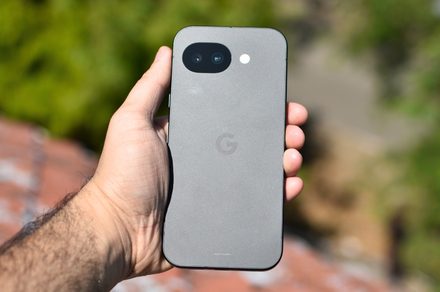
The countdown to Google’s next major hardware showcase is officially underway, with the Pixel 11 series set to make its debut on August 12. Having spent the last year rotating between the Pixel 10 Pro and the Pixel 10a, I’ve developed a deep appreciation for Google’s software-first approach-yet I’ve also become intimately familiar with the hardware limitations that continue to hold these devices back. As the smartphone market reaches a fever pitch of competition, there are three critical areas where I am hoping Google finally pivots. If you’ve been a long-term Pixel user, these pain points likely mirror your own frustrations.
1. Solving the Persistent Thermal Throttling
The most glaring issue that has plagued the Pixel lineup for years is its struggle with heat management. This isn’t a fleeting observation; having used every iteration from the Pixel 8 through the current 10-series, I’ve found that “thermal instability” is a recurring theme. It is no longer acceptable to dismiss this as a seasonal issue caused by summer heat. I have frequently encountered devices that run hot even in climate-controlled environments, whether I am simply navigating via Google Maps or capturing a few high-resolution photos.
The inconsistency is the most frustrating part. While the Tensor chip has made strides in AI processing and machine learning, its thermal efficiency remains erratic. In my own stress tests-running CPU throttling benchmarks across the Pixel 9, Pixel 9a, Pixel 10 Pro, and Pixel 10a-the data confirmed my real-world experience: as soon as the internal temperature spikes, the processor aggressively throttles performance to compensate. This creates a “stutter” effect that ruins the premium feel of the device. For the Pixel 11 to be taken seriously as a flagship contender, Google must prioritize a more robust cooling architecture. If the hardware cannot sustain peak performance, the software’s brilliance is effectively wasted.
2. Modernizing Charging Infrastructure
Beyond thermals, the Pixel’s charging capabilities feel like a relic of the past. In an era where competitors are pushing 80W, 100W, or even 120W charging speeds-allowing users to go from 0% to 100% in under 30 minutes-Google’s conservative approach feels sluggish. My experience with the Pixel 10a is particularly telling: not only is the charging speed underwhelming, but the device often generates significant heat
Why the Pixel 11 Needs to Move Beyond “Good Enough”
In the landscape of 2026 mobile technology, waiting over sixty minutes for a smartphone to reach a full charge feels like a relic of a bygone era. While the industry has sprinted toward hyper-fast power delivery, Google’s flagship lineup remains tethered to a sluggish charging standard that no longer aligns with the expectations of modern power users.
The frustration stems from the fact that this isn’t a technical impossibility; it is a choice. Competitors in the Android ecosystem have normalized the “coffee break” charge-gaining hours of battery life in under 20 minutes. By comparison, the Pixel series feels like it is idling in the slow lane. For the upcoming Pixel 11, faster charging isn’t just a luxury; it is a necessity. Users should no longer have to rationalize these compromises. Google doesn’t need to engage in a “wattage war” to hit 100W+ speeds, but it must bridge the widening gap between its current capabilities and the industry standard.
Beyond Benchmarks: The Need for Sustained Tensor Performance
I have never been a user who obsesses over synthetic benchmark scores. My daily usage rarely involves pushing a device to its absolute limit with high-fidelity titles like Zenless Zone Zero or Warzone Mobile. Instead, my priority is seamless, reliable performance during the mundane, high-intensity moments of daily life.
Unfortunately, the Pixel experience often falters under the weight of real-world multitasking. My typical workflow-snapping a series of high-resolution photos, recording 4K video clips, and toggling between the camera interface and Google Photos to review shots-frequently pushes the hardware to its breaking point. This is where the current Tensor architecture often hits a wall.
When the device begins to throttle due to thermal buildup, the user experience degrades rapidly. App switching becomes a chore, with noticeable input lag that can last nearly a minute. Even more concerning is the tendency for the modem to struggle under heat, leading to dropped network signals exactly when I need GPS navigation or instant cloud uploads. This isn’t about needing more raw power for gaming; it is about thermal efficiency. I want a device that maintains its composure while I document my day, without the looming fear of a system-wide slowdown.
Refining the Pixel Identity
The enduring appeal of the Pixel has never been about winning the spec-sheet race. It isn’t about having the most lenses, the highest clock speed, or the most radical industrial design. Its charm lies in the software-first philosophy and the “smart” features that make daily life easier. However, after years of using successive generations, it has become clear that the most persistent irritants aren’t missing features-they are the unaddressed hardware bottlenecks.
If Google shifts its focus toward superior thermal management, modernized charging speeds, and rock-solid performance consistency, the impact on the user experience would be transformative. These refinements would be far more valuable than another incremental camera sensor upgrade. If the Pixel 11 can finally resolve these long-standing pain points, it will move from being a “great phone with caveats” to a truly flawless daily driver that I can recommend without hesitation.