




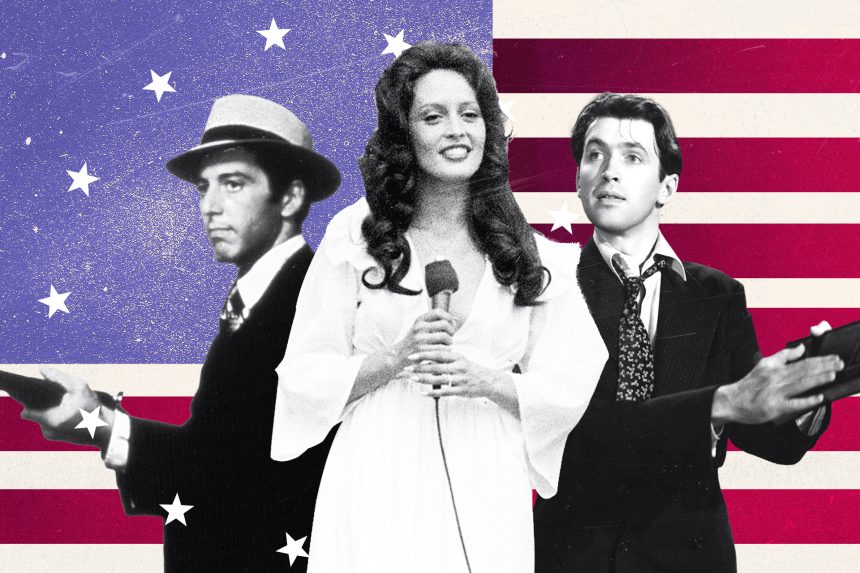

Defining the American Spirit: Five Films That Capture the National Soul
The quest to identify the “definitive” movie about America is a perennial obsession for critics and cinephiles alike. While recent attempts by major publications have sparked debate with eclectic, sometimes baffling selections, the conversation remains vital. To truly understand the American experience-a complex tapestry of idealism, grit, systemic rot, and boundless ambition-we must look toward films that function as cultural mirrors. Here are five essential cinematic works that encapsulate the American identity.
1. The Myth of the Underdog: Rocky (1976)
Sylvester Stallone’s breakout hit did more than just revitalize the sports drama; it resurrected the classic American mythos. By tapping into the “rags-to-riches” narrative, Rocky reinforced the national belief that meritocracy is alive and well, even when the odds are insurmountable. Much like the cultural impact of Star Wars, Rocky helped define the blockbuster era, but its deeper legacy lies in its political resonance. It mirrored the shifting national mood of the mid-70s, setting the stage for the Reagan-era optimism that prioritized individual willpower over systemic reform-a dream that remains as intoxicating as it is occasionally deceptive.
2. The Corrosive Nature of Power: The Godfather (1972)
If Rocky represents the American dream, Francis Ford Coppola’s The Godfather exposes the brutal reality of the American machine. Released during a period of deep national disillusionment, the film serves as a chilling allegory for unchecked capitalism. By framing the Mafia as a mirror to corporate America, Coppola suggested that the “underworld” and the “establishment” are often one and the same. It remains a definitive text on the hidden costs of success and the moral compromises required to maintain power in a society built on ruthless competition.
3. The Fragile Idealist: Mr. Smith Goes to Washington (1939)
Frank Capra’s political drama remains startlingly relevant nearly a century later. James Stewart’s portrayal of a naive, idealistic senator confronting a labyrinth of institutional corruption is a masterclass in political cynicism. While the film concludes with a triumphant stand for integrity, the journey there is a sobering reminder that the American system is a battlefield. It posits that the greatness of the nation is not a static inheritance, but a fragile state that must be fought for-and often bled for-by those who refuse to be bought.
4. The Pulse of the Nation: Nashville (1975)
Robert Altman’s sprawling masterpiece is perhaps the most accurate depiction of the American “vibe.” Rather than focusing on a single hero, Nashville captures the chaotic, noisy, and vibrant intersection of celebrity culture, politics, and everyday life. It is a film about the sheer density of the American experience. Its closing anthem, “It Don’t Worry Me,” perfectly encapsulates a uniquely American brand of fatalistic optimism-a refusal to let the lack of true freedom dampen the spirit of the pursuit.
5. The Vigilante Impulse: Dirty Harry (1971)
Don Siegel’s Dirty Harry tapped into a growing anxiety regarding law, order, and the perceived failure of the judicial system. Clint Eastwood’s Harry Callahan became the archetype for the “lone wolf” hero who operates outside the lines to achieve justice. This film serves as a precursor to the rise of populist rhetoric that would dominate political discourse in the decades to follow. It highlights a recurring American tension: the desire for a strongman to restore order when the bureaucracy feels paralyzed by its own rules.
The Evolving Cinematic Landscape
These films, while decades old, continue to
The Vanishing Mirror: Why American Cinema No Longer Reflects the Nation
Decades ago, while listening to talk radio in the back of taxis, I noticed a recurring pattern: hosts like Rush Limbaugh and Michael Savage had mastered the art of framing every political grievance as a scene from a 1970s vigilante film. The gritty, vengeful spirit of movies like *Death Wish* became the blueprint for modern cable news and the polarized worldview that followed. At the center of this cultural shift was *Dirty Harry*, a film that transformed Clint Eastwood into a nihilistic icon. While *Dirty Harry* remains a masterpiece of tension, its unsettling political undertones have echoed through the halls of American discourse for fifty years, shaping how we perceive justice and authority.
The Evolution of the American Cinematic Dream
On Independence Day, it is natural to reflect on the films that define our national identity. However, the concept of a “definitive” American movie is inherently subjective because the nation itself is a sprawling, contradictory, and ever-evolving entity.

Historically, cinema served as a collective dreamscape. If the “American Dream” is a mosaic of our shared and clashing aspirations, then the silver screen was the primary arena where we debated those ideals. Yet, we must confront a sobering reality: the era of movies explicitly *about* America appears to be waning. As our national identity faces unprecedented instability, we must ask if we still hold democracy as our foundational value. If, as *Mr. Smith Goes to Washington* famously argued, democracy requires a constant, active fight for survival, what happens when that spirit of civic engagement fades? We risk transitioning from a nation of citizens to a “Godfather” state-a society governed by power, loyalty, and transactional influence rather than shared democratic principles.
From Myth-Making to Cynical Realism
During the Golden Age of Hollywood, the studio system acted as a primary architect of the American identity. The moguls of the time crafted a “white-picket-fence” mythology-an idealized, aspirational version of the country that, while often detached from the lived reality of many, provided a moral compass. Whether it was the tension between law and liberty in Westerns, the pursuit of justice in *12 Angry Men*, or the confrontation of systemic prejudice in *In the Heat of the Night*, these films projected the America we *wanted* to be.
The “New Hollywood” era of the late 60s and 70s shifted the lens. Films like *Chinatown*, *Midnight Cowboy*, and *Dog Day Afternoon* traded the polished veneer of the past for raw, often cynical truths. These movies didn’t ignore the American Dream; instead, they explored the painful disconnect between the dream and the reality. By highlighting the flaws of their protagonists, these films forced audiences to grapple with the nation’s failures, ultimately keeping the conversation about our national character alive.
The Rise of the Abstract Fantasy Landscape
Today, the landscape of American cinema has shifted toward a different horizon: pure fantasy. While there is certainly a place for escapism, the dominance of franchise-driven, high-concept cinema has created a cultural “no-man’s land.” Modern blockbusters frequently transport audiences to distant galaxies, hermetic horror funhouses, or sanitized, candy-colored animated worlds.
According to recent industry data, the top-grossing films of the last decade have been overwhelmingly dominated by intellectual property-based franchises and superhero narratives. While these films are technical marvels, they rarely engage with the complexities of the American experience. When cinema stops holding up a mirror to the society that produces it, we lose a vital tool for self-reflection.
The Need for a New National Narrative
Occasionally, a film breaks through the noise to offer a profound examination of the American condition, and the audience response is almost always electric. When a movie dares to tackle the messy, uncomfortable, and beautiful reality of our country,
The Missing Mirror: Why Modern Cinema is Failing to Capture the American Soul
In recent years, a handful of cinematic works have dared to confront the raw, jagged edges of our national identity. Last year’s One Battle After Another stood out for its unflinching commitment to capturing the current zeitgeist-a visceral exploration of the suffocating political discord, systemic oppression, and the collective, desperate struggle for liberty. Similarly, the 2021 phenomenon Oppenheimer served as more than just a historical biopic; it functioned as a profound national reckoning, forcing audiences to confront the moral weight and the enduring, radioactive fallout of the atomic age.
The Great Disconnect: Reality vs. The Silver Screen
Despite these notable outliers, these films feel increasingly like anomalies in an industry that has largely retreated from the front lines of cultural commentary. As we approach the 250th anniversary of the Fourth of July, a jarring dissonance has emerged. We are currently navigating a period of unprecedented domestic upheaval. The foundational pillars of the American experience-the stability of the middle class, the sanctity of democratic institutions, and the protection of free speech-are no longer viewed as constants, but as fragile variables hanging in the balance.
Yet, while we live through this turbulence in real-time-doomscrolling through endless feeds, debating these shifts at our dinner tables, and feeling the anxiety of a changing landscape-we are met with a strange silence from Hollywood. The movies, which have historically served as a metaphysical mirror for the American psyche, are failing to reflect the gravity of our current moment.
Why We Need a New Cinematic Lens
The statistics regarding modern media consumption suggest that audiences are more engaged with “reality” than ever, yet the film industry seems hesitant to synthesize this reality into art. According to recent industry reports, while documentary viewership has spiked, narrative feature films have largely pivoted toward escapism or franchise-driven nostalgia. This retreat is a missed opportunity. When cinema avoids the “big picture,” it leaves a void that is quickly filled by the fragmented, often toxic noise of social media algorithms.
Consider the impact of 1970s cinema, such as All the President’s Men or Network. These films didn’t just entertain; they processed the national trauma of Watergate and the rise of corporate media, helping the public make sense of their own lives. Today, we lack that synthesis. We are living through a digital revolution that has fundamentally altered human connection, yet our major studio releases rarely grapple with the psychological toll of this hyper-connected, high-stress existence.
The Call for a Definitive Vision
Is it even possible for a contemporary Hollywood production to offer a “definitive” vision of such a fractured era? Perhaps not in the way it once did. The sheer speed of our news cycle makes it difficult for traditional filmmaking to keep pace. However, the difficulty of the task is exactly why it must be attempted.
We are starving for a narrative that can zoom out from the pixelated chaos of our daily feeds to provide a coherent, artistic perspective on who we are becoming. If cinema is to remain relevant as a cultural force, it must stop looking away. It is time for filmmakers to turn their cameras back toward the American experiment, not to provide easy answers, but to provide the reflection we so desperately need to understand our own reflection.



![‘I Will Find You’ Star Britt Lower on Rachel’s ‘Spidey Sense’ and Why [SPOILER] as the Murderous Villain Was ‘Perfect Casting’](https://www.mixtv1.com/wp-content/uploads/2026/07/9690-attachment-scaled.jpg)