




Mapping the Cosmos: A New Era of Astronomical Discovery
The landscape of modern science is shifting rapidly, marked by ambitious long-term projects and innovative biological engineering. From the high-altitude deserts of Chile to the cutting edge of robotics, this week’s breakthroughs highlight our relentless pursuit of understanding both the vastness of space and the potential of the natural world.
The Decade-Long Cinematic Journey of the Vera C. Rubin Observatory
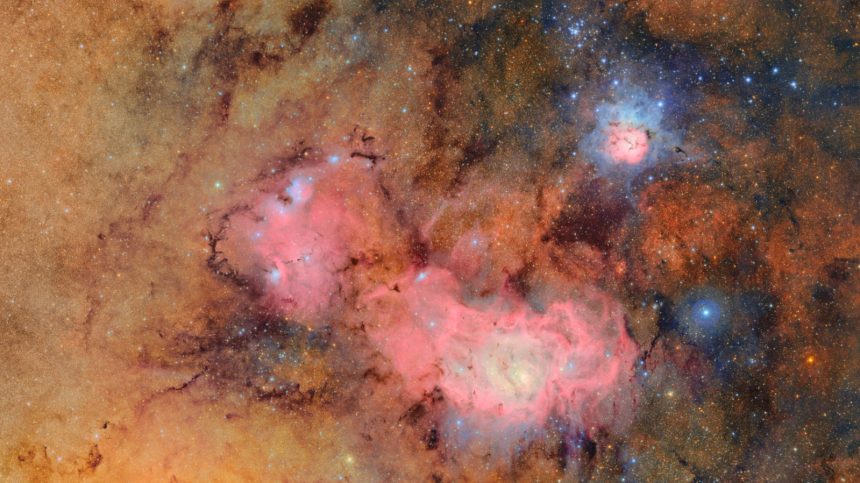
After twenty years of meticulous planning and construction, the Vera C. Rubin Observatory has officially commenced its Legacy Survey of Space and Time (LSST). This monumental project, which began operations on June 30, is set to transform our comprehension of the universe. By utilizing the world’s most powerful digital camera-a staggering 3,200-megapixel instrument-the observatory is essentially filming a “cosmic movie” of the southern sky.
The scale of this operation is unprecedented. Over the next ten years, the facility will capture high-resolution imagery of the entire southern celestial hemisphere every 40 seconds. This rapid-fire data collection is designed to act as a time-lapse of the heavens, allowing researchers to track transient events that were previously invisible to us. By monitoring these changes, scientists hope to unlock fundamental secrets regarding:
- Dark Energy and Dark Matter: Investigating the invisible forces that dictate the structure and expansion of the cosmos.
- Solar System Dynamics: Identifying near-Earth objects and mapping the distribution of asteroids with greater precision than ever before.
- Universal Expansion: Providing a clearer timeline of how the universe has evolved since its inception.
Beyond the Stars: Innovation in Robotics and Exploration
While the Rubin Observatory looks outward, other scientific sectors are looking at how we can navigate challenging environments here on Earth and beyond. Recent developments in “cyborg” technology-specifically the integration of electronics with biological organisms like cockroaches-are paving the way for search-and-rescue missions in disaster zones where traditional robots struggle to maneuver. These bio-hybrid systems leverage the natural agility of insects, augmented by sensors that can transmit data from tight, hazardous spaces.
Simultaneously, the push for lunar exploration continues to gain momentum. NASA’s Commercial Lunar Payload Services (CLPS) initiative is currently reshaping how we approach the Moon. By partnering with private industry, NASA is lowering the barrier to entry for lunar research, aiming to establish a sustainable presence on the lunar surface. Recent data suggests that the global space economy is projected to reach $1.8 trillion by 2035, with lunar logistics playing a central role in this growth.
Why This Matters
The convergence of these technologies-massive astronomical surveys and advanced robotics-represents a shift toward data-driven discovery. Whether we are analyzing petabytes of celestial data to understand the origins of dark energy or deploying bio-hybrid robots to save lives in collapsed buildings, the common thread is our increasing ability to observe and interact with the world at scales previously thought impossible. As the Rubin Observatory continues its decade-long survey, we can expect a steady stream of discoveries that will likely rewrite our current textbooks on astrophysics.
The Vera C. Rubin Observatory: Capturing the Universe’s Cinematic History
The Vera C. Rubin Observatory has officially commenced its ambitious mission to document the cosmos. By generating an ultra-high-definition, panoramic time-lapse of the night sky, the facility aims to transform our understanding of celestial evolution. Brian Stone, representing the National Science Foundation, aptly described the project as the production of the “greatest cosmic movie ever made.”
During its preliminary testing phase last summer, the observatory demonstrated its immense power by capturing millions of stars and galaxies, alongside thousands of previously unidentified asteroids. The core of this initiative is the Legacy Survey of Space and Time (LSST), a ten-year endeavor that will see the telescope revisit every sector of the sky approximately 800 times. This repetitive scanning allows researchers to track transient events and subtle shifts in the heavens. With a nightly output of roughly 1,000 images, the observatory will generate an staggering 10 terabytes of data every 24 hours.
Darío Gil, Under Secretary for Science at the U.S. Department of Energy, emphasized the project’s profound implications: “We are embarking on a mission that will redefine modern cosmology and astrophysics. By investigating the mysteries of dark matter and dark energy, we are moving beyond simple observation to uncover the fundamental laws that dictate the structure of our universe.”
Aquatic Cyborg Cockroaches: Engineering for Disaster Response
In a development that blurs the line between biology and robotics, researchers from Nanyang Technological University Singapore and Waseda University have engineered specialized “diving suits” for cyborg cockroaches. While the concept of aquatic, cybernetically enhanced insects may sound like the premise of a horror film, the practical applications are rooted in life-saving technology.


These cyborg insects are designed for high-stakes search and rescue missions. Their small size allows them to navigate rubble and tight crevices that remain unreachable for human rescuers, search dogs, or traditional heavy machinery. In fact, this technology has already moved from the lab to the field; cyborg roaches were recently utilized to assist in recovery efforts following a major earthquake in Myanmar earlier this year.
The “diving suit” is a sophisticated piece of bio-engineering. Madagascar hissing cockroaches are equipped with electronic controllers and a flexible, protective shell. The suit features an oxygen-generation tank connected to the insect’s spiracles-its natural breathing pores-via four silicone tubes. According to the study published in *Nature Communications*, this setup allows the roaches to remain submerged for up to three hours. The researchers noted that the apparatus is designed to be removed without causing any lasting harm to the insects.
NASA’s Strategic Pivot: The 2028 Moon Base Initiative
NASA has significantly recalibrated its lunar exploration strategy. Moving away from the original concept of an orbiting Lunar Gateway station, the agency has shifted its focus toward the construction of a permanent $20 billion Moon Base. This pivot is part of a broader restructuring of the Artemis program, which now prioritizes a sustainable surface presence over orbital infrastructure.
This shift reflects a long-term commitment to establishing a human foothold on the lunar surface. By prioritizing a base, NASA aims to facilitate more extensive scientific research and resource utilization. As the agency prepares for the next phase of lunar exploration, it has already selected three private sector partners to handle the critical logistics and cargo deliveries required to sustain operations at this new lunar outpost by 2028. This transition marks a new era in space exploration, emphasizing durability and long-term habitation over temporary orbital visits.
Expanding the Lunar Frontier: NASA’s Strategy for Sustainable Moon Base Operations
The roadmap for establishing a permanent human presence on the Moon is accelerating. With initial cargo deliveries to the lunar surface slated for completion by the close of 2026, NASA has officially expanded its operational horizon. The agency recently confirmed four additional lunar missions scheduled for late 2028, signaling a robust commitment to the Commercial Lunar Payload Services (CLPS) initiative.
A $600 Million Investment in Commercial Partnerships
To facilitate these upcoming ventures, NASA has finalized contracts valued at approximately $600 million. This funding has been distributed among three key industry players: Astrobotic, Firefly Aerospace, and Intuitive Machines. Under this agreement, Astrobotic is tasked with executing two distinct lunar landings, while Firefly Aerospace and Intuitive Machines will each manage one mission. These companies are currently refining their lander architectures, leveraging critical performance data gathered from earlier CLPS flights to ensure higher success rates for future cargo transport.
The Logic of Redundancy: Why Consistency Matters
While it might seem counterintuitive to send identical equipment on multiple missions, this strategy is intentional. Each of the four missions will carry a standardized suite of scientific instruments:
- SCALPSS (Stereo Camera for Lunar Plume Surface Studies): Designed to capture high-fidelity data regarding how rocket exhaust interacts with lunar soil during touchdown.
- LRA (Laser Retroreflector Array): A passive optical device that acts as a permanent target, allowing for pinpoint accuracy when tracking spacecraft in orbit or navigating to a landing site.
- LETS (Linear Energy Transfer Spectrometer): A vital sensor used to monitor and measure the intensity of space radiation, which is essential for protecting future human crews.
By deploying these instruments across various landing sites, NASA is effectively creating a “lunar weather network.” Just as meteorologists rely on a distributed grid of sensors across the globe to predict climate patterns, NASA is building a comprehensive environmental map of the Moon. This data is foundational for mitigating risks associated with lunar dust, radiation exposure, and landing precision.
Building a Foundation for Human Exploration
Joel Kearns, the deputy associate administrator for exploration within NASA’s Science Mission Directorate, emphasized the strategic importance of this approach. “By flying the same science instruments on multiple landers, we will better understand potential hazards during landing and build out a global network of environmental data and location markers on the Moon,” Kearns noted. He likened the initiative to establishing a series of terrestrial weather stations, where the consistency of the data allows for a more reliable understanding of the lunar environment. As of 2024, the global space economy is rapidly expanding, with private sector investment in lunar infrastructure reaching record highs, further validating NASA’s decision to rely on flight-proven technology to pave the way for safe, long-term human exploration.
Related Developments in Aerospace
- Rocket Lab’s Strategic Acquisition: Challenging Starlink and Amazon in the LEO Market
- Amazon’s Project Kuiper: Preparing for Large-Scale Broadband Deployment
- Preserving History: Space Shuttle Endeavour’s New Public Exhibition
- Extending the Life of Science: NASA’s Mission to Stabilize the Swift Observatory