





The Privacy Dilemma: Meta’s “Super Sensing” AI Glasses and the Future of Surveillance
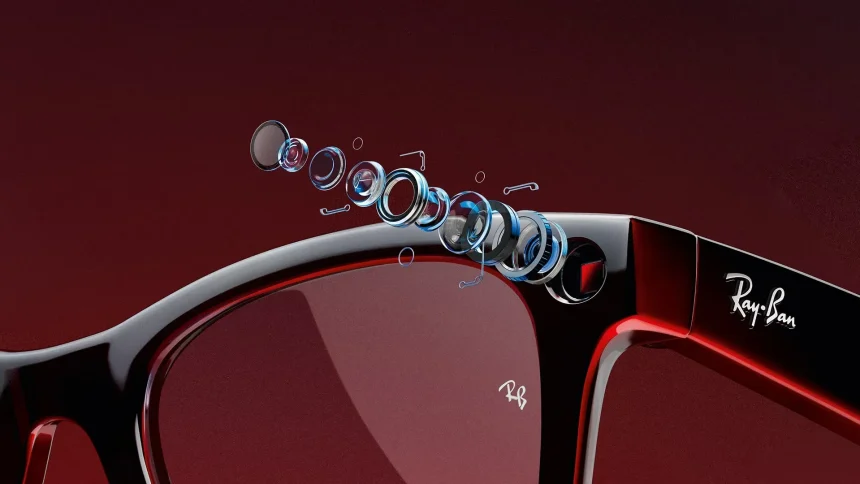
Meta is currently navigating a complex internal debate regarding the privacy implications of its upcoming smart glasses. These next-generation wearables are designed to feature “always-on” AI capabilities, a project internally dubbed “super sensing.” While the technology promises to transform how we interact with the world, it has sparked significant concerns regarding how to signal to bystanders that they are being recorded or analyzed.
The Vision: From Smart Glasses to Personal Agents
Mark Zuckerberg has been vocal about his ambition to evolve Meta AI from a simple voice assistant into a proactive “personal agent.” The goal is for these glasses to accompany users throughout their day, acting as a cognitive extension that helps manage tasks, recall information, and achieve personal objectives.
Industry experts, including Meta’s Chief Scientist Michael Abrash, have outlined a future where these devices maintain a continuous, contextual understanding of the user’s environment. By mapping physical spaces and tracking interactions with objects in real-time, the AI could perform complex tasks-such as calculating your daily caloric intake based on what you’ve eaten, without you ever needing to manually log a meal.
How “Super Sensing” Operates
According to reports from The Financial Times and The Information, the “super sensing” architecture relies on a continuous stream of data. The glasses would capture audio and visual snapshots every few seconds, processing this information through an AI model that converts sensory input into text-based data for Meta’s servers.
Potential use cases for this technology include:
* Proactive Reminders: The AI could alert you if you’ve left your keys behind or remind you to stop at a specific grocery store when you are in close proximity.
* Social Assistance: The glasses could potentially utilize facial recognition to provide subtle cues, such as reminding you of a colleague’s name during a networking event.
The Privacy Paradox: To Flash or Not to Flash?
The most significant hurdle for Meta is the “privacy LED.” Currently, Meta’s smart glasses feature a light that indicates when the camera is active. However, the company is grappling with whether this light should remain illuminated during “super sensing” sessions.
The internal argument against a constant light is that the data is processed in real-time and not stored in a human-readable format. Meta’s perspective is that since no human is actually “watching” the footage, the privacy risk is mitigated. However, this creates a social friction point: if the glasses are constantly analyzing the environment, how do bystanders know they are being recorded?
The Regulatory and Social Landscape
The challenge of “always-on” recording is not unique to Meta. As wearable technology becomes more pervasive, public sentiment is shifting. A 2024 survey by the Pew Research Center indicated that over 60% of adults are concerned about the rise of AI-driven surveillance in public spaces.
Meta is already taking steps to prevent hardware manipulation, recently rolling out firmware updates designed to detect if a user has tampered with the privacy LED. If the system detects that the light has been disabled, it automatically shuts down the camera. Despite these technical safeguards, the company remains in a state of flux regarding the final user experience.
As Meta continues to refine its “super sensing” technology, the company must balance the desire for seamless, helpful AI with the growing public demand for transparency. Whether they opt for a persistent visual indicator or a more discreet approach, the decision will likely set a precedent for the entire wearable tech industry. For now, Meta has declined to provide further comment on the specific



Advancing Wearable Tech: Meta’s Privacy-First Approach to Research Hardware
While Meta continues to iterate on its internal hardware prototypes, the company is doubling down on a philosophy of “privacy by design.” This commitment is most visible in the development of its Project Aria Gen 2 research glasses, which represent a significant departure from conventional imaging devices.
Redefining Data Collection in Smart Eyewear
Unlike standard smart glasses or wearable cameras that function as continuous recording devices, the Project Aria Gen 2 platform is engineered to prioritize user and bystander anonymity. Meta has integrated specialized privacy-preserving technologies that fundamentally change how the hardware interacts with its environment.
Rather than capturing raw, identifiable video feeds or high-resolution photographs-the standard approach for most consumer-grade cameras-these research glasses utilize advanced sensor fusion. This allows the device to map spatial data and understand context without storing traditional visual media that could compromise personal privacy.
Why Privacy Matters for Future AR
As the industry moves toward augmented reality (AR), the challenge of public acceptance remains a primary hurdle. Recent industry data suggests that over 60% of consumers are hesitant to adopt wearable cameras due to concerns regarding surveillance and data misuse. By utilizing hardware that avoids traditional “point-and-shoot” mechanics, Meta is attempting to build a framework where data collection is strictly functional rather than observational.
Think of it less like a security camera strapped to your face and more like a sophisticated navigation tool for a blind person; the device “sees” the geometry of a room to provide guidance, but it doesn’t “watch” the people inside it. This distinction is critical for the future of wearable tech, as it shifts the focus from capturing content to enhancing the user’s spatial awareness while maintaining a strict boundary of digital ethics.