



The UAP Science Advisory Council: Avi Loeb’s Controversial New Mandate
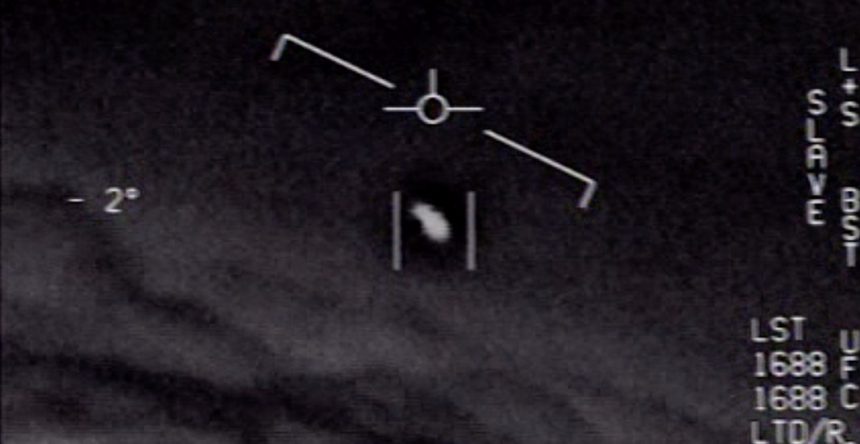
The United States government has officially launched the UAP Science Advisory Council, a high-level initiative tasked with demystifying Unidentified Anomalous Phenomena (UAP). This body, which operates under the guidance of the White House, the Pentagon, the FBI, and the Office of the Director of National Intelligence, aims to provide rigorous scientific analysis to the UAP Governing Board. At the helm of this ambitious project is Harvard astrophysicist Avi Loeb, a figure whose appointment has sparked intense debate within the scientific community.
A Multidisciplinary Approach to the Unknown
On the surface, the Council’s structure appears designed for comprehensive inquiry. Loeb has assembled a diverse team of experts that extends well beyond the realm of traditional physics. The roster includes specialists in computer science, pathology, psychology, and philosophy, alongside Michael Shermer, the founding publisher of Skeptic magazine. This eclectic mix of disciplines is intended to provide a holistic framework for evaluating data that has historically been dismissed or misunderstood.
The Loeb Paradox: Credentials vs. Credibility
While Loeb’s academic pedigree is undeniable, his recent trajectory has alienated many of his peers. Over the past decade, he has transitioned from a respected mainstream astronomer to a polarizing figure who frequently suggests that anomalous data points are evidence of extraterrestrial technology.
This shift has made him a darling of cable news and documentary producers, yet it has simultaneously led many colleagues to label his recent work as speculative or even pseudoscientific. Critics argue that his penchant for sensationalism undermines the very scientific rigor the UAP Science Advisory Council is supposed to uphold.
A History of Extraterrestrial Claims
Loeb’s reputation for unconventional theories is well-documented. His public assertions regarding alien life date back to at least 2015, but his profile exploded following his controversial analysis of ‘Oumuamua. While the broader astronomical community largely classified the object as an interstellar comet, Loeb famously argued it was an artificial alien probe.
More recently, he led an expedition to recover small metallic spherules from the ocean floor, claiming they were remnants of an interstellar spacecraft. These claims were met with significant pushback from geologists and planetary scientists, who suggested the materials were likely of terrestrial or volcanic origin.
The Stakes for UAP Research
The appointment of such a divisive figure to a government-backed council highlights the tension between the desire for transparency regarding UAP and the need for empirical, evidence-based research. As of 2024, public interest in UAP remains at an all-time high, with recent congressional hearings and declassified reports fueling the demand for answers.
By placing Loeb in a position of influence, the government is signaling a willingness to explore “fringe” hypotheses. However, the success of the UAP Science Advisory Council will ultimately depend on whether it can move past the polarizing rhetoric of its leader and produce data that satisfies the stringent requirements of the global scientific community. Whether this initiative leads to a breakthrough or further controversy remains to be seen.