



The Delicate Balance: Remaking Classics for a Modern Audience
The landscape of modern entertainment is currently defined by a singular, recurring tension: the struggle between honoring a beloved legacy and the necessity of creative evolution. When developers or filmmakers revisit a classic property, they are inevitably confronted with two existential questions: How much reverence is required to satisfy the purists, and how much innovation is needed to justify the project’s existence?
The Paradox of Preservation
Faithfulness is often treated as the gold standard in adaptations, yet it is a double-edged sword. If a remake is a pixel-perfect recreation, it risks becoming a redundant artifact-a museum piece that offers nothing new to the medium. Conversely, straying too far from the source material can alienate the very fanbase that sustained the property’s longevity.
Consider the evolution of the gaming industry. According to recent market analysis from 2025, over 60% of top-selling titles are either remakes or sequels. This trend highlights a massive appetite for nostalgia, but it also reveals a creative bottleneck. Audiences are no longer satisfied with mere graphical updates; they demand a reimagining of mechanics that feel archaic by today’s standards.
Redefining the “New” in Reimagining
To remain relevant, a remake must
The Remake Paradox: Why We Keep Returning to Familiar Worlds
The entertainment landscape is currently dominated by a familiar trend: the relentless cycle of remakes. Whether it’s the latest Disney live-action adaptation or a high-profile video game remaster, the industry seems obsessed with revisiting the past. But why are we seeing such a surge in these projects, and do they serve the same purpose across different mediums?
## The Moana Phenomenon: Nostalgia as a Business Model
Take the recent *Moana* remake, a project that has left many critics scratching their heads. With Dwayne Johnson reprising his role as Maui and the visual aesthetic mirroring the 2016 original with near-perfect precision, the film offers little in the way of innovation. Despite the critical confusion regarding its necessity, the film is poised for massive commercial success. It’s a staple in households worldwide, proving that for major studios, brand recognition is a far safer bet than original intellectual property.
## Gaming’s “Resynced” Reality
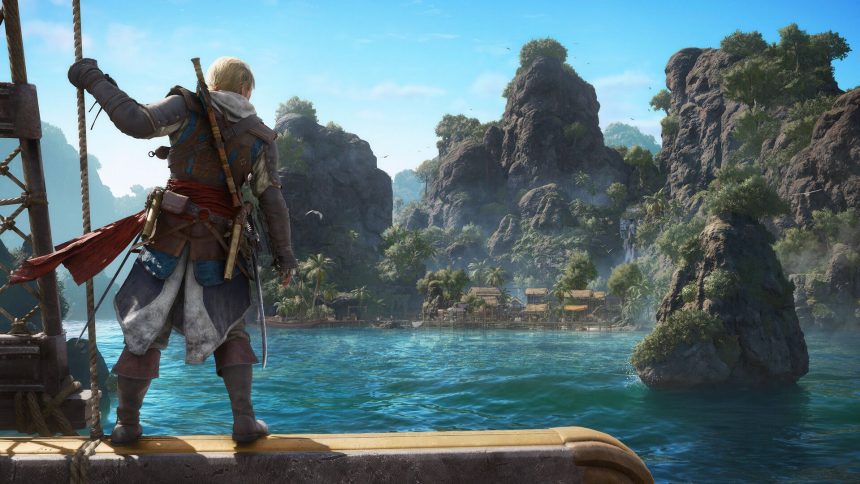
In the gaming sphere, Ubisoft recently launched *Assassin’s Creed Black Flag Resynced*. Unlike the *Moana* remake, which feels
The Delicate Art of the Video Game Remake: Balancing Nostalgia and Modernization
For modern gamers who cut their teeth on the expansive, polished landscapes of Breath of the Wild, returning to the foundational titles of the late 90s can be a jarring experience. Can we truly expect a new generation to overlook the clunky camera angles, stuttering frame rates, and pixelated textures that defined the era? There is a compelling argument for reimagining these classics-not just to preserve them, but to ensure they evoke the same sense of wonder today that they did upon their original release.
The Remake Paradox: How Much Change is Too Much?
Revisiting a beloved classic is a high-stakes endeavor. Developers are constantly walking a tightrope between honoring the source material and catering to contemporary expectations. The core dilemma is simple: what does the audience actually want? While some purists demand a 1:1 recreation with only a resolution bump, others crave a comprehensive overhaul that addresses the design shortcomings of the past.
Consider the evolution of game design. Mechanics that were revolutionary in 1998-such as rigid, tank-like movement or cryptic, menu-heavy inventory systems-are often viewed as archaic obstacles today. When a studio decides to remake a title, they face a series of difficult questions:


- Interface Overhauls: Should we streamline the UI to match modern standards, or does that strip away the game’s unique identity?
- Combat Refinement: If the original combat loop feels sluggish by today’s standards, is it acceptable to implement a more fluid, action-oriented system?
- Narrative Tweaks: Is it permissible to rewrite clunky dialogue or excise tedious side-content that no longer serves the pacing?
Modernizing the Legacy: Lessons from Industry Successes
The industry has seen varying degrees of success in this arena. For instance, the 2018 remake of Shadow of the Colossus by Bluepoint Games serves as a masterclass in visual fidelity while maintaining the original’s haunting atmosphere. By keeping the core gameplay loop intact while completely rebuilding the assets, they proved that you can modernize a title without losing its soul.
However, the “line” remains subjective. According to recent industry data, remakes and remasters have seen a massive surge in popularity, with consumer interest in “nostalgia-driven” gaming growing by nearly 20% over the last five years. Yet, this demand comes with a caveat: players are increasingly vocal about wanting “quality of life” improvements. A game that is visually stunning but still suffers from a frustrating, uncooperative camera will often be met with mixed reviews, regardless of its historical significance.
Defining the Future of Preservation
Ultimately, the goal of a remake shouldn’t be to replace the original, but to provide a bridge for new players to experience a piece of gaming history. Whether it is through updating the physics engine to feel more responsive or refining the user experience to be more intuitive, the best remakes are those that understand the “why” behind the original design choices. By carefully selecting which elements to preserve and which to evolve, developers can ensure that the magic of these classics isn’t lost to the passage of time, but rather, rediscovered by a new audience.
Elevating Your Workflow: The Power of PlusThis
In the modern digital landscape, the efficiency of your marketing stack often dictates the ceiling of your growth. While platforms like Infusionsoft (Keap) provide a robust foundation for automation, they frequently hit a wall when it comes to complex, multi-channel integration. This is where PlusThis enters the equation, acting as the connective tissue that transforms a standard CRM into a sophisticated, high-performance engine.
Bridging the Gap Between Tools and Strategy
Many businesses struggle with “siloed” data. You might have a webinar platform, a video hosting service, and a payment gateway, but if they don’t communicate seamlessly with your CRM, you are losing valuable insights. PlusThis functions as a comprehensive library of “plug-and-play” tools designed to bridge these gaps without requiring a background in software engineering.
By utilizing these integrations, you move beyond basic email triggers. Instead, you create dynamic customer journeys that respond in real-time to user behavior.
Why Automation Needs a Force Multiplier
Recent industry data suggests that businesses utilizing advanced marketing automation see a 14.5% increase in sales productivity and a 12.2% reduction in marketing overhead. However, the complexity of setting up these workflows often deters teams.
Think of PlusThis as a universal adapter for your digital ecosystem. Just as a travel adapter allows your electronics to function in any country regardless of the local outlet shape, PlusThis allows disparate software platforms to “speak the same language” as your CRM. Whether you need to track video engagement, manage SMS follow-ups, or automate webinar registration sequences, the platform removes the technical friction that usually stalls these initiatives.
Key Advantages of Integrating PlusThis
* Streamlined User Experience: By automating the hand-off between platforms, you ensure that your leads never experience a “dead end” in their journey.
* Data-Driven Personalization: Use engagement metrics-such as how much of a video a prospect watched-to trigger specific, highly relevant follow-up campaigns.
* Time Efficiency: Tasks that previously required manual data entry or complex API coding can now be deployed in minutes.
* Scalability: As your business grows, your automation needs will evolve. PlusThis provides a modular approach, allowing you to add new features as your strategy matures.
Moving Beyond the Basics
If your current automation strategy is limited to simple “if-this-then-that” email sequences, you are likely leaving revenue on the table. The true power of a tool like PlusThis lies in its ability to handle nuanced scenarios. For instance, rather than sending a generic “thank you” email after a purchase, you can trigger a personalized onboarding sequence that adjusts based on the specific product tier the customer selected.
By integrating these advanced capabilities, you aren’t just automating tasks; you are architecting a more responsive, intelligent, and profitable customer experience. In an era where personalization is the primary driver of brand loyalty, having the right tools to execute that vision is no longer optional-it is a competitive necessity.