



The Evolution of Seamless Home Access: Beyond Traditional Smart Locks
The ultimate goal of modern smart home technology is the total elimination of friction. For years, we have relied on keypads, physical keys, or manual app interactions to enter our homes. However, the true “gold standard” of convenience is hands-free entry-a system where your door recognizes your presence and grants access automatically as you approach. Just as facial recognition has become the standard for securing our smartphones, it is rapidly becoming the next logical step for residential security.
The Limitations of Legacy Geofencing
For a long time, geofencing served as the primary method for automated unlocking. By tracking your smartphone’s GPS location, these systems attempt to trigger an unlock command when you enter a specific perimeter. While innovative, this approach is often plagued by latency and inconsistency. Because it relies on background app processes, it can be a battery drain and frequently fails to trigger at the precise moment you reach the doorstep. According to recent industry reports, reliance on GPS-based triggers often results in a “wait time” at the door, which defeats the purpose of a frictionless experience.
The Rise of UWB and Biometric Precision
To solve the reliability issues of geofencing, the industry is shifting toward two sophisticated alternatives: Ultrawideband (UWB) technology and advanced facial recognition.
* Ultrawideband (UWB) Precision: UWB is currently the gold standard for proximity-based unlocking. Unlike Bluetooth or GPS, UWB provides spatial awareness, allowing the lock to detect exactly how close your device (such as a smartwatch or phone) is to the door. It is incredibly fast and secure, ensuring the door only opens when you are standing directly in front of it. However, the current market landscape is limited; UWB-enabled hardware remains a premium investment, and the selection of compatible devices is still growing as manufacturers like Schlage and Apple refine their ecosystems.
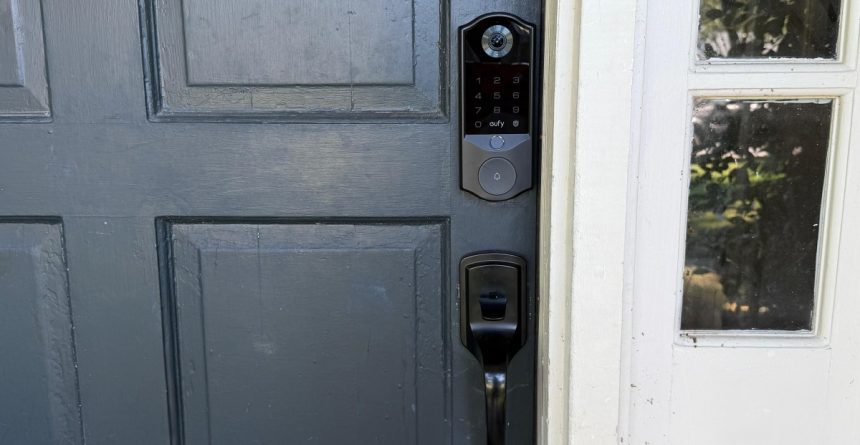
* Facial Recognition: This technology offers a unique advantage by verifying the user’s identity rather than just the presence of a device. If you are carrying groceries or your phone is buried in a bag, your face remains the most reliable “key.”
Why Facial Recognition is Gaining Traction
While UWB is excellent for device-based proximity, facial recognition provides a more human-centric approach to security. During recent evaluations of high-end hardware like the Schlage Sense Pro, it became clear that biometric verification offers a level of convenience that device-tethered systems cannot match. By removing the need to carry a specific wearable or smartphone, facial recognition creates a truly seamless entry experience that feels intuitive rather than technical.
As we move toward a future where our homes anticipate our needs, the integration of these biometric and spatial technologies will likely become standard in new construction and smart home retrofits. While the cost of entry for UWB and facial-recognition locks is currently high, the trajectory of smart home tech suggests that these features will soon be as ubiquitous as the touchscreen.