





Lenovo ThinkPad X1 Carbon Gen 14 Aura Edition: A Masterclass in Refined Engineering
Rating: 8.3/10
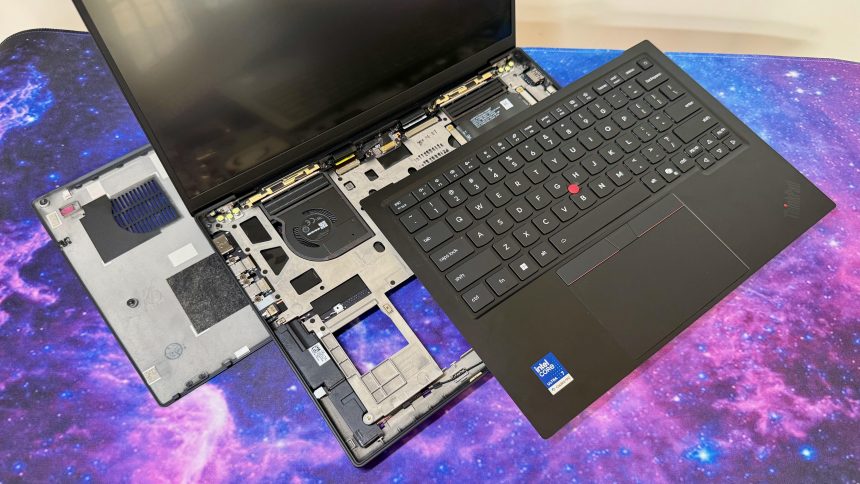
The latest iteration of Lenovo’s premier business ultraportable, the ThinkPad X1 Carbon Gen 14 Aura Edition, might appear identical to its predecessor at a glance. However, beneath the iconic carbon-fiber aesthetic lies a significant internal transformation. Lenovo has pivoted away from mere aesthetic updates, focusing instead on thermal efficiency, acoustic performance, and, crucially, long-term serviceability.
The Verdict: Strengths and Weaknesses
Why It Stands Out:
* Enhanced Serviceability: The new Space Frame architecture simplifies component access for repairs.
* Signature Design: Retains the classic, professional X1 Carbon aesthetic that users love.
* Portability: Remains an industry benchmark for lightweight, compact design.
* Display Value: Now includes a complimentary OLED panel upgrade.
Areas for Improvement:
* Stagnant Performance: Processing speeds remain largely unchanged from the previous generation.
* Power Efficiency: Battery longevity has seen a slight regression compared to the Gen 13 model.
Reimagining the Internal Architecture
While the exterior remains a familiar sight for long-time ThinkPad enthusiasts, the Gen 14 is a different beast under the hood. Lenovo has implemented a “Space Frame” chassis design, a structural overhaul that prioritizes internal airflow. By shrinking the motherboard footprint, engineers were able to integrate larger, more efficient cooling fans.
This shift isn’t just about keeping the device cool; it’s about longevity. In an era where the “Right to Repair” movement is gaining significant legislative momentum-with states like California and New York passing laws to ensure consumers can fix their own electronics-Lenovo’s modular approach is a timely response. By making individual components more accessible, the company is effectively extending the lifecycle of the machine, reducing e-waste, and lowering the total cost of ownership for enterprise fleets.
Performance and Efficiency Trade-offs
Despite the internal redesign, the Gen 14 faces a common challenge in the ultraportable market: the balance between thermal headroom and battery endurance. While the cooling system is superior, the device does not offer a significant leap in raw computing power over the previous model. Furthermore, users may notice a slight dip in battery life. This is a common trade-off in modern laptops, where high-resolution OLED displays-now offered as a standard upgrade-often demand more power than traditional IPS panels. For professionals who prioritize screen clarity and color accuracy, the OLED upgrade is a welcome addition, though it necessitates a more mindful approach to power management during long travel days.