




### Rethinking EV Efficiency: Why Integration Beats Massive Batteries
For years, the electric vehicle sector has relied on a singular, somewhat unimaginative strategy to combat range anxiety: simply adding more battery cells. This “brute force” methodology treats weight as an afterthought, ignoring the fundamental physics that govern vehicle performance. By packing vehicles with increasingly massive battery arrays, manufacturers are inadvertently creating a cycle of diminishing returns.
Heavier vehicles demand more energy to overcome rolling resistance and inertia, which in turn necessitates even larger batteries to maintain acceptable range. This approach forces engineers to compensate with reinforced chassis components and stiffer suspension systems, ultimately degrading the vehicle’s handling and overall energy efficiency. It is a classic engineering paradox where the solution to the problem-range-actively undermines the vehicle’s performance.
### The Shift Toward Mechanical Minimalism
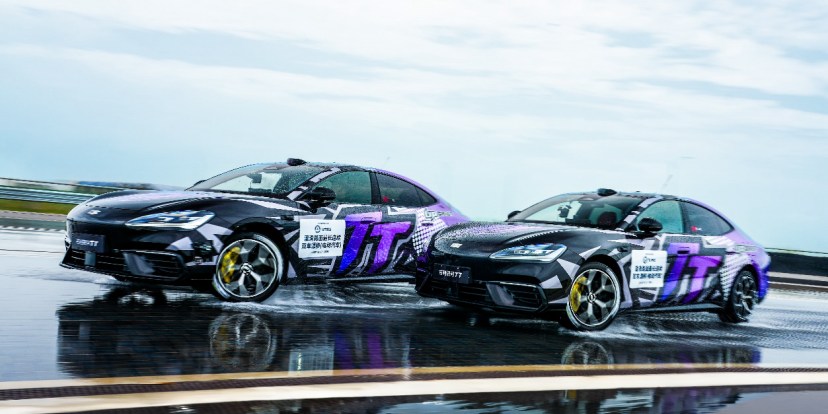
A paradigm shift is finally emerging, led by innovators like Geely, who are challenging the industry’s reliance on sheer mass. Rather than focusing on energy storage capacity, the new frontier of EV development lies in drivetrain optimization. Geely’s recently unveiled “Thunder” 16-in-1 intelligent electric drive system serves as a masterclass in component integration, proving that efficiency gains are better achieved through sophisticated engineering than through raw weight.
By consolidating sixteen distinct functions into a single, highly compact unit, Geely has effectively reduced the mechanical complexity that typically plagues electric powertrains. This level of integration minimizes energy loss between components, allowing the vehicle to travel further on the same amount of electricity without the need for a heavier battery pack.
### Why Integration Matters for the Future of EVs
To put this into perspective, consider the evolution of computing: just as smartphones moved from bulky, separate components to highly integrated “System on a Chip” (SoC) architectures to improve battery life and speed, the automotive industry is now doing the same for electric propulsion.
Current industry data suggests that for every 100kg of weight reduction, an EV can see a range improvement of approximately 3% to 5%. By stripping away the excess weight of redundant housings, cables, and cooling systems, manufacturers can achieve these gains without the environmental and financial costs associated with mining more lithium and cobalt for larger batteries. Geely’s Thunder system is not just a technical achievement; it is a signal that the era of “bigger is better” is coming to an end, replaced by a smarter, more elegant approach to electric mobility.