





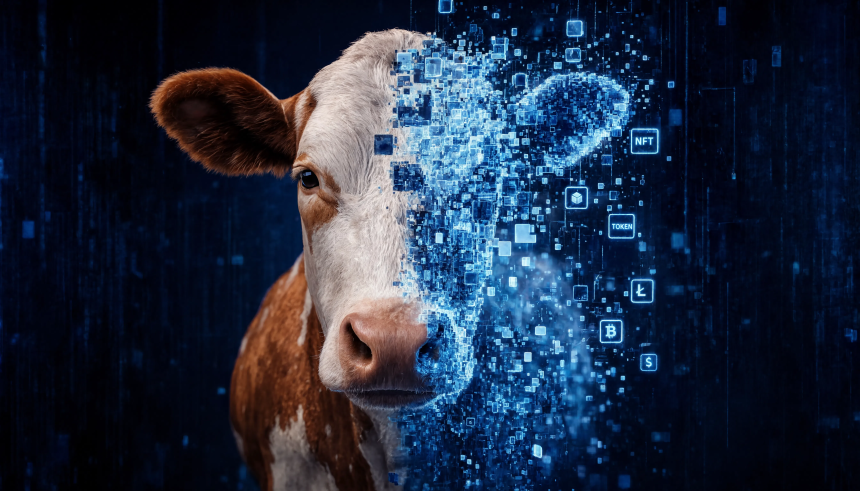
Revolutionizing Rural Finance: How Tokenized Livestock is Transforming Agricultural Credit
In a landmark development for the Brazilian agricultural sector, a dairy farm in Imbituva, Paraná, has successfully utilized its herd as digital collateral to secure a significant financial loan. By leveraging blockchain technology and artificial intelligence, this initiative marks the first time livestock has been formally tokenized and registered on B3, Brazil’s primary stock exchange.
A New Era for Agricultural Collateral
Traditionally, farmers seeking credit against their livestock have faced significant hurdles. Financial institutions often impose steep “haircuts”-drastic reductions in the appraised value of animals-to account for the risks of disease, theft, or death. Furthermore, the logistical burden of mandatory in-person farm inspections has historically slowed down the lending process.
The recent operation at Fazenda Engenho Velho changes this dynamic entirely. By utilizing AI-integrated sensor collars provided by Cowmed, each of the ten cows involved was assigned a unique, immutable blockchain identity. This digital footprint provides real-time data on the health, location, and productivity of the animals, effectively replacing the need for manual audits and mitigating the risk factors that previously led to unfavorable loan terms.
The Mechanics of the Deal
The transaction involved a Cédula de Produto Rural Financeira (CPR-F), a specialized financial instrument designed to help rural producers leverage their assets. Here is how the process unfolded:
* Asset Valuation: Ten cows, appraised at a total value of R$120,000 (approximately $23,310), served as the underlying collateral.
* Credit Issuance: The farm secured a loan of R$100,000 (roughly $19,420) through BMP, a credit firm authorized by the Central Bank of Brazil.
* Market Integration: BMP subsequently transferred these credit rights to Target FIDC, a fund specializing in the monetization of receivables, which finalized the registration on the B3 exchange.
Why This Matters for Global Agriculture
This pilot program serves as a compelling case study for the “Real World Asset” (RWA) tokenization movement. While crypto markets often focus on digital-native assets, the ability to bridge physical commodities-like livestock-with blockchain infrastructure offers a scalable solution for liquidity in the agricultural sector.
According to recent industry reports, the global agricultural credit gap remains a significant barrier to innovation, with many small-to-medium producers struggling to access capital at competitive rates. By providing lenders with transparent, verifiable, and real-time data, tokenization could lower interest rates and streamline the credit approval process for farmers worldwide. As this technology matures, it is likely that we will see a broader adoption of “smart” collateral, where physical assets are continuously monitored and verified through decentralized ledgers.