


The Reality Behind the Vegas Loop’s Airport Expansion
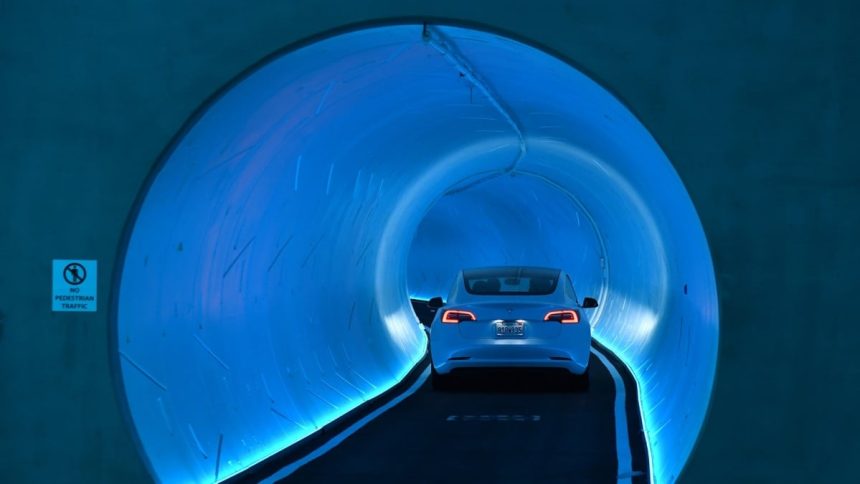
For years, Elon Musk’s infrastructure venture, The Boring Company, has promised to revolutionize urban transit through its subterranean Vegas Loop. While the network has successfully established a footprint across 10 active stations, recent developments regarding its connection to Harry Reid International Airport have sparked significant debate regarding the project’s current utility.
Bridging the Gap: Tunnels vs. Surface Streets
The marketing surrounding the Vegas Loop often emphasizes a futuristic, high-speed tunnel experience. However, the reality for travelers heading to the airport is currently quite different. Although the company lists two at the city’s Harry Reid International Airport as part of its operational map, these stations do not yet benefit from the promised underground infrastructure.
Instead of gliding through a dedicated tunnel, passengers are transported via human-operated Tesla vehicles navigating standard Las Vegas surface streets. This setup essentially functions as a private shuttle service rather than the high-capacity, grade-separated transit system originally envisioned by Musk’s engineers.
Critiquing the “Loop” Experience
The discrepancy between the project’s branding and its functional reality has drawn sharp criticism from urban planning analysts. Notably, transportation commentator and YouTuber CityNerd (Ray Delahanty) recently conducted an on-the-ground assessment of the system.
In his analysis, Delahanty characterized the airport-bound service as a “farce,” pointing out that relying on surface-level traffic defeats the primary value proposition of a “Boring” tunnel system: the ability to bypass congestion entirely. While the Las Vegas Convention Center loop remains a functional novelty for event attendees, the airport extension highlights the challenges of scaling such a complex infrastructure project in a dense, active metropolitan environment.
The Future of Subterranean Transit
As of 2024, the transit industry continues to watch the Vegas Loop closely. While the project has successfully moved thousands of passengers during major conventions, the transition from a localized shuttle network to a city-wide transit backbone remains a work in progress. For the system to move beyond its current “shuttle-on-the-street” phase, The Boring Company must overcome significant regulatory and engineering hurdles to complete the necessary tunnel boring required to connect the airport to the existing underground grid.