




Elevating Your Setup: The Shift Toward Optical Precision
For years, the gaming keyboard landscape was defined by a standard set of features: flashy RGB lighting, dedicated macro dials, and the occasional integrated OLED display. Yet, beneath the surface, the core technology-the mechanical switch-remained largely stagnant. That era of uniformity is ending. Modern manufacturers are pivoting toward adjustable optical switches, a technology that prioritizes lightning-fast response times and granular customization.
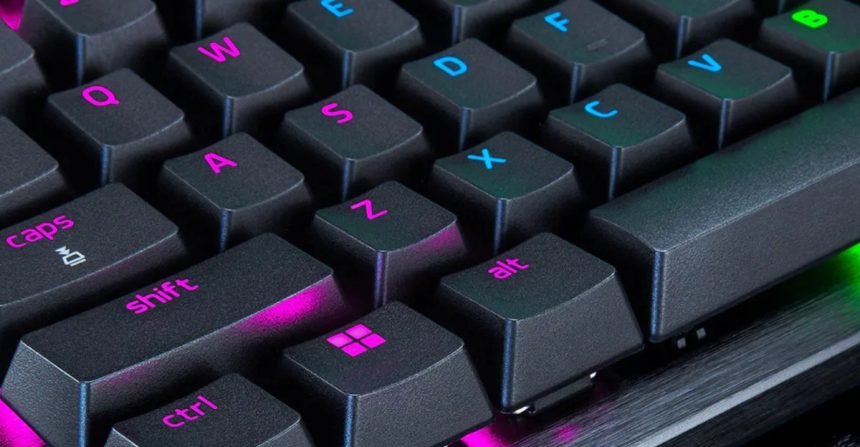
If you are looking to upgrade your hardware, the Razer Huntsman V3 Pro TKL is currently a standout choice. This compact, wired powerhouse is available at Amazon for $124.99, a significant discount from its standard $159.99 retail price.
Why Optical Switches Outperform Traditional Mechanical Keys
Unlike traditional mechanical switches, which rely on physical metal contact points to register a keystroke, optical switches utilize light beams to detect input. This fundamental difference allows for constant monitoring of each key’s position.
This technology unlocks a level of control previously unavailable to gamers:
* Customizable Actuation: You can calibrate the sensitivity of individual keys. Set your movement keys to a hair-trigger 0.1mm for near-instant response, while assigning a deeper 4mm travel distance to keys like “Escape” or “Delete” to prevent accidental misfires.
* Rapid Triggering: Because the switch doesn’t need to reset at the top of its travel path, you can execute repeated presses much faster than on a standard board. This is a massive advantage in high-APM (actions per minute) titles like Valorant or StarCraft II.
Advanced Input Control: The “Snap Tap” Advantage
Beyond simple actuation depth, optical keyboards are introducing software-driven features that fundamentally change how you interact with your games. Razer’s “Snap Tap” mode is a prime example. By prioritizing the most recent input between two keys-such as “A” and “D” for strafing-the keyboard eliminates the “dead zone” that occurs when both keys are held simultaneously.
This creates a fluid, responsive movement profile that feels more intuitive than traditional hardware. As competitive gaming continues to demand millisecond-level precision, these optical advancements are quickly becoming the new industry standard for enthusiasts and pros alike.