




Why Your PC Tower Doesn’t Belong Directly on the Floor
Modern desk setups are often crowded landscapes. Between dual 27-inch displays, high-fidelity speakers, and the inevitable clutter of peripherals like mechanical keyboards and docking stations, finding real estate for a bulky desktop tower is a constant struggle. While the temptation to shove your PC under the desk to reclaim surface space is strong, it is a decision that often leads to hardware headaches.
As my colleague Dominic Bayley discovered, treating your floor like a storage shelf for your computer is a recipe for disaster. From restricted airflow to the accumulation of dust and debris, the floor is arguably the most hostile environment for sensitive electronics.
The Hidden Dangers of Floor-Level Computing
Placing a PC directly on carpet or even hard flooring creates several immediate risks:
- Thermal Throttling: Most PC cases draw air from the bottom. When placed on a carpet, the fibers act as an insulator, choking off intake fans and causing internal temperatures to spike.
- Dust Infiltration: The floor is a magnet for dust, pet hair, and dander. According to recent maintenance studies, PCs kept on the floor require internal cleaning up to three times more frequently than those elevated just a few inches.
- Physical Hazards: A tower on the floor is vulnerable to accidental kicks, vacuum cleaner collisions, and even minor spills that would otherwise be contained on a desktop.
The Simple Solution: Elevate Your Hardware
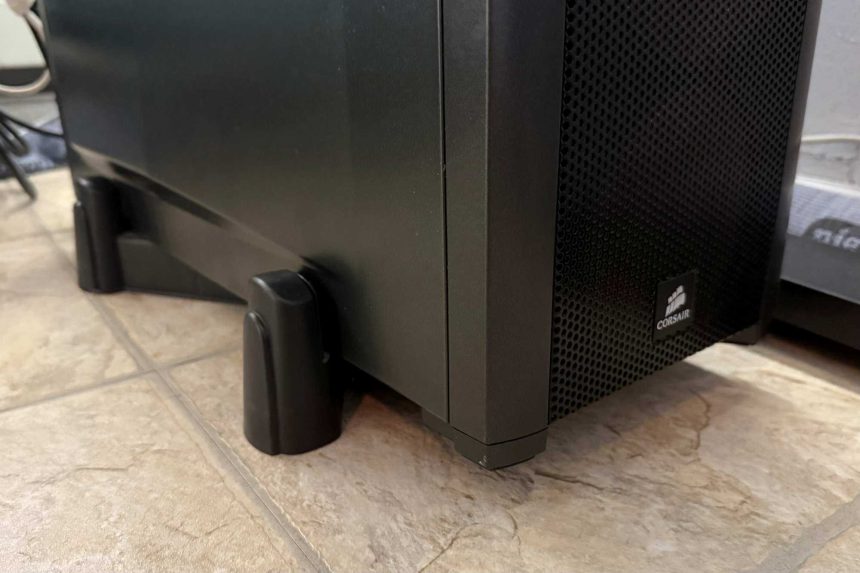
If you are determined to keep your tower off the desk, you must bridge the gap between the floor and the chassis. I have found that the most effective, low-cost insurance for your hardware is a dedicated PC floor stand. It provides a stable, elevated platform that allows for proper ventilation and keeps the intake fans away from floor-level debris.
After researching various options, I opted for the Syba floor stand. It is an inexpensive investment that significantly extends the lifespan of your components by ensuring your cooling system can actually do its job.
Don’t wait for a hardware failure to realize that your PC needs a proper foundation. Elevating your tower is a small step that pays dividends in system stability and cleanliness.