





A Rare Celestial Convergence: The 2026 Solar Spectacle
For the first time in over a century, mainland Spain is set to host a total solar eclipse. This rare astronomical event, scheduled for August 12, 2026, promises to be a once-in-a-lifetime experience, made even more extraordinary by a rare alignment of cosmic phenomena occurring simultaneously.
A Triple-Threat Astronomical Event
Beyond the primary solar eclipse, observers are in for a rare treat: the event coincides with a vibrant meteor shower and a “planet parade,” where six planets will be visible in the sky at once. This convergence of events creates a unique window for both amateur stargazers and professional astronomers to witness a sky filled with activity.
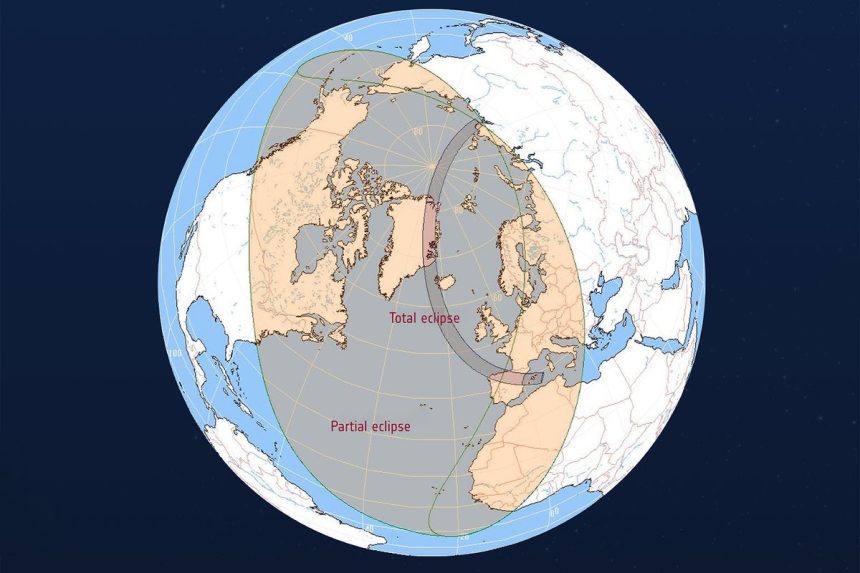
As the moon perfectly obscures the sun, a swath of daytime darkness will sweep across the Iberian Peninsula just before sunset. While the path of totality primarily crosses the Atlantic, it will also cast its shadow over parts of Greenland and Iceland, offering a dramatic backdrop for those in the northern latitudes.
Tracking the Path of Totality
The eclipse trajectory begins near the North Pole, moving southward across the globe. The moon’s shadow, known as the umbra, will travel a staggering 5,130 miles (8,260 kilometers) in just 90 minutes.
* Duration: Observers in the path of totality can expect up to two minutes and 18 seconds of darkness.
* Peak Viewing: The maximum duration of the eclipse will occur off the western coast of Iceland.
* Global Reach: While the 2026 event is a significant milestone, it serves as a precursor to an even more extensive solar event in 2027, which will feature a massive six-and-a-half-minute totality stretching from the Iberian Peninsula through North Africa and into the Middle East.
Preparing for the Shadow
The shadow will eventually make landfall in Portugal before moving into Spain. Given the rarity of this event-the last time mainland Spain experienced a total solar eclipse was in 1905-local authorities are anticipating massive crowds. As the Earth, moon, and sun align, the sudden transition from daylight to twilight is expected to draw millions of tourists to the region.